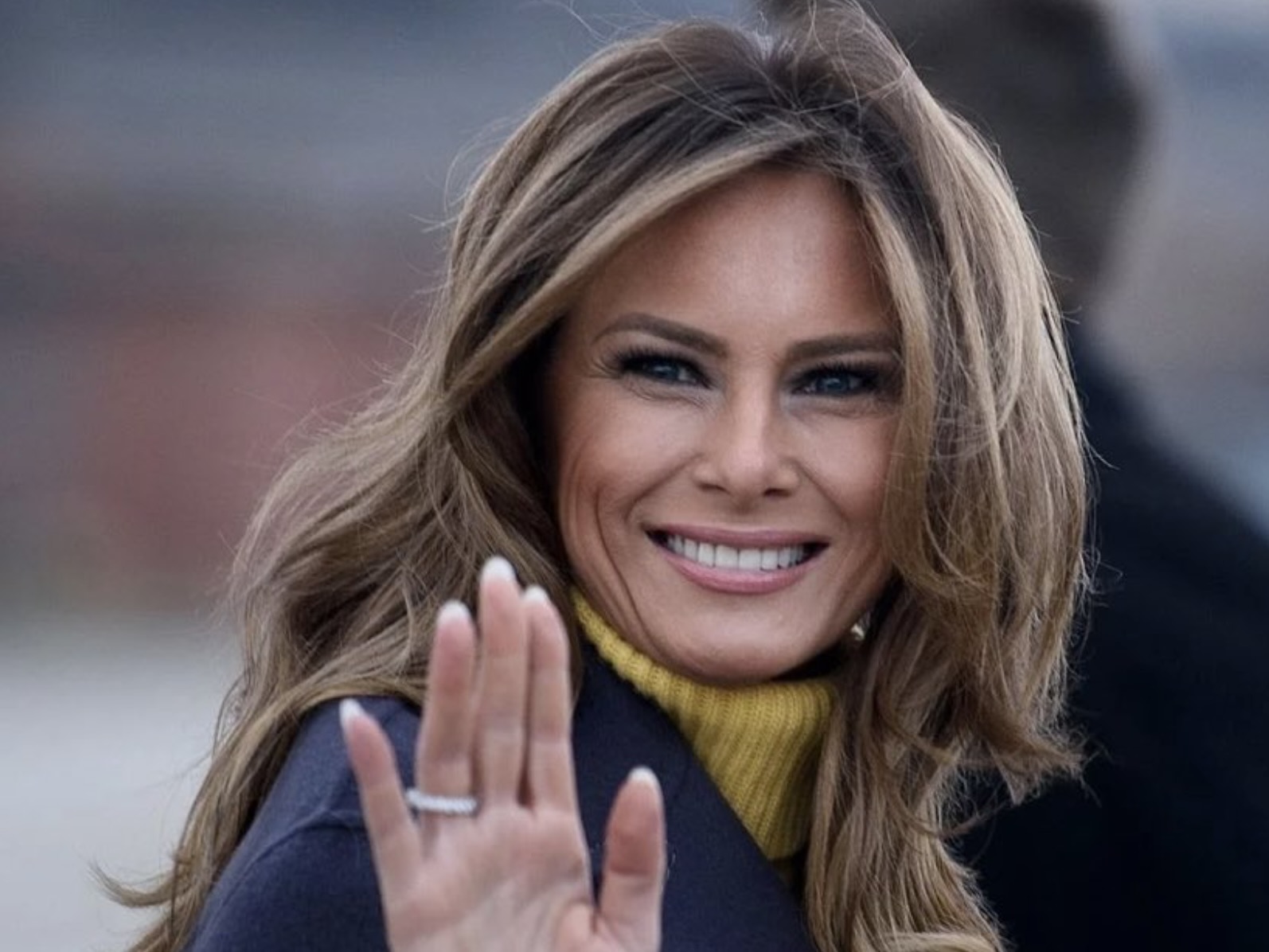
Melania Trumpfaced fierce backlash on Friday after The Washington Post published her Mother's Day weekend op-ed, 'Mothers Are America's Strength,' in which the first lady urged women to pursue both work and family life while helping restore what she called the 'honour of motherhood.'
First Lady Melania Trump:Mothers are America’s strengthhttps://t.co/Rn8GlS6hRY
The criticism followed a piece that appeared both in The Washington Post and on the White House website, giving it the feel of both a personal essay and an official message. In it, Melania argued that the American family should preserve parts of the past that 'have proven their worth' and said feminism had too often placed career above family, 'with consequences for our nation.'
The column was framed as a Mother's Day reflection, but it was also a cultural argument dressed in softer language. Melania described mothers as the 'foundation' of democratic life and the 'first teachers of empathy, aspiration and discipline,' before suggesting that the health of the nation begins inside the home.
She was careful not to say that women must choose between work and children. In one of the more practical passages, she wrote that women can 'thrive in both motherhood and business,' while acknowledging that extended families and strong support systems are often essential to making that possible.
The essay also acknowledged the burden often carried by women. Melania praised single mothers, highlighted National Foster Care Month and said foster mothers provide safety and stability at moments when children need it most.
Even so, the essay repeatedly returned to an older moral vocabulary that was always likely to provoke a response. Her call to 'restore the honour of motherhood' after years in which feminism supposedly placed career above family was not a passing line tucked away in the middle. It was the driving force of the argument, turning what might have been a routine Mother's Day essay into something more ideological and more fragile.
Melania wrote that mothers should make themselves available to their children 'whenever your child needs you' and argued that self-care is 'not selfish' because it helps mothers care for others more effectively.
She also used the piece to defend the seriousness of her own public role. Melania wrote that she had gone beyond the traditional duties of the East Wing by leading four reunifications of Ukrainian and Russian children with their families, addressing the UN Security Council and launching 'Fostering the Future Together.'
Readers on The Washington Post responded with open scepticism. Reporting on the reaction said commenters called the piece 'tone deaf' and 'a disgrace,' while others questioned whether Melania had any standing to lecture working mothers about sacrifice, family values or the realities of everyday strain.
Source: International Business Times UK
