Key points:President Donald Trump reaffirmed the U.S.-Iran ceasefire remains in place despite fresh hostilities.Trump confirmed three U.S. destroyers transited the Strait of Hormuz âunder fireâ while claiming no damage.Iranian sources report U.S. forces violated the ceasefire by attacking an oil tanker and civilian areas.Iranâs IRGC Navy launched ballistic missiles, cruise missiles, and drones at U.S. vessels.Both sides accuse each other of breaking the truce amid conflicting accounts of the engagement.Conflicting accounts of the strait engagementIranian state media throughTasnimreported that the U.S. military violated the ceasefire by targeting an Iranian oil tanker moving from coastal waters near Jask toward the Strait of Hormuz. According to the spokesperson for Khatam al-Anbiya Central Headquarters, U.S. forces also struck another vessel entering the strait near Fujairah in the United Arab Emirates while launching air assaults on civilian areas along the coasts of Bandar Khamir, Sirik, and Qeshm Island. Iranâs armed forces responded immediately by striking U.S. military vessels in the eastern Strait of Hormuz and south of Chabahar, reportedly inflicting significant damage. The IRGC Navy described its response as a âlarge-scale and precise combined operationâ using ballistic missiles, anti-ship cruise missiles, and explosive drones.Trump offered a dramatically different version of events. Writing on Truth Social, the president claimed three U.S. destroyers transited out of the Strait of Hormuz âunder fireâ but insisted they sustained no damage while Iranian attackers were âcompletely destroyed.â He wrote that âmissiles were shot at our destroyers and were easily knocked down. Likewise, drones came and were incinerated while in the air.â Trump confirmed the destroyers would rejoin the U.S. naval blockade, which he described as a âWall of Steel,â and threatened Iran with a harsher response if a deal is not signed quickly. When asked directly whether the ceasefire remained in effect, Trump told reporters: âYeah, it is. They trifled with us today. We blew them away.âThe oil tanker factor and regional escalationThe targeting of an oil tanker near Jask introduces a critical economic dimension to the conflict. Jask sits on Iranâs southeastern coast and has become a strategic alternative export point for Iranian oil as Tehran seeks to circumvent international sanctions. The U.S. Navy has maintained a persistent presence in the region, and the Strait of Hormuz remains the worldâs most important oil transit chokepoint, handling approximately 20 percent of global petroleum consumption. Any disruption to shipping through these waters sends shockwaves through global energy markets.Iranâs Revolutionary Guard Corps Navy said intelligence monitoring indicated âsignificant damageâ to U.S. forces, adding that three U.S. warships quickly fled the Strait of Hormuz area. The IRGC statement warned that âthe Islamic Republic of Iran will deliver a crushing response to any aggression.â This language echoes decades of Iranian military doctrine that emphasizes asymmetric retaliation in the Persian Gulf, where Iran lacks conventional naval superiority but possesses extensive missile and drone capabilities developed specifically to threaten larger U.S. warships. The U.S. Navy has not independently confirmed any damage to its vessels.The competing claims create an environment where determining ground truth becomes nearly impossible. Both sides have incentives to exaggerate their own success and minimize their losses. For Trump, maintaining the fiction of a functioning ceasefire preserves the appearance of diplomatic progress even as his administration pursues a policy of maximum pressure through economic sanctions and military intimidation. For Iran, demonstrating the ability to strike U.S. warships reinforces its deterrent posture and bolsters domestic support at a time of severe economic hardship.Sources include:SputnikGlobe.comSputnikGlobe.comSputnikGlobe.com
Key points:President Donald Trump reaffirmed the U.S.-Iran ceasefire remains in place despite fresh hostilities.Trump confirmed three U.S. destroyers transited the Strait of Hormuz âunder fireâ while claiming no damage.Iranian sources report U.S. forces violated the ceasefire by attacking an oil tanker and civilian areas.Iranâs IRGC Navy launched ballistic missiles, cruise missiles, and drones at U.S. vessels.Both sides accuse each other of breaking the truce amid conflicting accounts of the engagement.Conflicting accounts of the strait engagementIranian state media throughTasnimreported that the U.S. military violated the ceasefire by targeting an Iranian oil tanker moving from coastal waters near Jask toward the Strait of Hormuz. According to the spokesperson for Khatam al-Anbiya Central Headquarters, U.S. forces also struck another vessel entering the strait near Fujairah in the United Arab Emirates while launching air assaults on civilian areas along the coasts of Bandar Khamir, Sirik, and Qeshm Island. Iranâs armed forces responded immediately by striking U.S. military vessels in the eastern Strait of Hormuz and south of Chabahar, reportedly inflicting significant damage. The IRGC Navy described its response as a âlarge-scale and precise combined operationâ using ballistic missiles, anti-ship cruise missiles, and explosive drones.Trump offered a dramatically different version of events. Writing on Truth Social, the president claimed three U.S. destroyers transited out of the Strait of Hormuz âunder fireâ but insisted they sustained no damage while Iranian attackers were âcompletely destroyed.â He wrote that âmissiles were shot at our destroyers and were easily knocked down. Likewise, drones came and were incinerated while in the air.â Trump confirmed the destroyers would rejoin the U.S. naval blockade, which he described as a âWall of Steel,â and threatened Iran with a harsher response if a deal is not signed quickly. When asked directly whether the ceasefire remained in effect, Trump told reporters: âYeah, it is. They trifled with us today. We blew them away.âThe oil tanker factor and regional escalationThe targeting of an oil tanker near Jask introduces a critical economic dimension to the conflict. Jask sits on Iranâs southeastern coast and has become a strategic alternative export point for Iranian oil as Tehran seeks to circumvent international sanctions. The U.S. Navy has maintained a persistent presence in the region, and the Strait of Hormuz remains the worldâs most important oil transit chokepoint, handling approximately 20 percent of global petroleum consumption. Any disruption to shipping through these waters sends shockwaves through global energy markets.Iranâs Revolutionary Guard Corps Navy said intelligence monitoring indicated âsignificant damageâ to U.S. forces, adding that three U.S. warships quickly fled the Strait of Hormuz area. The IRGC statement warned that âthe Islamic Republic of Iran will deliver a crushing response to any aggression.â This language echoes decades of Iranian military doctrine that emphasizes asymmetric retaliation in the Persian Gulf, where Iran lacks conventional naval superiority but possesses extensive missile and drone capabilities developed specifically to threaten larger U.S. warships. The U.S. Navy has not independently confirmed any damage to its vessels.The competing claims create an environment where determining ground truth becomes nearly impossible. Both sides have incentives to exaggerate their own success and minimize their losses. For Trump, maintaining the fiction of a functioning ceasefire preserves the appearance of diplomatic progress even as his administration pursues a policy of maximum pressure through economic sanctions and military intimidation. For Iran, demonstrating the ability to strike U.S. warships reinforces its deterrent posture and bolsters domestic support at a time of severe economic hardship.Sources include:SputnikGlobe.comSputnikGlobe.comSputnikGlobe.com
President Donald Trump reaffirmed the U.S.-Iran ceasefire remains in place despite fresh hostilities.Trump confirmed three U.S. destroyers transited the Strait of Hormuz âunder fireâ while claiming no damage.Iranian sources report U.S. forces violated the ceasefire by attacking an oil tanker and civilian areas.Iranâs IRGC Navy launched ballistic missiles, cruise missiles, and drones at U.S. vessels.Both sides accuse each other of breaking the truce amid conflicting accounts of the engagement.Conflicting accounts of the strait engagementIranian state media throughTasnimreported that the U.S. military violated the ceasefire by targeting an Iranian oil tanker moving from coastal waters near Jask toward the Strait of Hormuz. According to the spokesperson for Khatam al-Anbiya Central Headquarters, U.S. forces also struck another vessel entering the strait near Fujairah in the United Arab Emirates while launching air assaults on civilian areas along the coasts of Bandar Khamir, Sirik, and Qeshm Island. Iranâs armed forces responded immediately by striking U.S. military vessels in the eastern Strait of Hormuz and south of Chabahar, reportedly inflicting significant damage. The IRGC Navy described its response as a âlarge-scale and precise combined operationâ using ballistic missiles, anti-ship cruise missiles, and explosive drones.Trump offered a dramatically different version of events. Writing on Truth Social, the president claimed three U.S. destroyers transited out of the Strait of Hormuz âunder fireâ but insisted they sustained no damage while Iranian attackers were âcompletely destroyed.â He wrote that âmissiles were shot at our destroyers and were easily knocked down. Likewise, drones came and were incinerated while in the air.â Trump confirmed the destroyers would rejoin the U.S. naval blockade, which he described as a âWall of Steel,â and threatened Iran with a harsher response if a deal is not signed quickly. When asked directly whether the ceasefire remained in effect, Trump told reporters: âYeah, it is. They trifled with us today. We blew them away.âThe oil tanker factor and regional escalationThe targeting of an oil tanker near Jask introduces a critical economic dimension to the conflict. Jask sits on Iranâs southeastern coast and has become a strategic alternative export point for Iranian oil as Tehran seeks to circumvent international sanctions. The U.S. Navy has maintained a persistent presence in the region, and the Strait of Hormuz remains the worldâs most important oil transit chokepoint, handling approximately 20 percent of global petroleum consumption. Any disruption to shipping through these waters sends shockwaves through global energy markets.Iranâs Revolutionary Guard Corps Navy said intelligence monitoring indicated âsignificant damageâ to U.S. forces, adding that three U.S. warships quickly fled the Strait of Hormuz area. The IRGC statement warned that âthe Islamic Republic of Iran will deliver a crushing response to any aggression.â This language echoes decades of Iranian military doctrine that emphasizes asymmetric retaliation in the Persian Gulf, where Iran lacks conventional naval superiority but possesses extensive missile and drone capabilities developed specifically to threaten larger U.S. warships. The U.S. Navy has not independently confirmed any damage to its vessels.The competing claims create an environment where determining ground truth becomes nearly impossible. Both sides have incentives to exaggerate their own success and minimize their losses. For Trump, maintaining the fiction of a functioning ceasefire preserves the appearance of diplomatic progress even as his administration pursues a policy of maximum pressure through economic sanctions and military intimidation. For Iran, demonstrating the ability to strike U.S. warships reinforces its deterrent posture and bolsters domestic support at a time of severe economic hardship.Sources include:SputnikGlobe.comSputnikGlobe.comSputnikGlobe.com
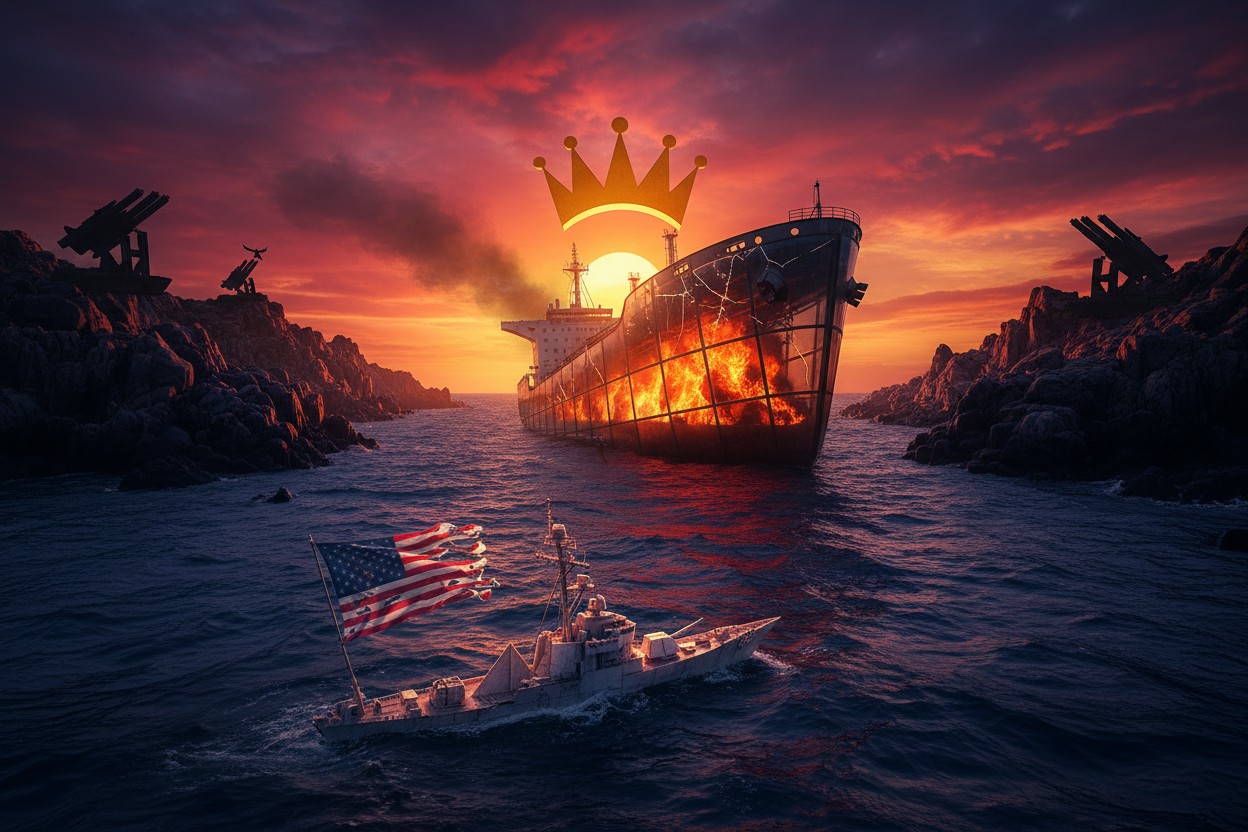
President Donald Trump reaffirmed the U.S.-Iran ceasefire remains in place despite fresh hostilities.Trump confirmed three U.S. destroyers transited the Strait of Hormuz âunder fireâ while claiming no damage.Iranian sources report U.S. forces violated the ceasefire by attacking an oil tanker and civilian areas.Iranâs IRGC Navy launched ballistic missiles, cruise missiles, and drones at U.S. vessels.Both sides accuse each other of breaking the truce amid conflicting accounts of the engagement.
Trump confirmed three U.S. destroyers transited the Strait of Hormuz âunder fireâ while claiming no damage.Iranian sources report U.S. forces violated the ceasefire by attacking an oil tanker and civilian areas.Iranâs IRGC Navy launched ballistic missiles, cruise missiles, and drones at U.S. vessels.Both sides accuse each other of breaking the truce amid conflicting accounts of the engagement.
Iranian sources report U.S. forces violated the ceasefire by attacking an oil tanker and civilian areas.Iranâs IRGC Navy launched ballistic missiles, cruise missiles, and drones at U.S. vessels.Both sides accuse each other of breaking the truce amid conflicting accounts of the engagement.
Iranâs IRGC Navy launched ballistic missiles, cruise missiles, and drones at U.S. vessels.Both sides accuse each other of breaking the truce amid conflicting accounts of the engagement.
Both sides accuse each other of breaking the truce amid conflicting accounts of the engagement.
Conflicting accounts of the strait engagementIranian state media throughTasnimreported that the U.S. military violated the ceasefire by targeting an Iranian oil tanker moving from coastal waters near Jask toward the Strait of Hormuz. According to the spokesperson for Khatam al-Anbiya Central Headquarters, U.S. forces also struck another vessel entering the strait near Fujairah in the United Arab Emirates while launching air assaults on civilian areas along the coasts of Bandar Khamir, Sirik, and Qeshm Island. Iranâs armed forces responded immediately by striking U.S. military vessels in the eastern Strait of Hormuz and south of Chabahar, reportedly inflicting significant damage. The IRGC Navy described its response as a âlarge-scale and precise combined operationâ using ballistic missiles, anti-ship cruise missiles, and explosive drones.Trump offered a dramatically different version of events. Writing on Truth Social, the president claimed three U.S. destroyers transited out of the Strait of Hormuz âunder fireâ but insisted they sustained no damage while Iranian attackers were âcompletely destroyed.â He wrote that âmissiles were shot at our destroyers and were easily knocked down. Likewise, drones came and were incinerated while in the air.â Trump confirmed the destroyers would rejoin the U.S. naval blockade, which he described as a âWall of Steel,â and threatened Iran with a harsher response if a deal is not signed quickly. When asked directly whether the ceasefire remained in effect, Trump told reporters: âYeah, it is. They trifled with us today. We blew them away.âThe oil tanker factor and regional escalationThe targeting of an oil tanker near Jask introduces a critical economic dimension to the conflict. Jask sits on Iranâs southeastern coast and has become a strategic alternative export point for Iranian oil as Tehran seeks to circumvent international sanctions. The U.S. Navy has maintained a persistent presence in the region, and the Strait of Hormuz remains the worldâs most important oil transit chokepoint, handling approximately 20 percent of global petroleum consumption. Any disruption to shipping through these waters sends shockwaves through global energy markets.Iranâs Revolutionary Guard Corps Navy said intelligence monitoring indicated âsignificant damageâ to U.S. forces, adding that three U.S. warships quickly fled the Strait of Hormuz area. The IRGC statement warned that âthe Islamic Republic of Iran will deliver a crushing response to any aggression.â This language echoes decades of Iranian military doctrine that emphasizes asymmetric retaliation in the Persian Gulf, where Iran lacks conventional naval superiority but possesses extensive missile and drone capabilities developed specifically to threaten larger U.S. warships. The U.S. Navy has not independently confirmed any damage to its vessels.The competing claims create an environment where determining ground truth becomes nearly impossible. Both sides have incentives to exaggerate their own success and minimize their losses. For Trump, maintaining the fiction of a functioning ceasefire preserves the appearance of diplomatic progress even as his administration pursues a policy of maximum pressure through economic sanctions and military intimidation. For Iran, demonstrating the ability to strike U.S. warships reinforces its deterrent posture and bolsters domestic support at a time of severe economic hardship.Sources include:SputnikGlobe.comSputnikGlobe.comSputnikGlobe.com
Iranian state media throughTasnimreported that the U.S. military violated the ceasefire by targeting an Iranian oil tanker moving from coastal waters near Jask toward the Strait of Hormuz. According to the spokesperson for Khatam al-Anbiya Central Headquarters, U.S. forces also struck another vessel entering the strait near Fujairah in the United Arab Emirates while launching air assaults on civilian areas along the coasts of Bandar Khamir, Sirik, and Qeshm Island. Iranâs armed forces responded immediately by striking U.S. military vessels in the eastern Strait of Hormuz and south of Chabahar, reportedly inflicting significant damage. The IRGC Navy described its response as a âlarge-scale and precise combined operationâ using ballistic missiles, anti-ship cruise missiles, and explosive drones.Trump offered a dramatically different version of events. Writing on Truth Social, the president claimed three U.S. destroyers transited out of the Strait of Hormuz âunder fireâ but insisted they sustained no damage while Iranian attackers were âcompletely destroyed.â He wrote that âmissiles were shot at our destroyers and were easily knocked down. Likewise, drones came and were incinerated while in the air.â Trump confirmed the destroyers would rejoin the U.S. naval blockade, which he described as a âWall of Steel,â and threatened Iran with a harsher response if a deal is not signed quickly. When asked directly whether the ceasefire remained in effect, Trump told reporters: âYeah, it is. They trifled with us today. We blew them away.âThe oil tanker factor and regional escalationThe targeting of an oil tanker near Jask introduces a critical economic dimension to the conflict. Jask sits on Iranâs southeastern coast and has become a strategic alternative export point for Iranian oil as Tehran seeks to circumvent international sanctions. The U.S. Navy has maintained a persistent presence in the region, and the Strait of Hormuz remains the worldâs most important oil transit chokepoint, handling approximately 20 percent of global petroleum consumption. Any disruption to shipping through these waters sends shockwaves through global energy markets.Iranâs Revolutionary Guard Corps Navy said intelligence monitoring indicated âsignificant damageâ to U.S. forces, adding that three U.S. warships quickly fled the Strait of Hormuz area. The IRGC statement warned that âthe Islamic Republic of Iran will deliver a crushing response to any aggression.â This language echoes decades of Iranian military doctrine that emphasizes asymmetric retaliation in the Persian Gulf, where Iran lacks conventional naval superiority but possesses extensive missile and drone capabilities developed specifically to threaten larger U.S. warships. The U.S. Navy has not independently confirmed any damage to its vessels.The competing claims create an environment where determining ground truth becomes nearly impossible. Both sides have incentives to exaggerate their own success and minimize their losses. For Trump, maintaining the fiction of a functioning ceasefire preserves the appearance of diplomatic progress even as his administration pursues a policy of maximum pressure through economic sanctions and military intimidation. For Iran, demonstrating the ability to strike U.S. warships reinforces its deterrent posture and bolsters domestic support at a time of severe economic hardship.Sources include:SputnikGlobe.comSputnikGlobe.comSputnikGlobe.com
Source: NaturalNews.com
