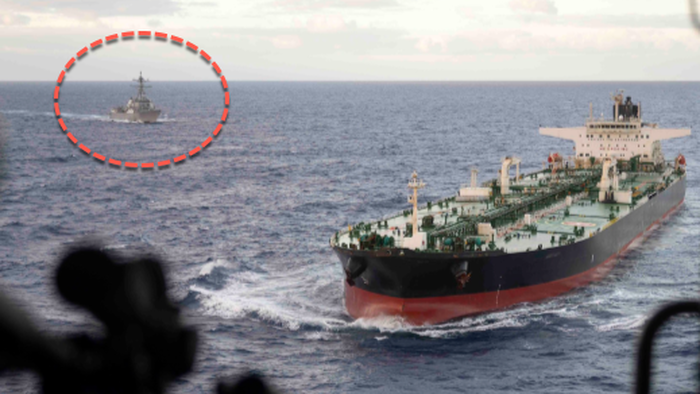
In a bold escalation of his administration's campaign against Venezuela's illicit oil trade, U.S. naval forces in coordination with Indian authorities have interdicted a tanker in the Indian Ocean suspected of carrying sanctioned Venezuelan crude. The operation, which occurred late last week near the Maldives, marks the first known enforcement action outside the Western Hemisphere under President Trump's intensified tanker crackdown, signaling a global reach to the shadowy fleet evading U.S. sanctions.
The vessel, identified as the Petro Liberty, a Liberia-flagged supertanker, was boarded by a joint U.S.-Indian team after intelligence linked it to Venezuela's state-owned PDVSA. Satellite tracking and U.S. Treasury data revealed the ship had loaded heavy crude at Venezuela's Jose terminal before embarking on a circuitous route through the Panama Canal, across the Pacific, and into the Indian Ocean—likely bound for buyers in Asia hungry for discounted oil. Officials confirmed the tanker was using deceptive practices, including AIS spoofing and ship-to-ship transfers, hallmarks of the "dark fleet" that has proliferated since sanctions tightened under Trump.
This interdiction builds on a series of high-seas seizures that began in Trump's first term but have surged since his 2025 return to the White House. In recent months, U.S. Coast Guard and Navy assets have detained over a dozen tankers in the Caribbean and Gulf of Mexico, crippling Maduro's regime by slashing its primary revenue stream. The pivot to the Indian Ocean reflects deepening U.S.-India strategic ties under the Quad framework, with New Delhi viewing the action as a counter to China's reliance on Venezuelan oil imports, which have quietly doubled despite sanctions.
Experts hail the move as a masterstroke in economic warfare, underscoring Trump's "maximum pressure" doctrine against adversaries like Venezuela, Iran, and their enablers. "By going global, the U.S. is closing the loopholes that allowed Maduro to fund his repression," said energy analyst Dr. Elena Vasquez of the Atlantic Council. Yet, the operation has drawn sharp rebukes from Caracas, which branded it "piracy," and Beijing, whose state media accused Washington of disrupting "free trade." Iran, a frequent partner in Venezuela's shadow shipping, issued a veiled warning of retaliation.
As the Petro Liberty's cargo—estimated at 2 million barrels worth $150 million—is offloaded for legal disposition, the message is clear: no ocean is safe for sanction-busters. With global oil markets already strained by OPEC+ cuts and Middle East tensions, Trump's crackdown could accelerate Venezuela's collapse or force a diplomatic pivot, reshaping alliances in a multipolar world where energy security reigns supreme.
