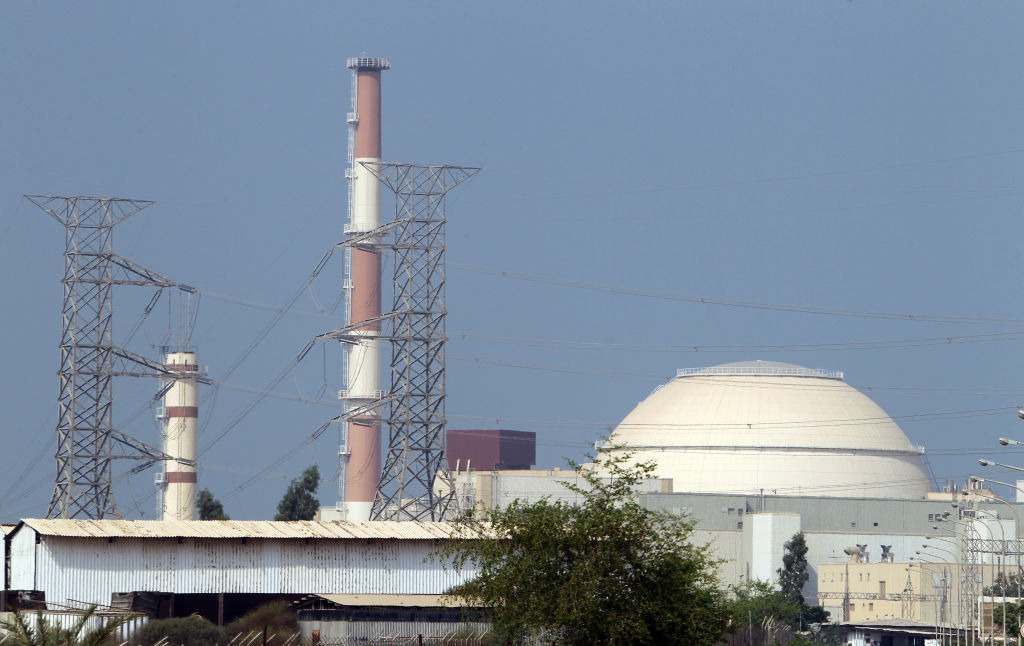
The Iranian regime's core is still rooted in anti-Americanism, anti-Semitism, and systematically controlling and destabilizing the region. None of its defining pillars have changed. Any deal with such a system will not transform it — just offer it enough relief to allow it to rearm before returning with renewed strength.
Although U.S. and Israeli strikes in June 2025 significantly degraded Iran's military capabilities, thenatureof Iran's regime itself -- deeply hostile toward its neighbors, Western civilization, the United States, Israel, other Muslims and even its own population —continuesto guide its actions. As the Islamic Revolutionary Guard Corps (IRGC)executesmore people and consolidates even greater power in the aftermath of its setbacks, it hasbecomeeven more ruthless.
The regime – what is left of it -- is not seeking peace. It is seeking continued rule, breathing room and money. Economically strained and increasinglyconcernedabout internal unrest, Iran's leadership views negotiations merely as a tactical pause.
Any agreement that would allow Iran a multi-year "moratorium" towards enriching uranium again would erase everything that President Donald J. Trump has so brilliantly and historically accomplished. Any "moratorium" is essentially no different from the catastrophic "sunset clauses" in President Barack H. Obama's 2015 JCPOA "nuclear deal" – a short delay that will correctly be taken as a green light inviting Iran to resume enriching uranium for nuclear weapons.
Politically, such a policy would be devastating for Trump. He would immediately be seen as the negotiating partner who desperately wanted a deal -- any deal -- just to declare victory and announce that he had "won." If there is a "moratorium" even for 100 years, it is Iran that will have won.
Equally, any agreement that would lift sanctions or allow oil revenues to flow again would provide the regime with precisely what it needs: time to recover, rebuild militarily, and resume brutalizing its citizens, its neighbors, the region and the United States
As long as Iran's foundational policies — rooted in anti-Americanism and hostility toward the West — remain intact, no deal has proven capable of transforming its conduct. On thecontrary, previous deals have enabled the regime to strengthen its position, channel more funding and weapons to its proxy networks, and deepen its regional influence rather than moderate it.
The regime, in addition, understands political cycles in the United States. It can agree to terms temporarily — two or three years, if necessary — while quietly waiting for a shift in leadership in Washington. Once that shift occurs, it has usually felt free to abandon commitments and resume its previous trajectory. Agreements are treated as tools of convenience, not binding obligations.
At the same time, the regime's support for militant proxies remains intact, and itsposturetoward neighboring countries is aggressive and interventionist.
Inside Iran, there are stillreportsof repression, restrictions on internet access, and crackdowns on dissent complete with torture, forced confessions and executions (here,hereandhere). Why would a government that brutalizes its own citizens treat anyone else any better?
Source: Gatestone Institute :: Articles
