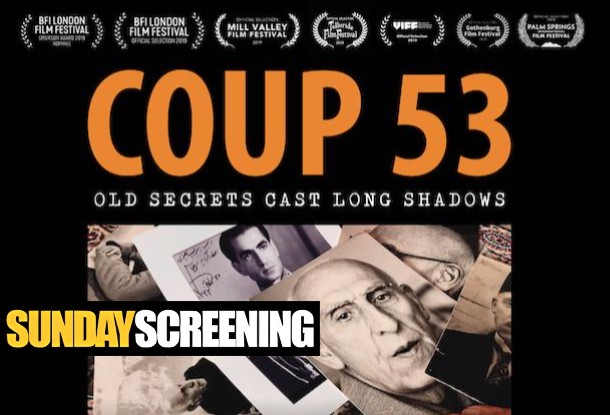
In a riveting Sunday screening highlight, the 2019 investigative documentary Coup 53 peels back the layers of a long-suppressed chapter in modern history: Operation Ajax, the CIA and MI6-orchestrated coup that toppled Iran's democratically elected Prime Minister Mohammad Mossadegh in August 1953. Curated as a weekly feature, this film delivers a political thriller packed with revelations that challenge official narratives of the era.
The documentary uncovers never-before-seen archival footage and declassified documents that had been buried for over six decades, providing fresh evidence of the covert operation's mechanics. At its core is the explosive testimony of MI6 agent Norman Darbyshire, who secretly confessed to his pivotal role in plotting the coup, thereby exposing Britain's long-denied central involvement alongside the CIA.
Mohammad Mossadegh, Iran's prime minister at the time, became the target of this regime change effort driven by oil interests and Cold War paranoia. The overthrow, executed in Tehran during that fateful summer of 1953, marked a dramatic shift in the nation's trajectory, replacing democratic leadership with forces aligned with Western powers.
What unfolds in Coup 53 is not just historical recounting but a gripping narrative that traces the coup's immediate execution and its far-reaching consequences. The film illustrates how the events of August 1953 ignited decades of regional instability, fundamentally shaping the strained relationship between Iran and the West that persists to this day.
Directed and written by Taghi Amirani, with co-writing credits to Walter Murch, the film was produced by Paul Zaentz and Taghi Amirani. Clocking in at a taut 1 hour and 59 minutes, it masterfully blends archival material with personal admissions to create an unmissable viewing experience for those interested in the underbelly of international intrigue.
For viewers seeking deeper context on Iran's modern history, the documentary serves as an entry point into broader discussions on geopolitical machinations. Its release of hidden materials underscores the power of persistent investigation in reclaiming obscured truths from the shadows of state secrecy.
