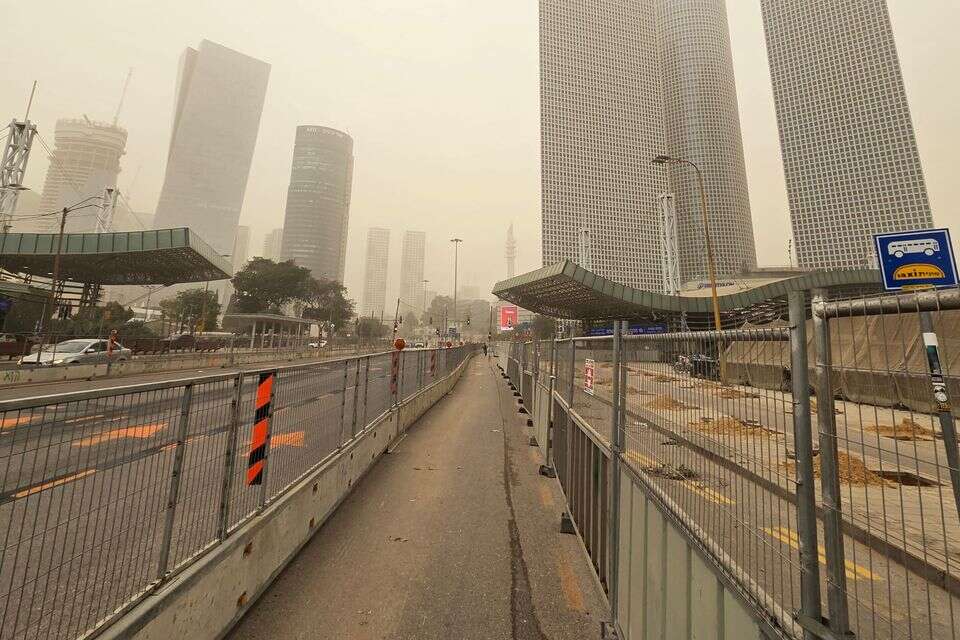
In recent days, many Israelis have noticed grayish skies, reduced visibility, a sense of "heavy air," and occasional burning sensations in the throat and eyes, all without needing an app to confirm it. According to updates from the Ministry of Health and the Ministry of Environmental Protection, these conditions stem from a surge in concentrations of respirable particles, or dust, resulting in high and sometimes very high air pollution levels that demand caution, particularly for sensitive populations. Weather forecasts have also reported a wave of dust and haze blanketing extensive areas across the country.
This haze is far more than a mere inconvenience for balcony photos; it alters the composition of air inhaled with every breath, making it a critical health concern rather than just a weather phenomenon.
Haze in Israel frequently originates from desert dust carried by winds from North Africa. When these particle clouds arrive, they elevate levels of PM10 and sometimes PM2.5—tiny particles that penetrate the respiratory system. Even though the source may be "natural" in dust events, the health effects can be substantial, especially when the dust mixes with everyday urban pollution from traffic, industry, and local fires.
Government offices explain that such events involve measured increases in respirable particle concentrations, with "haze waves" sometimes lasting one or two days or even longer, depending on meteorological conditions.
The primary issue lies in particle size: respirable particles are not simply trapped in the nose and throat. Many penetrate deep into the lungs, and in some cases, trigger an inflammatory response that strains both the respiratory system and the cardiovascular system. This goes beyond fleeting discomfort.
During days of haze and particle pollution, people commonly experience symptoms such as burning in the throat and eyes, alongside the visible signs of gray skies and low visibility.