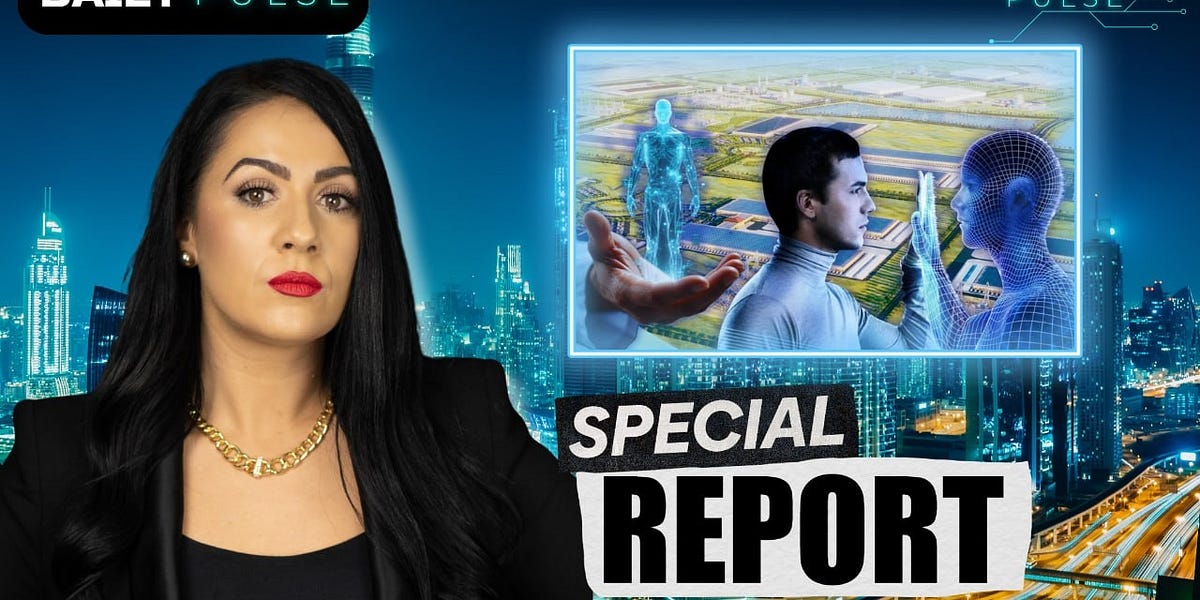
The same question gets asked every time another massive AI data center is announced:what exactly are they building this for?
Most people are just using AI to search the internet faster, summarize emails, or generate memes. Yet governments and corporations are racing to build infrastructure that consumes staggering amounts of land, energy, water, and computing power, as if the future depends on it.
The official explanation doesn’t seem proportional to the scale of what’s being built. And once you watchMaria Zeeeconnect the dots onDigital Twins, it all starts to make sense…
People already know they’re being tracked.
Your searches, your location, your purchases, your viewing habits, even the amount of time you stop on a video, all of it is constantly being collected. But Maria Zeee’s new report highlights something much bigger than ordinary surveillance:the creation of a digital version of society itself.
The report points to the Department of Energy’s new“Genesis Mission,”designed to accelerate the AI computing revolution. Maria immediately noted the symbolism. Genesis is the story of creation, and critics believe these systems are moving toward recreating human behavior inside centralized AI networks.
Digital Twinsare publicly marketed as tools for engineering, infrastructure, and disaster prevention. The concern begins when the technology shifts from modeling bridges and cities to modeling people themselves, including their habits, routines, movements, preferences, and decisions.
Maria described futurists openly discussing a world where physical interaction becomes less necessary, where you “hug” family members through holograms while embedded technology simulates touch itself.
Once behavior, movement, emotion, and interaction are being mapped in real time, the technology stops feeling like a simple convenience tool.
Maria tied Digital Twins directly into the wider infrastructure already being built aroundsmart cities, CBDCs, AI surveillance, climate systems, and digital ID.
Source: The Vigilant Fox
