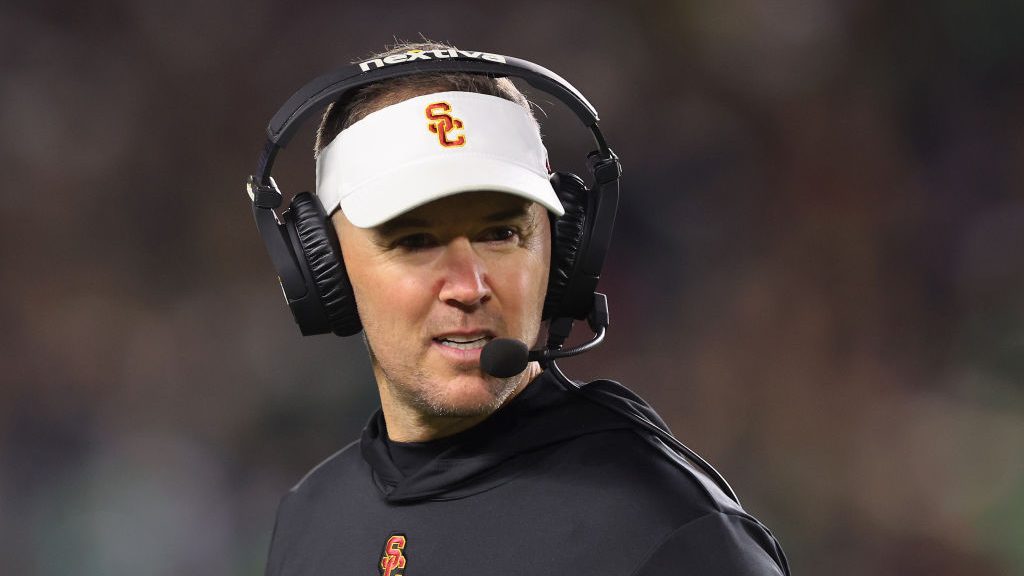
USC Trojans head coach Lincoln Riley has ignited fresh debate in college football by declaring that two conferences have clearly separated themselves from the rest of the sport, emphasizing their tougher schedules. In comments amid ongoing discussions about the future of the game, Riley stated that "everybody knows" these conferences stand apart, playing the most challenging slate of opponents.
College football remains embroiled in heated debates over critical issues, including the composition of the College Football Playoff field. Questions persist about the ideal number of teams, whether Group of 5 conferences deserve guaranteed spots, or if they should be capped at one to prevent scenarios like the 2025-2026 season, where two G5 teams earned berths in the 12-team playoff.
Conversations also swirl around which conference reigns supreme, the value of strength of schedule in team evaluations and rankings, and even the relevance of preseason polls. Riley's pointed remarks add fuel to these discussions, highlighting how schedule difficulty could define conference hierarchies in the evolving landscape of the sport.
The USC coach's perspective comes as prominent voices, such as ESPN's Kirk Herbstreit, advocate for dramatic changes. Herbstreit has proposed that the Power 4 conferences break away entirely from Group of 5 schools to form a new league, underscoring growing tensions between tiers of college football.
Riley's assertion that two conferences have "separated themselves" by embracing tougher schedules aligns with broader scrutiny of competitive balance. As debates intensify over the sport's structure, his comments from the sidelines of USC Trojans practices spotlight the premium placed on rigorous non-conference and crossover matchups.
Amid these high-stakes conversations, lighter quirks of the game—like Texas A&M's male cheerleaders and their elaborate hand motions—provide brief levity, but they do little to distract from the serious questions about conference realignments and playoff equity facing college football's power brokers.
With the 2025-2026 playoff edition fresh in memory, Riley's bold take serves as a rallying cry for recognizing superior scheduling ambition, potentially influencing future discussions on playoff access and conference prestige as the sport hurtles toward further transformation.
