An outbreak of Hantavirus on board a Dutch luxury cruise ship in the South Atlantic has left three passengers dead, sparked quarantines in at least five US states and prompted a hesitant response from President Donald Trump, who told reporters in Washington that he 'hopes' Americans will not need to worry about the virus spreading.
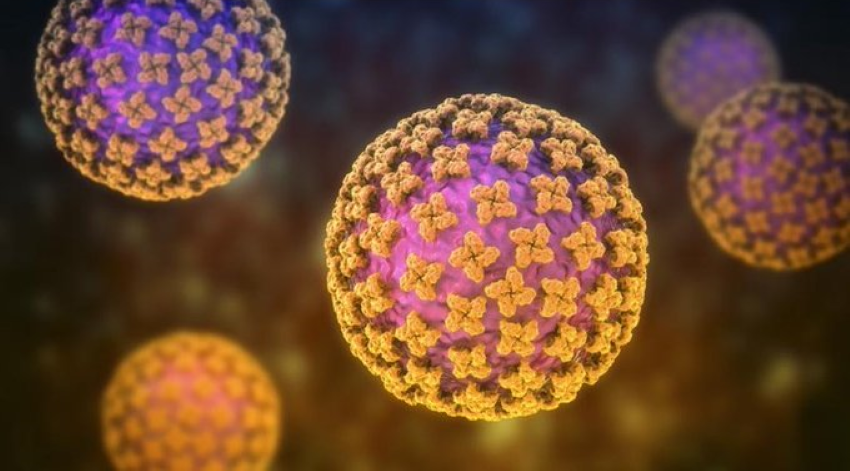
Hantavirusis a rodent-borne infection that can cause severe respiratory illness and, in some cases, rapid organ failure. It rarely makes global headlines, but this time it has arrived via a cruise liner that disembarked passengers in multiple countries. Health agencies across North America, Europe, and Africa are now scrambling to trace travellers who may have been exposed before the scale of the outbreak became clear.
Trump on Hantavirus: We should be fine.Reporter: Should Americans be concerned that it’s going to spread?Trump: I hope not.pic.twitter.com/dks4sTZRDT
The latest concern over Hantavirus is not just about the pathogen itself, but also about who is shaping the public message. Asked at the White House whether Americans should be worried, Trump replied: 'I hope not.' It was hardly the sort of clear reassurance that infectious disease specialists tend to favour.
ABC News correspondent Karen Travers pressed him on what exactly he had been told about the Hantavirus outbreak. Trump said the situation was 'very much we hope under control,' describing it as an incident 'on the ship' and promising 'a full report' the following day. He pointed to 'a lot of great people' studying the problem and added: 'It should be fine. We hope.'
The language is familiar. During the early months of COVID-19, Trump repeatedly downplayed the risk and later triggered outrage from doctors and scientists after suggesting disinfectant could be injected as a treatment. That history inevitably colours how his latest remarks on Hantavirus are heard, particularly when the facts emerging from the South Atlantic cruise do not sit neatly with the idea of a contained, passing scare.
According to theDaily Mail, at least six American passengers left the cruise ship on 24 April on the remote island of St Helena, roughly two weeks after the first death on board. By that point, the virus was already circulating among those on the vessel. Three people have now died after falling ill on the cruise, and another remains in intensive care in South Africa.
Five US states, Virginia, Texas, California, Arizona and Georgia, are understood to have former passengers from the ship under quarantine after the Hantavirus outbreak. Authorities have not yet detailed how many people are being monitored in each state, nor how long they will be required to isolate, but the cross-country spread illustrates how quickly a single maritime incident can turn into a multinational public health exercise.
Worryingly for contact tracers, there is already evidence that the virus may have jumped beyond the original passenger list. A French citizen has beenplaced in isolationwith what officials describe as 'benign symptoms' after being identified as a contact of a cruise passenger who travelled from St Helena to Johannesburg on 25 April and later tested positive for Hantavirus, according to France's Health Ministry. The ministry said the individual is undergoing medical testing while doctors determine whether they have contracted the virus.
In the Netherlands, a flight attendant has been admitted to the hospital after coming into contact with a cruise passenger on a flight to Amsterdam. Local health services have not publicly confirmed the person's diagnosis. If either of these secondary cases is confirmed, it would underscore that the outbreak is no longer confined to those physically on the ship.
Source: International Business Times UK
