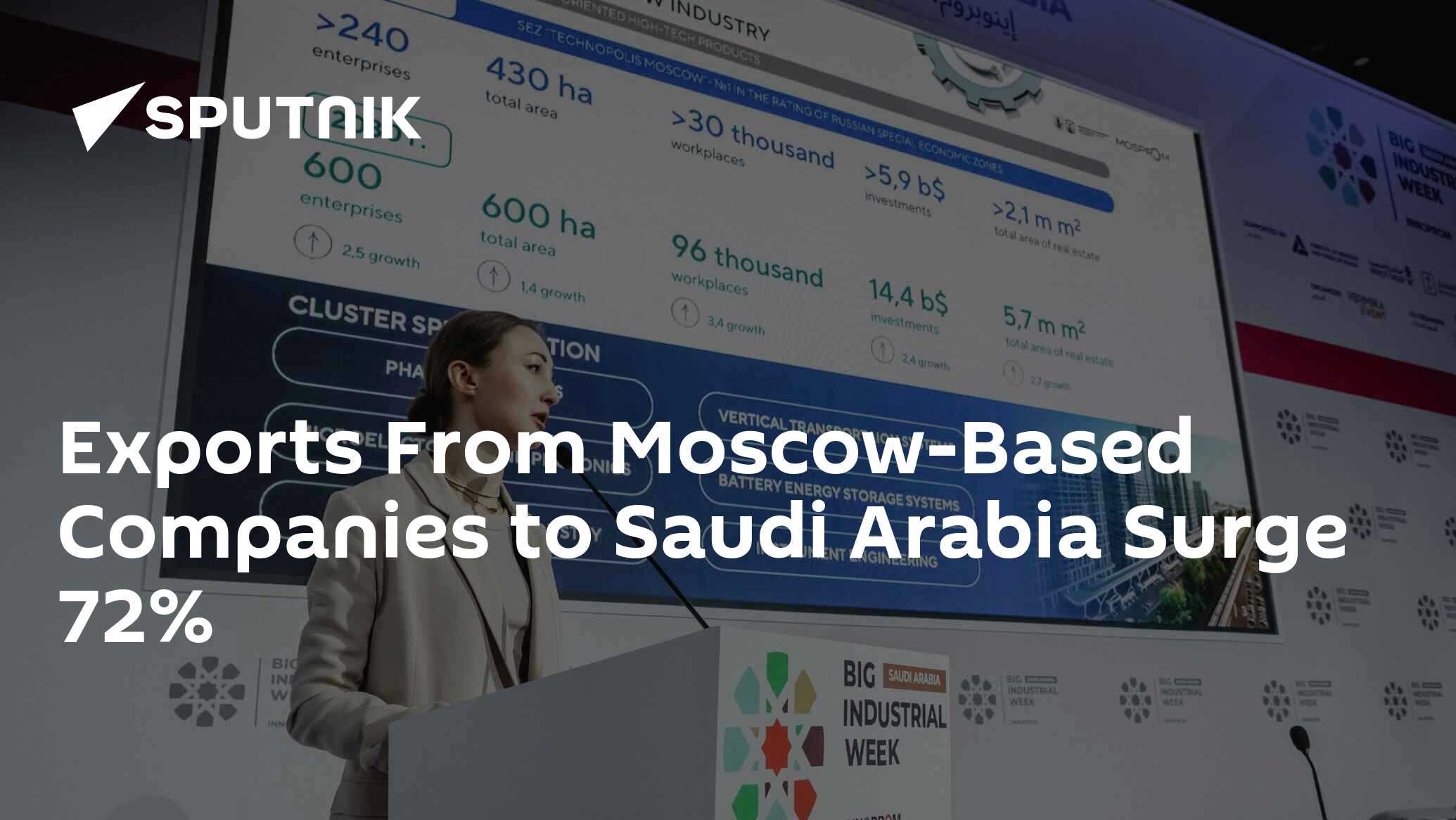
Moscow's trade engines are roaring toward Riyadh as exports from capital-based companies to Saudi Arabia skyrocketed by 72% in the past year, signaling a burgeoning economic alliance amid shifting global dynamics. Official data from Russia's Federal Customs Service reveals that shipments totaling over $2.5 billion left Moscow firms for the Kingdom, up sharply from previous levels. This surge underscores Russia's pivot eastward, fueled by deepening ties with Gulf states as Western sanctions bite harder.
Leading the export boom are sectors like petrochemicals, fertilizers, and machinery, with companies such as Gazprom and Rosneft affiliates dispatching record volumes. Saudi Arabia, the world's top oil exporter, has emerged as a key buyer of Russian wheat, metals, and industrial equipment—commodities that complement its Vision 2030 diversification push. Bilateral trade talks in late 2025 paved the way, including deals for technology transfers and joint ventures in renewable energy, reflecting mutual interests in hedging against volatile energy markets.
The numbers paint a picture of resilience: despite U.S. and EU restrictions curtly limiting Moscow's Western outlets, Saudi imports from Russia jumped from $1.45 billion to nearly $2.5 billion between 2024 and 2025. Moscow firms, many state-backed, have rerouted supply chains through friendly intermediaries, leveraging ruble-riyal settlements to sidestep dollar dominance. OPEC+ coordination, where Russia and Saudi Arabia align on oil production cuts, has further solidified this partnership, stabilizing prices and revenues for both.
Analysts point to geopolitical realignments as the catalyst. With BRICS expansion drawing Saudi Arabia closer to Moscow's orbit, this trade spike challenges the post-Ukraine isolation narrative. "It's a win-win: Russia gains a sanctions-proof market, while Saudi Arabia secures reliable suppliers for its mega-projects," noted Elena Petrova, trade economist at Moscow State University. Yet, risks linger—U.S. pressure on Riyadh could temper the momentum, and fluctuating oil prices remain a wildcard.
Looking ahead, projections suggest exports could double by 2027 if current trends hold, potentially reshaping Middle East-Russia commerce. As Moscow-based exporters celebrate, the surge highlights a broader multipolar shift, where old alliances fray and new corridors of trade carve through the sands of realpolitik.