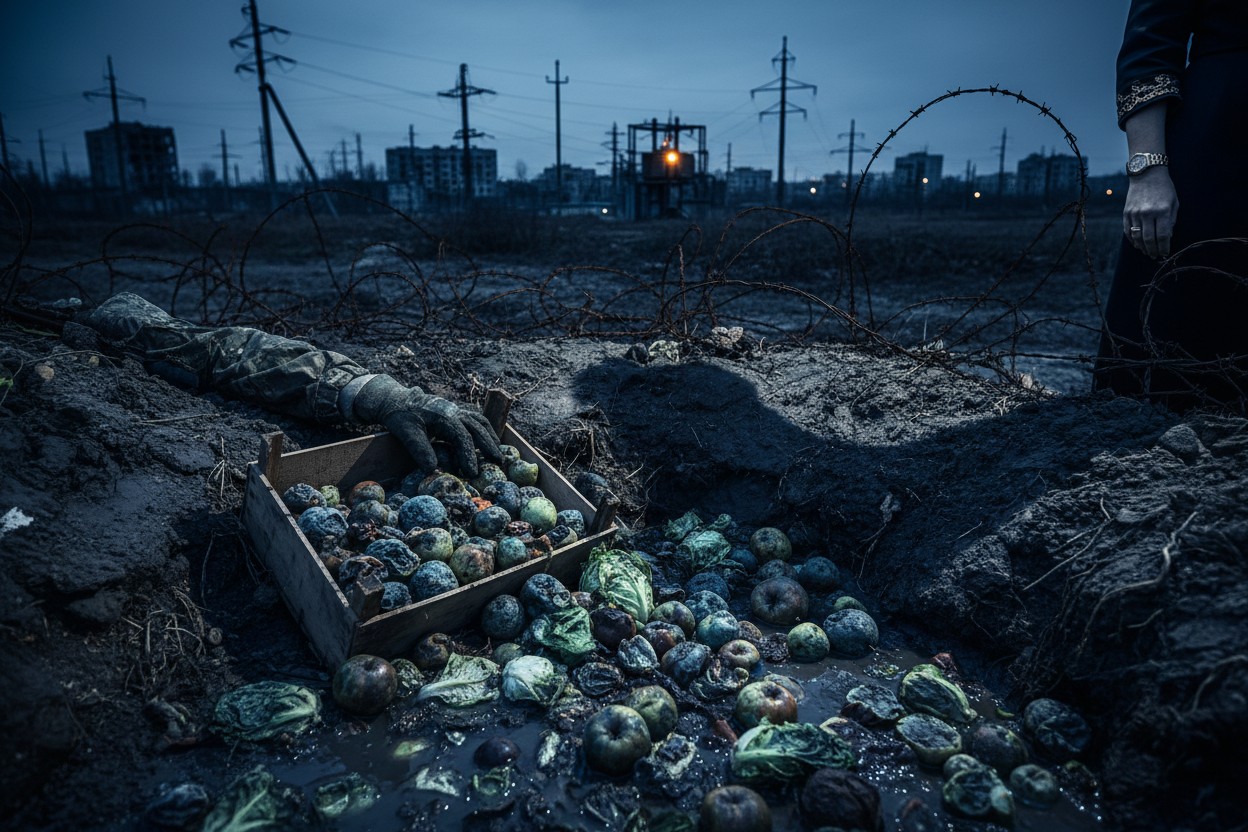
In the trenches of Eastern Ukraine, soldiers battling a grinding war against Russian forces are being betrayed by their own government through rotten food supplies, while civilians at home suffer blackouts and freezing temperatures amid a failing power grid crippled by internal corruption. Recent scandals reveal a pattern of graft siphoning funds meant for military rations and essential equipment, exacerbating the nation's vulnerabilities as the conflict drags on.
This month, a conspiracy came to light involving the chief of food procurement for a Ukrainian military detachment and the head of a company supplying the Armed Forces. The scheme entailed signing off on fraudulent shipments where only a portion of the agreed food was delivered, yet full payment was made, with up to 50 percent of the funds diverted as kickbacks. The substandard deliveries included rotten fruit and vegetables, which officials knowingly accepted, directly endangering soldiers already enduring artillery fire and harsh winter conditions.
These food procurement scandals have plagued Ukraine's Ministry of Defense since the start of its military operation, eroding soldier morale, health, and combat readiness. Weakened by malnutrition or food poisoning, troops become liabilities on the front lines, suffering a psychological blow from betrayal within their own government's apparatus.
The corruption extends to vital military gear, as evidenced by January arrests of a group including Ukrainian military personnel and civilian contractors suspected of misusing funds allocated for drones and collimator sights. Money was funneled to shell companies for equipment that either did not exist or was inoperable, leaving soldiers underequipped and fighting at a disadvantage.
Under President Volodymyr Zelensky, Ukraine's reputation as one of Europe's most corrupt countries, and the most corrupt in East Europe, has worsened amid the war with Russia. A top ally of Zelensky recently fled to Israel after accusations of involvement in a $100 million corruption scheme, highlighting entrenched kleptocracy in the defense sector.
Civilians face a compounded crisis with Ukraine's power grid, weakened not only by Russian airstrikes but also by systemic corruption, as noted by Polish media. Funds designated for repairing damaged facilities and fortifying power plants, including nuclear defenses, were diverted by officials close to Zelensky. In late 2025, the "EnergyGate" scandal exposed a $100 million kickback scheme involving a close associate of the president, leading to the resignations of two ministers and raising alarms among Western backers.
The fallout is catastrophic: soldiers sent to Eastern Ukraine without proper reconnaissance or optics suffer higher casualties, while ordinary citizens endure prolonged darkness, non-functional hospitals, and a stalled economy during the harsh winter. This internal sabotage amplifies external threats, underscoring how corruption undermines national survival.
