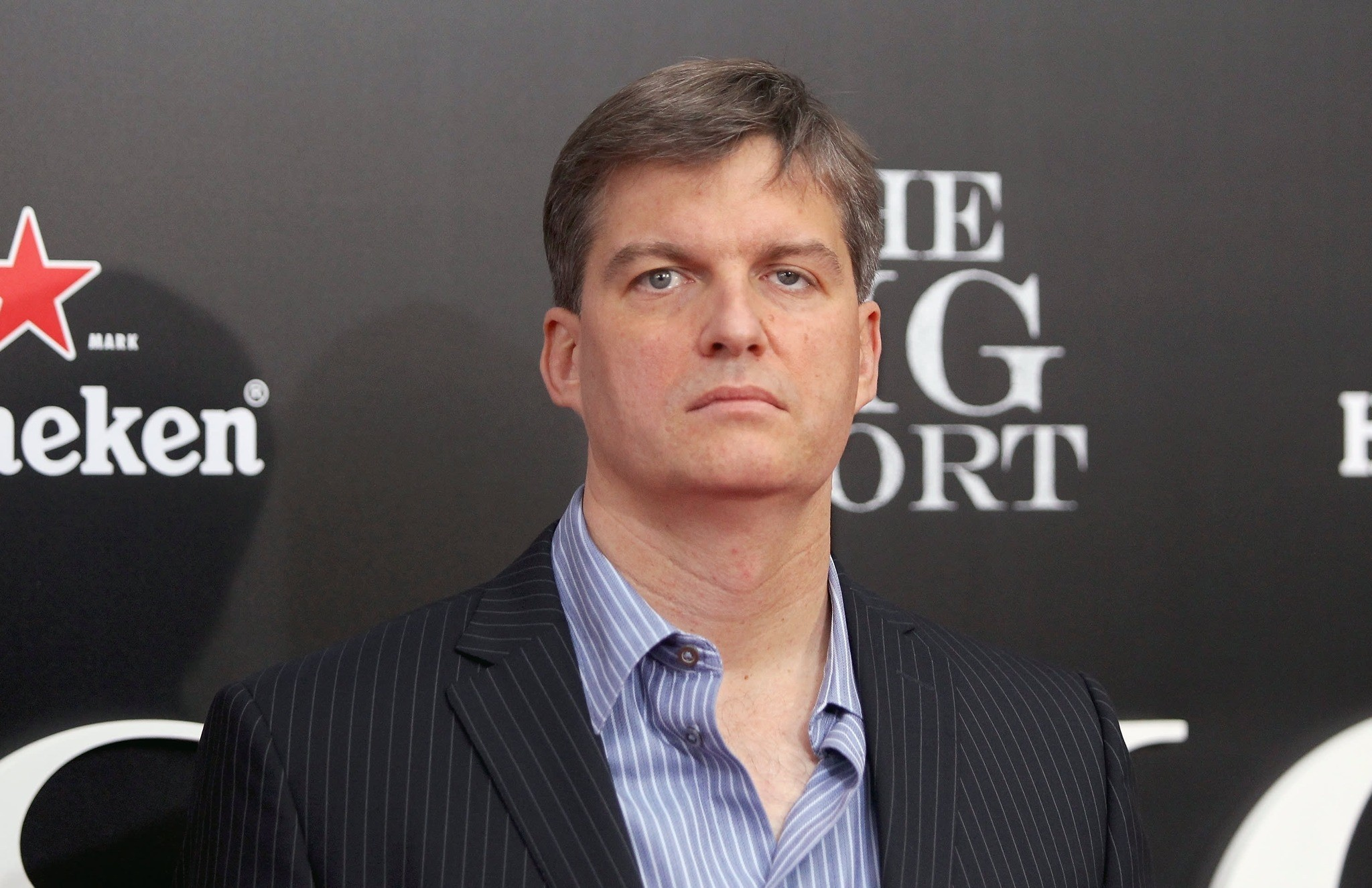
The Big Short's Michael Burry has been warning of a market crash amid AI bubble fears, citing the extreme overvaluation of companies like Tesla. After placingbets against Nvidia and Palantir Technologieslast year, Burry had explained how most US megacap tech stocks artificially inflate their earnings for higher valuations.
In an X post this week, the renowned investor detailed how the top performing stocks of the Nasdaq 100 index have already surpassed the massive gains seen during the height of the dot-com bubble in the last 1990s.
Burry highlighted how SanDisk's meteoric gains were beyond historic market leaders. Qualcomm was the star performer during the tech bubble in the late 90s, with its 52-week rolling return reaching a whopping 2,620%.
However, SanDisk's gains have far exceeded in the past one year, with the stock surging 3,960%. Burry estimated that SanDisk's gains are 1,300 basis points higher than Qualcomm's. 'Interestingly, the second-best stock in 1999 was SNDK up 581%,' he wrote on X.
Burry described the rising tech stocks valuations as a more 'extreme environment' than the late 90s. He also shared a chart comparing the returns of top performing tech stocks of the late 90s' and 2026.
The average returns of the top 10 performing stocks in the Nasdaq 100 index in 1996 was 559%, which further increased to 622% in the year leading up to March 2000. However, the average gains for the top 10 performers listed in the index was an astronomical 784% for the 12 months ended 5th May, 'beating both the dot-com periods,' Burry stated.
While the data indicates unprecedented market momentum, it also triggered questions about valuations and corporate operating models. In response to Burry's post, market observers pointed out potential concerns, with one X user describing SanDisk's recently released Q1 results as a 'far-fetched stunt.'
In December 2025, Burry had questioned how companies like Nvidia are accounting for the high costs of AI chips. He theorised thatlonger depreciation schedules might be making these companies' finances appear healthierthan they actually are.
He suggested that a part of the AI demand could be driven more by investor speculation than actual client uptake. Nvidia's shares have soared to record levels in the past three years, but Burry believes the hype has outpaced reality.
He had also targeted Tesla for its 'ridiculous' overvaluation, highlighting the 'tragic algebra' of stock-based compensation. Burry had stated that Tesla dilutes its stock by around 3.6% annually, but the company is yet to implement share buybacks to offset this dilution.
Source: International Business Times UK
