Authored by Michael Snyder via The Economic Collapse blog,
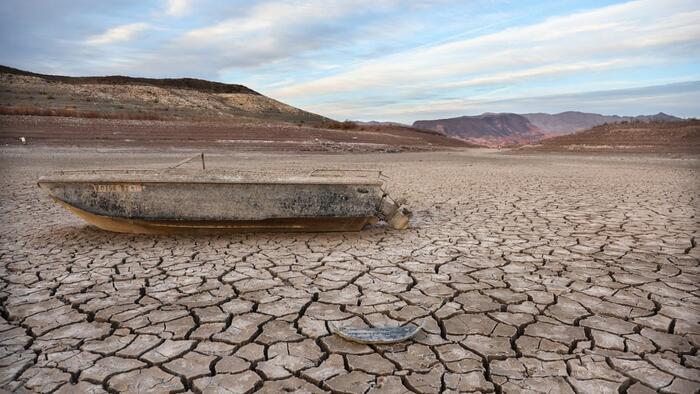
January, February and March were insanely dry. In fact, in all of U.S. history conditions have never been so dry during the first three months of the year. Just think about that for a moment. Not even during the Dust Bowl days of the 1930s were conditions this dry. Many were hoping that 2026 would be the year when our multi-year drought would finally break. Needless to say, that hasn’t happened. Scientists are telling us that the southwestern U.S. is in the midst of the worst multi-year drought in at least 1,200 years. We really are experiencing a “megadrought”, and this is something that experts such as Steve Quayle and Dane Wigington have been talking about for a long time.Unfortunately, it appears that our seemingly endless “megadrought” has gone to an entirely new level in 2026.
If it simply doesn’t rain, there is not much that farmers and ranchers can do.
Right now approximately 63 percent of the continental United States is experiencing at least some level of drought, and the first quarter of this yearwas one for the record books…
Winter wheat is dying in Kansas fields that should be green by now. Ranchers in New Mexico are selling cattle they cannot afford to feed. Reservoir levels along the Colorado River system are dropping weeks ahead of the season when mountain snowmelt is supposed to refill them. Across roughly 63% of the contiguous United States, drought rated moderate to exceptional on the federal scale has taken hold, and the first three months of 2026 were the driest the nation has recorded in 131 years of continuous measurement.
It appears that the winter wheat crop in the U.S. is going to be a disaster.
At this stage,more than 81 percentof the Southern Plains is experiencing drought…
Heading into the harvesting season for the key winter wheat crop, much of the western side of the U.S. Plains are locked in drought. Over 81% of Southern Plains is experiencing some form of drought, according to the latest data from the U.S. Drought Monitor. Nearly 20% of the region is experiencing either “extreme” or “exceptional” drought.
Only 30% of U.S. winter wheat is in either good or excellent condition as of the start of this week, according to the most recent weekly Crop Progress report from the Department of Agriculture. By comparison, 49% of the crop was good-or-excellent at this point last year.
The situation is particularly dire in the state of Oklahoma.
Source: ZeroHedge News
