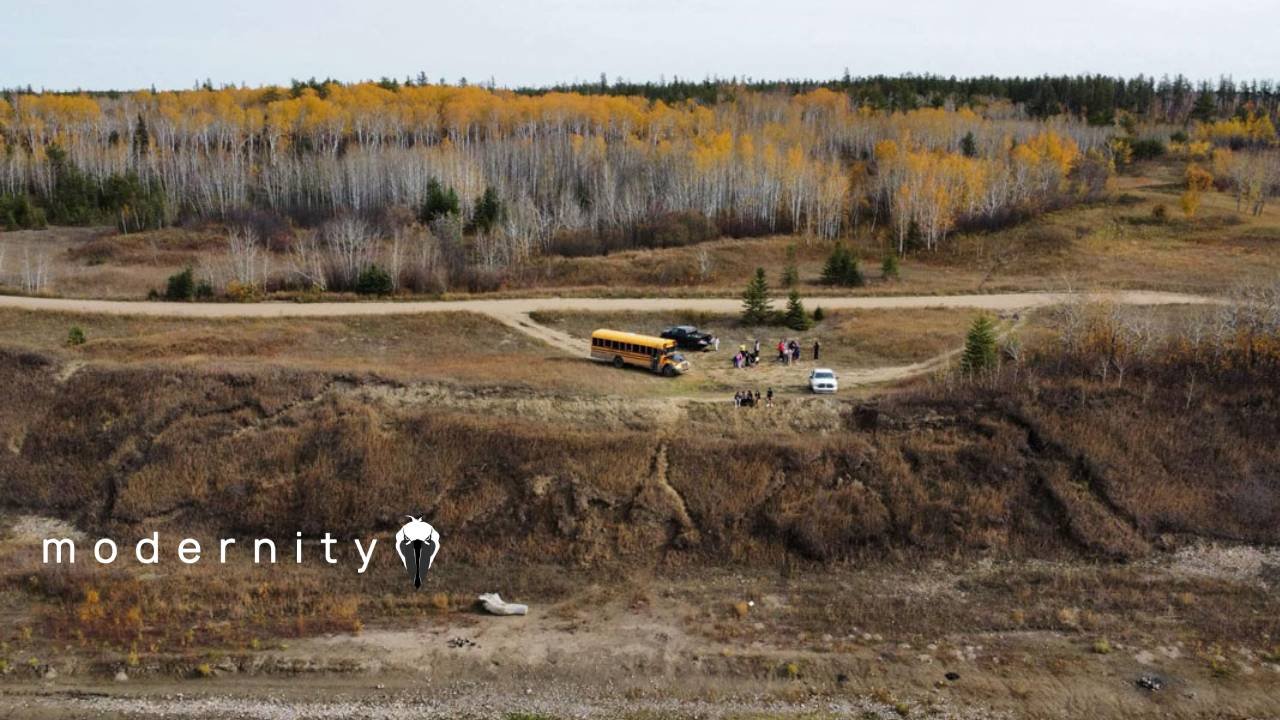
An ancient Indigenous settlement unearthed near Sturgeon Lake in Saskatchewan is challenging long-held views about early human presence in North America.
Dating to around 11,000 years ago and predating Egypt’s Great Pyramid by more than 6,000 years, according to the official timeline, the site provides evidence of long-term habitation rather than temporary camps.
Archaeologists working with Sturgeon Lake First Nationuncovered stone tools, fire pits, toolmaking materials, and remains of the extinct Bison antiquus. Charcoal layers point to controlled fire management, aligning with oral traditions. The findings suggest a sophisticated society with advanced hunting strategies, including buffalo jumps.
Experts found a Native American settlement older than the pyramids…North America’s earliest inhabitants formed stable communities far earlier than previously believed.Archaeologists working near Sturgeon Lake in Saskatchewan have unearthed evidence of a sophisticated…pic.twitter.com/8kh38Cklrf
The site, known as Âsowanânihk (“a place to cross” in Cree), lies about five kilometres north of Prince Albert along the North Saskatchewan River. It was first spotted by avocational archaeologist Dave Rondeau through riverbank erosion exposing artifacts.
Rondeau said: “The moment I saw the layers of history peeking through the soil, I felt the weight of generations staring back at me. Now that the evidence has proven my first instincts, this site is shaking up everything we thought we knew and could change the narrative of early Indigenous civilizations in North America.”
Dr. Glenn Stuart of the University of Saskatchewan added: “This discovery challenges the outdated idea that early Indigenous peoples were solely nomadic. The evidence of long-term settlement and land stewardship suggests a deep-rooted presence. It also raises questions about the Bering Strait Theory, supporting oral histories that Indigenous communities have lived here for countless generations.”
Prehistoric settlement discovery in North America older than Egypt's Great Pyramid rewrites human historyhttps://t.co/PVQjzCRF63
Excavations indicate the location served as a hub for organized activity shortly after the last Ice Age. Researchers compare its importance to iconic global sites like the Great Pyramids, Stonehenge, and Göbekli Tepe.
The discovery includes evidence of bison pounds and kill sites, with hunters targeting massive Bison antiquus weighing up to 4,400 pounds. This points to coordinated community efforts and deep environmental knowledge.
Source: modernity
