Authored by Haley Zaremba via OilPrice.com,
The final components of ITER's central solenoid magnet -- a 59-foot, 3,000-tonne superconducting system 15 years in the making -- have arrived in France, clearing a major path toward first plasma.
ITER will never supply electricity to the grid; it exists purely as a research tool, and at €22 billion and counting, it's still years from achieving its primary milestone.
A wave of well-funded private fusion startups is on track to hit the same technical benchmarks as ITER faster and more cheaply -- raising real questions about the megaproject's relevance even as it celebrates progress.
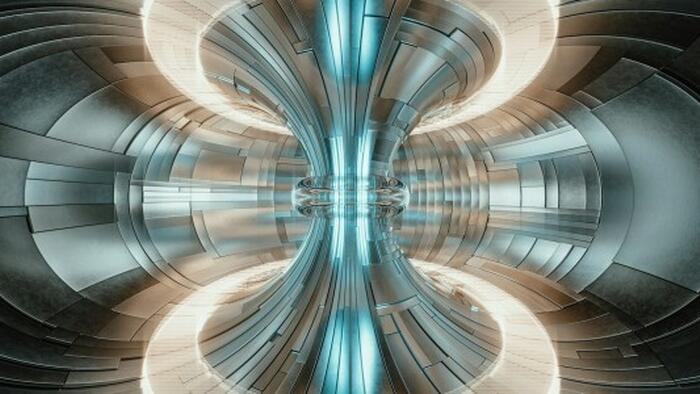
The world's biggest nuclear fusion experiment just got one huge step closer to completion.The International Thermonuclear Experimental Reactor (ITER) in Cadarache, France just received the final shipment of necessary components to assemble the giant magnet at the heart of the reactor. The central solenoid magnet, developed in the United States at the Oak Ridge National Laboratory, is a critical component of the massive experimental site, which is cooperatively funded and operated by a coalition of seven major world economies: China, the European Union (EU), India, Japan, Russia, South Korea and the United States.
The central solenoid is awe-inspiring in its size as well as its capabilities.
"The central solenoid is 18 meters (59 feet) tall and 4.25 meters (14 feet) wide, composed of six individual modules," Interesting Engineeringreportedearlier this week.
"Each module weighs more than 122.5 tonnes (135 tons) and is wound from 6 kilometers (3.7 miles) of niobium-tin superconducting cable."
And this is just one component of a jaw-droppingly massive apparatus that represents "the grandest scientific experiment in the world". ITER's tokamak (the donut-shaped device designed to confine plasma with ultra-powerful magnets) measures a kilometer in length. The solenoid magnet as its core is therefore almost inconceivably powerful, and it's just one part of a much bigger and more impressive system. "This component belongs to a magnetic system weighing 3,000 tonnes (3,300 tons) that interacts with nine vacuum vessel sectors," Interesting Engineering goes on to say.
This beating heat of ITER has been 15 years in the making, with each individual module requiring a two-year process for fabrication and testing.ITER will never produce power to supply to the energy grid, but will serve as one of the most important – if notthemost important – research projects on Earth to solve the puzzle of creating commercial nuclear fusion, the holy grail of clean energy.Nuclear fusionis the energetic process that powers our own sun. Replicating that process here on Earth could essentially provide limitless clean energy. It's a potentially long-lasting, ultra-efficient energy source that leaves behind zero greenhouse gases and zero hazardous radioactive waste, unlike nuclear fission.
Source: ZeroHedge News
