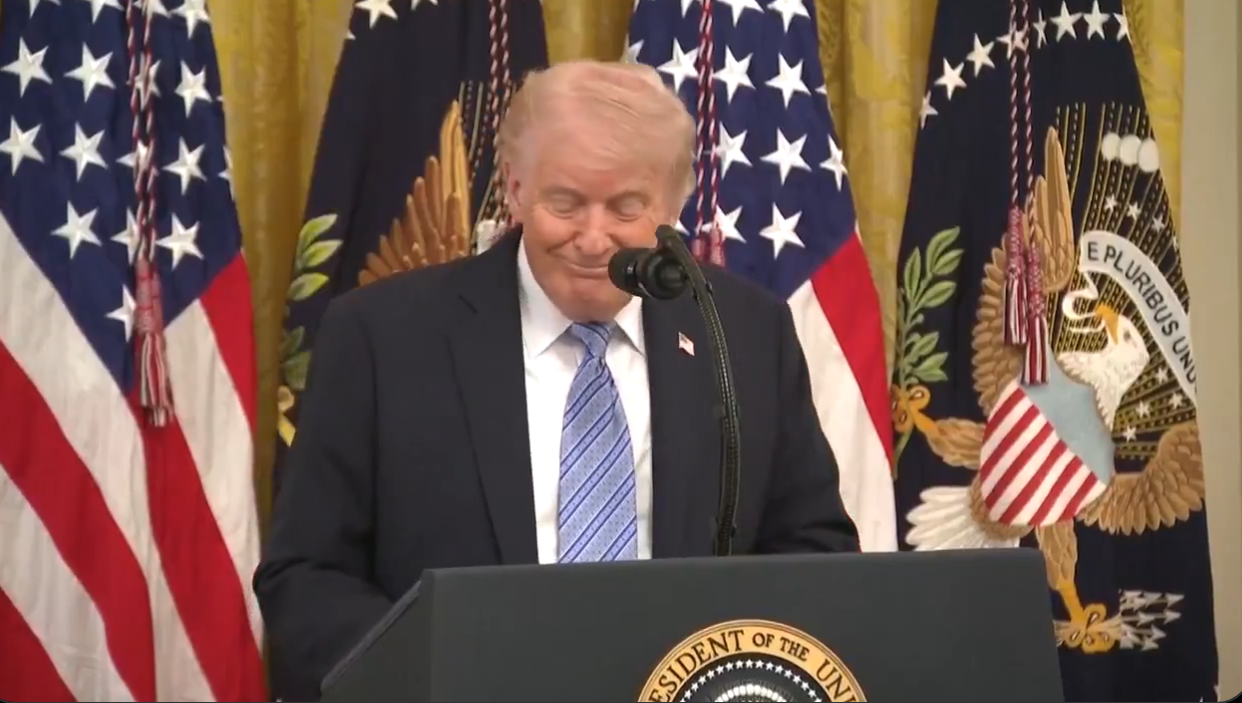
President Donald Trump said thedeadly hantavirus outbreakon the MV Hondius cruise ship 'should be fine' on Thursday, even as it emerged that his administration eliminated funding for a pilot project designed to study the very virus now killing passengers at sea.
'It's very much, we hope, under control,' Trump told reporters. 'We have a lot of people. It's a lot of great people are studying it. It should be fine.'
But scientists say the US government's ability to understand this pathogen has been weakened by the Trump administration's own decisions. In 2025, the National Institutes of Health (NIH) shut down a pilot project that was specifically studying how hantavirus passes from rodents to humans. The project was being run through the West African Centre for Emerging Infectious Diseases, one of 10 centres in the Centres for Research in Emerging Infectious Diseases (CREID) network.
TheCREID network launched in 2020with $82 million (£60.4 million) in projected funding to study viruses that could jump from animals to people. NIH had planned to renew the programme but instead issued a stop-work order in June 2025, declaring the research 'unsafe for Americans and not a good use of taxpayer funding.'
Virologists who worked with the network rejected that claim, saying there was no evidence their work posed any risk. Scott Weaver, the programme's former principal investigator and a professor at the University of Texas Medical Branch, said roughly $100,000 (£73,700) from the programme would have gone toward a hantavirus study in Argentina, where the Andes virus is endemic.
'We're not in a good position to say [hantavirus], just because it's never caused big outbreaks, doesn't have the potential to do that one day,' Weaver told Scientific American.
The outbreak on the MV Hondius has killed three people and produced at least eight cases, with five confirmed as the Andes strain. The Dutch-flagged expedition vessel departed Ushuaia, Argentina, on 1 April and is now heading toward Spain's Canary Islands with 146 passengers and crew from 23 countries still on board, including 17 Americans.
Roughly 30 passengers had already left the ship at the remote South Atlantic island of Saint Helena before the first suspected case surfaced. Former passengers from at least five US states are now being monitored by health officials. Those states include California, Arizona, Texas, Georgia, and Virginia. None of the returning travellers has shown symptoms so far.
A Dutch flight attendant who was not a passenger on the cruise is also being tested for hantavirus in the Netherlands, Dutch health officials confirmed on Thursday.
World Health Organization (WHO) Director-General Tedros Adhanom Ghebreyesusclassified the outbreak as 'serious'at a press conference on 7 May but stressed that the public health risk remains low. The Andes hantavirus does not appear to spread easily between humans, though limited person-to-person transmission has been recorded in previous outbreaks.
Source: International Business Times UK
