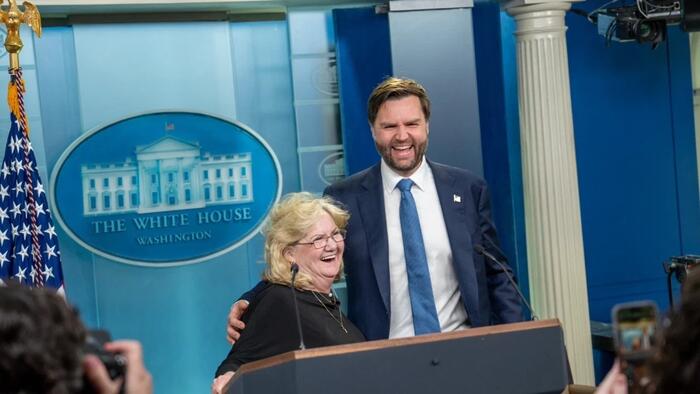
In a breathtaking escalation of personal vitriol, New York Times columnist Michelle Goldberg ignited a firestorm by suggesting that J.D. Vance's mother, Beverly Vance, should have sold her son to finance her drug addiction rather than raise him amid the chaos of her substance abuse. The remark, buried in a recent column critiquing Vance's rise to the vice presidency, drew swift condemnation from conservatives who decried it as emblematic of elite disdain for working-class struggles. Vance, whose memoir Hillbilly Elegy detailed his harrowing upbringing in Ohio's rust belt, has long portrayed his mother's addiction battles as a catalyst for his own path to the Senate and now the White House.
Goldberg's column, framed as an analysis of Vance's cultural critiques, veered into the provocative when she lamented that Beverly Vance's repeated relapses deprived society of a "cleaner" resolution. "If only she'd sold the kid off for a fix," Goldberg wrote, invoking a grim hypothetical that Vance's family interpreted as wishing harm on their vulnerable child. The Times opinion piece appeared amid heightened scrutiny of Vance following his selection as Donald Trump's 2024 running mate, with detractors mining his personal history for ammunition in the ongoing culture wars.
Vance's response was measured but pointed, issuing a statement through his team that highlighted his mother's hard-won sobriety and their reconciled bond. "My mom's fight against addiction is a story of redemption, not a punchline for coastal columnists," he said, underscoring how such narratives fueled his advocacy for Appalachia's forgotten communities. Supporters rallied online, with #StandWithBeverly trending as users shared stories of their own family battles with opioids, contrasting Goldberg's flippancy with Vance's emphasis on personal responsibility and policy reform.
The backlash extended beyond social media, prompting calls for Goldberg's resignation from prominent voices like Sen. Ted Cruz and podcaster Joe Rogan, who labeled the comment "inhuman." Critics argued it revealed a deeper media bias, where empathy evaporates for those outside progressive orthodoxy. The New York Times defended the column as "satirical hyperbole" in an editor's note, but the incident has amplified debates over journalistic ethics in polarized times, especially as Vance prepares to assume office in January.
Broader context reveals this as part of a pattern: Vance's unapologetic memoir has long irked the left, positioning him as a traitor to his class for critiquing welfare dependency and family breakdown. Goldberg's words, whether intentional or not, underscore the stakes in America's cultural divide, where personal tragedies become ideological weapons. As the nation braces for a Trump-Vance administration, such exchanges signal that the war of words will only intensify.