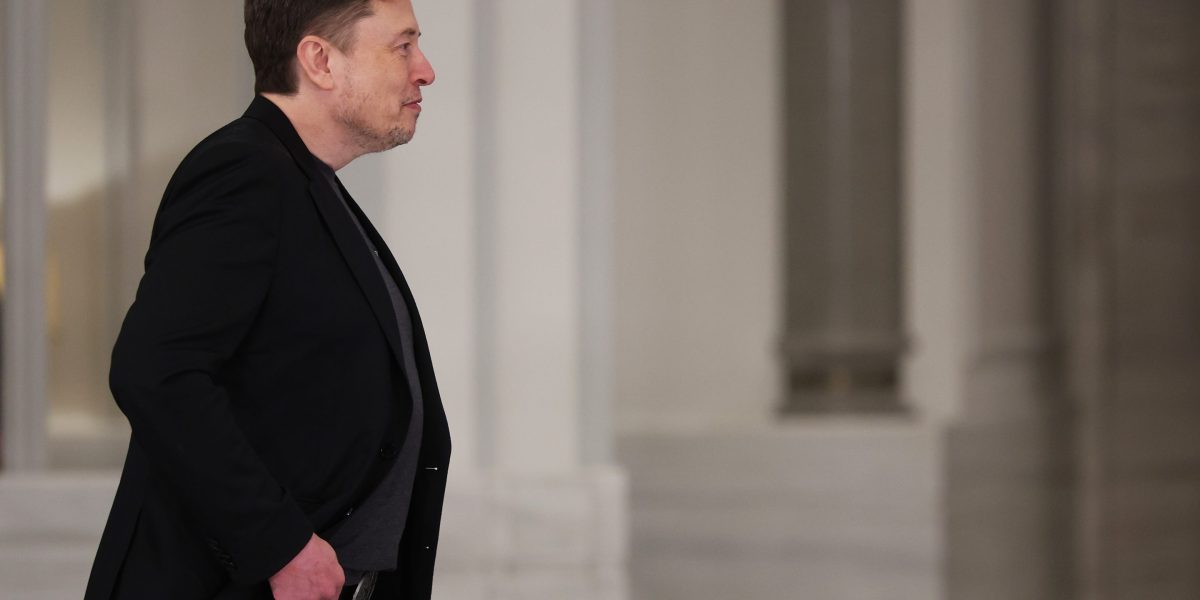
Elon Musk, the tech billionaire and co-head of the Department of Government Efficiency, delivered a dire prediction on X Thursday, asserting that the United States is "1,000% going to go bankrupt" without immediate and drastic cuts to federal spending. Speaking amid escalating debates over the nation's ballooning $36 trillion debt, Musk's hyperbolic alert amplified concerns that have simmered in conservative circles and financial markets alike, as interest payments on the debt now surpass defense spending.
Musk's comments came in response to a post highlighting the federal government's $2 trillion annual deficit, which he likened to a household maxing out credit cards while ignoring the bill. "We are spending money like drunken sailors... but at least the sailors are getting laid," he quipped, underscoring his signature blend of alarm and irreverence. As CEO of Tesla and SpaceX, and a key advisor to President Trump, Musk has positioned himself at the forefront of efforts to slash bureaucracy through DOGE, targeting $2 trillion in savings over the next few years—a goal critics deem unrealistic amid entrenched entitlements like Social Security and Medicare.
The U.S. fiscal trajectory has deteriorated rapidly, with debt-to-GDP ratio hovering near 130%, rivaling post-World War II peaks. Economists from the Congressional Budget Office project annual deficits exceeding $2 trillion through the decade, fueled by mandatory spending, interest costs projected to hit $1.7 trillion by 2034, and reluctance in Congress to tackle sacred cows. Musk's warning echoes sentiments from figures like JPMorgan's Jamie Dimon and even former Treasury Secretary Larry Summers, who have cautioned that unchecked borrowing risks a sovereign debt crisis akin to those in Greece or Argentina.
Reactions poured in swiftly, with Trump allies like Vivek Ramaswamy endorsing Musk's call for "brutal efficiency," while Democrats decried it as fearmongering to justify austerity measures that could gut social programs. Wall Street futures dipped slightly post-statement, reflecting investor jitters over potential volatility from DOGE's aggressive reforms. Yet Musk doubled down, posting charts showing U.S. spending growth outpacing GDP by 300% since 2020, framing bankruptcy not as hyperbole but mathematical inevitability absent reform.
Looking ahead, Musk's salvo injects urgency into the 2026 budget battles, where DOGE's mandate could force showdowns over pork-barrel spending and regulatory overreach. If his prophecy holds, the fallout—a dollar devaluation, higher taxes, or inflation surge—could reshape American prosperity and global standing. For now, it serves as a cultural flashpoint, pitting fiscal hawks against welfare statists in the ongoing war over government's size and scope.
