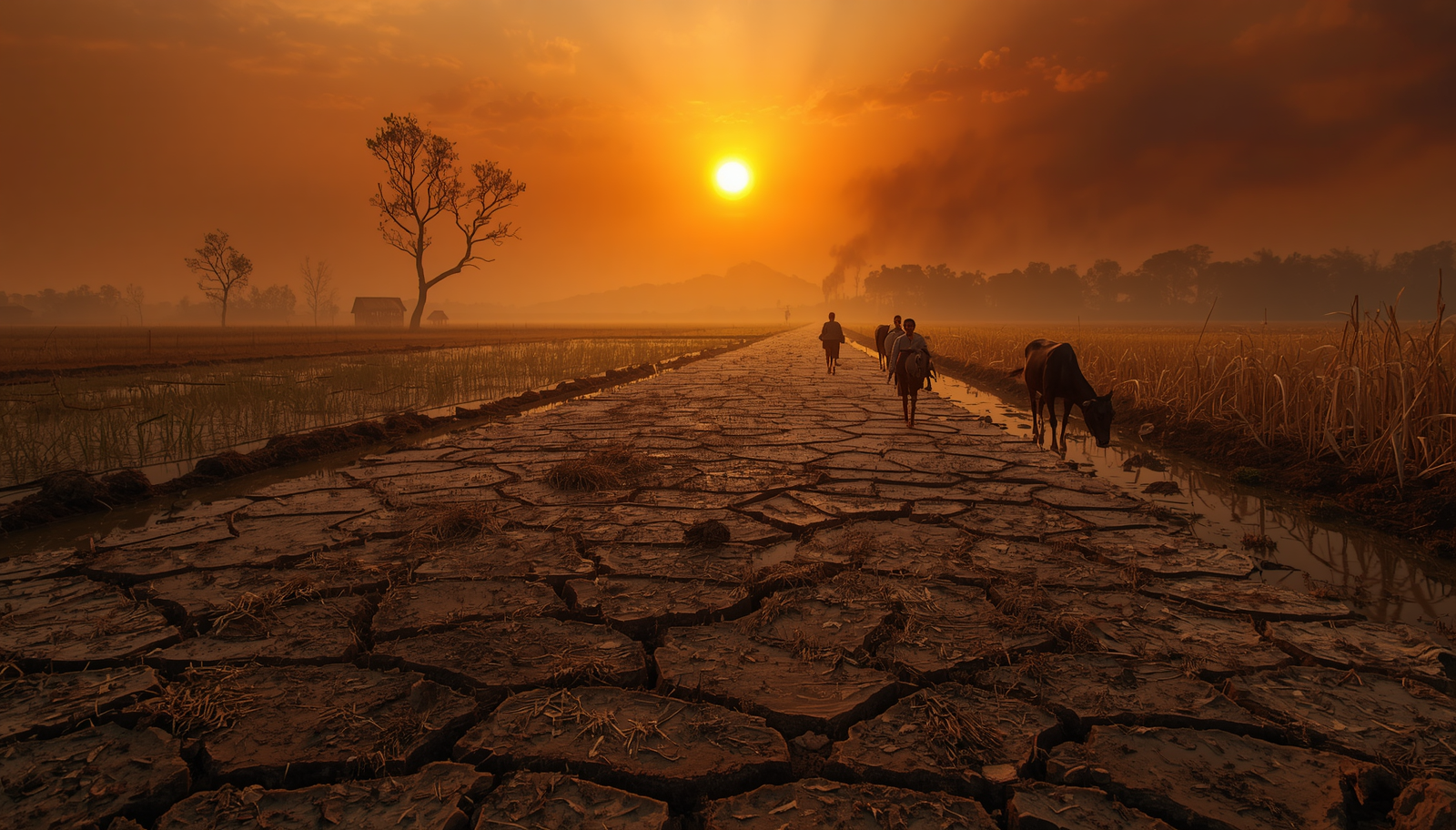
Forecasters are raising alarms over the possible emergence of a 'SuperEl Niño' later this year, warning that the powerful climate pattern could trigger record-breaking heat, catastrophic flooding, severe droughts and dangerous storms across several continents.
Climate agencies and researchers say Pacific Ocean temperatures are rising quickly, strengthening El Niño conditions. Some models suggest it could become as strong as the most powerful events ever recorded.
El Niño occurs when unusually warm water spreads across the central and eastern Pacific Ocean, disrupting weather systems worldwide.
A 'Super El Niño' is classified when ocean temperatures rise at least two degrees Celsius above normal for an extended period. Scientists say only a handful of such events have occurred since 1950, including the devastating 1997–98 and 2015–16 episodes.
New forecasts from the National Oceanic and Atmospheric Administration and the European Centre for Medium-Range Weather Forecasts say a possible 'Super El Niño' could develop and last until the end of the year. They report that sea surface temperatures have been 'near to above average' across most of the equatorial Pacific Ocean since mid-April,NBC Newsreported.
Experts warn that if a Super El Niño does form, it could push global temperatures torecord highsin 2027.
Some scientists also warn that crossing the 1.5-degree Celsius warming threshold – a critical climate benchmark – could become increasingly likely during a strong El Niño cycle.
Researchers say Super El Niño events release massive amounts of stored ocean heat into the atmosphere, amplifying heatwaves around the world. Areas already struggling withextreme temperaturescould see longer and more dangerous heat events, increasing risks to public health, agriculture and energy systems.
According to Paul Roundy, professor of atmospheric sciences at the University at Albany, State University of New York, the effects of a Super El Niño vary across continents.
'Places that don't normally get very much rain can get a lot of rain, and places that are normally wet end up being drier than normal', he said.
Source: International Business Times UK
