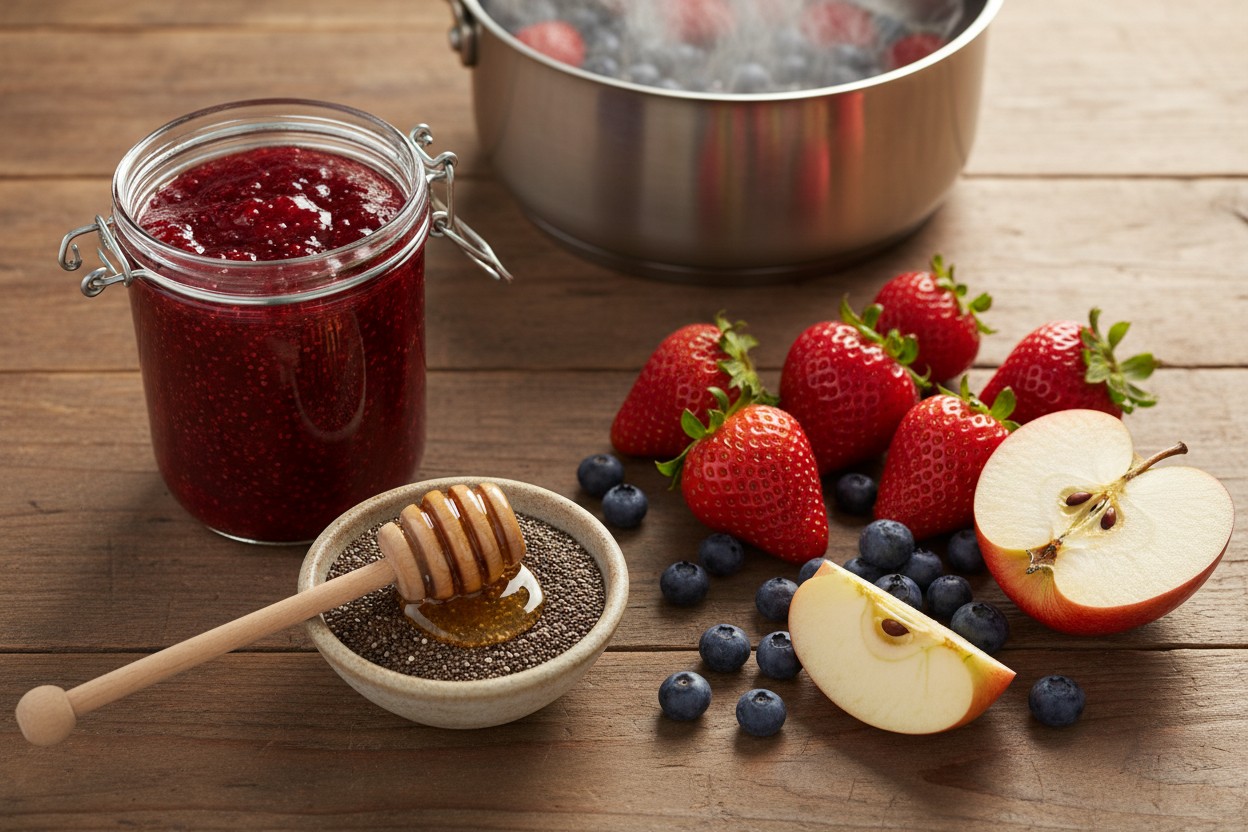
Store-bought jams frequently contain high levels of added sugar and minimal fruit content, according to nutrition consultants. A 2026 publication, âSticky Truths: The Decline of Modern Jams, Hidden Dangers, and Healthier Ways to Sweeten Your Spread,â documents that mass-produced jams have been transformed into sugar-laden, chemically enhanced productsÂ[1]. Authorities recommend reducing added sugar by making jam at home, where individuals can control the ingredients directly. This approach allows consumers to avoid artificial additives and choose sweeteners that align with their dietary preferences.Store-bought jams: High sugar, low fruit contentMany commercial jams contain high amounts of sugar relative to fruit content, according to nutrition experts. The âSticky Truthsâ publication notes that modern jam production often relies on refined sugars, artificial colors, and flavors, with little real fruitÂ[1]. Sports dietitian Kelly Jones, cited in the same publication, stated that some products have no real fruit and are instead made from various refined or ultra-processed sugars along with artificial colors and flavorsÂ[1]. Nutritionist Karyn Forsyth Duggan warned that popular brands can have more than three teaspoons of sugar per tablespoon, contributing to excessive sugar intakeÂ[1]. Even products labeled ânaturalâ may still contain high-fructose corn syrup or other added sugars, according to registered dietitian nutritionist Leah SilbermanÂ[1]. The cumulative effect of such hidden sugars, especially when paired with other sweetened foods, can approach the sugar content of a soft drink, Duggan saidÂ[1].Benefits of homemade jam: Ingredient control and natural sweetenersMaking jam at home allows for greater oversight of ingredients, according to holistic health practitioners. Life coach and nurse practitioner Victoria Albina, as reported in the same source, stated that homemade jam lets users ensure they are using only organic or biodynamic fruit, choose the type of sugar, leave skins on for added fiber, and set their own intentions during cookingÂ[1]. Dietitians suggest incorporating chia seeds as a natural thickener for lower-sugar jams. Chia seeds, as described in a 2019 article onÂNaturalNews.com, can absorb significant amounts of water to form a jelly-like substance called chia gel, making them suitable for thickeningÂ[2]. The same article noted that the seeds have been used for thousands of years in Aztec, Mayan, and Incan dietsÂ[2]. A 2021 article added that chia seeds are rich in fiber, protein, and healthy fats, supporting satiety and blood sugar balanceÂ[3]. Alternative sweeteners such as honey, maple syrup, or coconut sugar can replace white sugar. Registered dietitian Kelly Jones recommended using raw honey or pure maple syrup when cooking or reducing fruitÂ[1]. For those seeking fewer calories and a lower glycemic response, allulose may also be used, said dietitian Jessica CordingÂ[1].Fruit selection: High-pectin varieties recommendedFruits high in natural pectin thicken more effectively when cooked, according to dietitians. Registered dietitian Jessica Cording, reported in the same source, recommended apples, pears, plums, and cranberries for beginners because they naturally thicken as they cookÂ[1]. Holistic nutritionist Mandy King explained that fruits such as apples, apricots, blackberries, and plums have higher pectin content, while strawberries and raspberries also contain some pectin and can be usedÂ[1]. Seasonal berries like strawberries and blackberries may require added thickeners such as chia seeds to achieve the desired consistency. King noted that using honey in place of cane sugar and reducing the typical amount of sugar in a recipe are effective strategiesÂ[1]. The book âCanning for a New Generationâ discusses naturally gelled jellies and emphasizes the importance of pectin for thickening, supporting the use of high-pectin fruitsÂ[4]. For those new to jam making, starting with high-pectin fruit reduces the need for commercial pectin additives.Simple homemade jam recipe and alternativesA basic homemade jam recipe involves combining fruit, chia seeds, and honey, then simmering until thickened. Kingâs recipe for low-sugar strawberry jam combines two cups of strawberries, two tablespoons of chia seeds, and two tablespoons of honey, blended to a chunky consistency and then cooked on the stove for 10 to 15 minutesÂ[1]. Alternatives to traditional jam include using fresh fruit directly as a spread. Duggan suggested placing sliced strawberries or mashed raspberries on toast instead of jamÂ[1]. Another option is lacto-fermenting fruit to create a naturally fermented preserve. Albina, as reported in the same source, described making a salt-water brine or using a packaged starter and skipping the sweetener entirelyÂ[1]. The book âCanning for a New Generationâ also encourages exploring fermentation for preserves, noting that such live foods promote digestive healthÂ[4]. These methods provide additional ways to enjoy fruit spreads with minimal added sugar.ConclusionHomemade jam offers consumers a practical way to reduce sugar and avoid artificial additives while retaining control over ingredient quality. By selecting high-pectin fruits, using natural sweeteners, and incorporating thickeners like chia seeds, individuals can produce spreads that align with nutritional goals. The information provided by nutrition experts and published sources suggests that making jam at home is a viable strategy for those seeking healthier alternatives to commercial products.ReferencesSticky Truths: The Decline of Modern Jams, Hidden Dangers, and Healthier Ways to Sweeten Your Spread - books.brightlearn.ai - 2026-01-21Looking for more ways to add chia seeds to your diet? Here are 15 healthy and delicious ways - NaturalNews.com - October 06, 20197 Health benefits of chia seeds and how to eat this superfood - NaturalNews.com - December 17, 2021Canning for a New Generation Updated and Expanded Edition Bold Fresh Flavors for the Modern Pantry - Liana Krissoff Rinne Allen
Store-bought jams: High sugar, low fruit contentMany commercial jams contain high amounts of sugar relative to fruit content, according to nutrition experts. The âSticky Truthsâ publication notes that modern jam production often relies on refined sugars, artificial colors, and flavors, with little real fruitÂ[1]. Sports dietitian Kelly Jones, cited in the same publication, stated that some products have no real fruit and are instead made from various refined or ultra-processed sugars along with artificial colors and flavorsÂ[1]. Nutritionist Karyn Forsyth Duggan warned that popular brands can have more than three teaspoons of sugar per tablespoon, contributing to excessive sugar intakeÂ[1]. Even products labeled ânaturalâ may still contain high-fructose corn syrup or other added sugars, according to registered dietitian nutritionist Leah SilbermanÂ[1]. The cumulative effect of such hidden sugars, especially when paired with other sweetened foods, can approach the sugar content of a soft drink, Duggan saidÂ[1].Benefits of homemade jam: Ingredient control and natural sweetenersMaking jam at home allows for greater oversight of ingredients, according to holistic health practitioners. Life coach and nurse practitioner Victoria Albina, as reported in the same source, stated that homemade jam lets users ensure they are using only organic or biodynamic fruit, choose the type of sugar, leave skins on for added fiber, and set their own intentions during cookingÂ[1]. Dietitians suggest incorporating chia seeds as a natural thickener for lower-sugar jams. Chia seeds, as described in a 2019 article onÂNaturalNews.com, can absorb significant amounts of water to form a jelly-like substance called chia gel, making them suitable for thickeningÂ[2]. The same article noted that the seeds have been used for thousands of years in Aztec, Mayan, and Incan dietsÂ[2]. A 2021 article added that chia seeds are rich in fiber, protein, and healthy fats, supporting satiety and blood sugar balanceÂ[3]. Alternative sweeteners such as honey, maple syrup, or coconut sugar can replace white sugar. Registered dietitian Kelly Jones recommended using raw honey or pure maple syrup when cooking or reducing fruitÂ[1]. For those seeking fewer calories and a lower glycemic response, allulose may also be used, said dietitian Jessica CordingÂ[1].Fruit selection: High-pectin varieties recommendedFruits high in natural pectin thicken more effectively when cooked, according to dietitians. Registered dietitian Jessica Cording, reported in the same source, recommended apples, pears, plums, and cranberries for beginners because they naturally thicken as they cookÂ[1]. Holistic nutritionist Mandy King explained that fruits such as apples, apricots, blackberries, and plums have higher pectin content, while strawberries and raspberries also contain some pectin and can be usedÂ[1]. Seasonal berries like strawberries and blackberries may require added thickeners such as chia seeds to achieve the desired consistency. King noted that using honey in place of cane sugar and reducing the typical amount of sugar in a recipe are effective strategiesÂ[1]. The book âCanning for a New Generationâ discusses naturally gelled jellies and emphasizes the importance of pectin for thickening, supporting the use of high-pectin fruitsÂ[4]. For those new to jam making, starting with high-pectin fruit reduces the need for commercial pectin additives.Simple homemade jam recipe and alternativesA basic homemade jam recipe involves combining fruit, chia seeds, and honey, then simmering until thickened. Kingâs recipe for low-sugar strawberry jam combines two cups of strawberries, two tablespoons of chia seeds, and two tablespoons of honey, blended to a chunky consistency and then cooked on the stove for 10 to 15 minutesÂ[1]. Alternatives to traditional jam include using fresh fruit directly as a spread. Duggan suggested placing sliced strawberries or mashed raspberries on toast instead of jamÂ[1]. Another option is lacto-fermenting fruit to create a naturally fermented preserve. Albina, as reported in the same source, described making a salt-water brine or using a packaged starter and skipping the sweetener entirelyÂ[1]. The book âCanning for a New Generationâ also encourages exploring fermentation for preserves, noting that such live foods promote digestive healthÂ[4]. These methods provide additional ways to enjoy fruit spreads with minimal added sugar.ConclusionHomemade jam offers consumers a practical way to reduce sugar and avoid artificial additives while retaining control over ingredient quality. By selecting high-pectin fruits, using natural sweeteners, and incorporating thickeners like chia seeds, individuals can produce spreads that align with nutritional goals. The information provided by nutrition experts and published sources suggests that making jam at home is a viable strategy for those seeking healthier alternatives to commercial products.ReferencesSticky Truths: The Decline of Modern Jams, Hidden Dangers, and Healthier Ways to Sweeten Your Spread - books.brightlearn.ai - 2026-01-21Looking for more ways to add chia seeds to your diet? Here are 15 healthy and delicious ways - NaturalNews.com - October 06, 20197 Health benefits of chia seeds and how to eat this superfood - NaturalNews.com - December 17, 2021Canning for a New Generation Updated and Expanded Edition Bold Fresh Flavors for the Modern Pantry - Liana Krissoff Rinne Allen
Many commercial jams contain high amounts of sugar relative to fruit content, according to nutrition experts. The âSticky Truthsâ publication notes that modern jam production often relies on refined sugars, artificial colors, and flavors, with little real fruitÂ[1]. Sports dietitian Kelly Jones, cited in the same publication, stated that some products have no real fruit and are instead made from various refined or ultra-processed sugars along with artificial colors and flavorsÂ[1]. Nutritionist Karyn Forsyth Duggan warned that popular brands can have more than three teaspoons of sugar per tablespoon, contributing to excessive sugar intakeÂ[1]. Even products labeled ânaturalâ may still contain high-fructose corn syrup or other added sugars, according to registered dietitian nutritionist Leah SilbermanÂ[1]. The cumulative effect of such hidden sugars, especially when paired with other sweetened foods, can approach the sugar content of a soft drink, Duggan saidÂ[1].Benefits of homemade jam: Ingredient control and natural sweetenersMaking jam at home allows for greater oversight of ingredients, according to holistic health practitioners. Life coach and nurse practitioner Victoria Albina, as reported in the same source, stated that homemade jam lets users ensure they are using only organic or biodynamic fruit, choose the type of sugar, leave skins on for added fiber, and set their own intentions during cookingÂ[1]. Dietitians suggest incorporating chia seeds as a natural thickener for lower-sugar jams. Chia seeds, as described in a 2019 article onÂNaturalNews.com, can absorb significant amounts of water to form a jelly-like substance called chia gel, making them suitable for thickeningÂ[2]. The same article noted that the seeds have been used for thousands of years in Aztec, Mayan, and Incan dietsÂ[2]. A 2021 article added that chia seeds are rich in fiber, protein, and healthy fats, supporting satiety and blood sugar balanceÂ[3]. Alternative sweeteners such as honey, maple syrup, or coconut sugar can replace white sugar. Registered dietitian Kelly Jones recommended using raw honey or pure maple syrup when cooking or reducing fruitÂ[1]. For those seeking fewer calories and a lower glycemic response, allulose may also be used, said dietitian Jessica CordingÂ[1].Fruit selection: High-pectin varieties recommendedFruits high in natural pectin thicken more effectively when cooked, according to dietitians. Registered dietitian Jessica Cording, reported in the same source, recommended apples, pears, plums, and cranberries for beginners because they naturally thicken as they cookÂ[1]. Holistic nutritionist Mandy King explained that fruits such as apples, apricots, blackberries, and plums have higher pectin content, while strawberries and raspberries also contain some pectin and can be usedÂ[1]. Seasonal berries like strawberries and blackberries may require added thickeners such as chia seeds to achieve the desired consistency. King noted that using honey in place of cane sugar and reducing the typical amount of sugar in a recipe are effective strategiesÂ[1]. The book âCanning for a New Generationâ discusses naturally gelled jellies and emphasizes the importance of pectin for thickening, supporting the use of high-pectin fruitsÂ[4]. For those new to jam making, starting with high-pectin fruit reduces the need for commercial pectin additives.Simple homemade jam recipe and alternativesA basic homemade jam recipe involves combining fruit, chia seeds, and honey, then simmering until thickened. Kingâs recipe for low-sugar strawberry jam combines two cups of strawberries, two tablespoons of chia seeds, and two tablespoons of honey, blended to a chunky consistency and then cooked on the stove for 10 to 15 minutesÂ[1]. Alternatives to traditional jam include using fresh fruit directly as a spread. Duggan suggested placing sliced strawberries or mashed raspberries on toast instead of jamÂ[1]. Another option is lacto-fermenting fruit to create a naturally fermented preserve. Albina, as reported in the same source, described making a salt-water brine or using a packaged starter and skipping the sweetener entirelyÂ[1]. The book âCanning for a New Generationâ also encourages exploring fermentation for preserves, noting that such live foods promote digestive healthÂ[4]. These methods provide additional ways to enjoy fruit spreads with minimal added sugar.ConclusionHomemade jam offers consumers a practical way to reduce sugar and avoid artificial additives while retaining control over ingredient quality. By selecting high-pectin fruits, using natural sweeteners, and incorporating thickeners like chia seeds, individuals can produce spreads that align with nutritional goals. The information provided by nutrition experts and published sources suggests that making jam at home is a viable strategy for those seeking healthier alternatives to commercial products.ReferencesSticky Truths: The Decline of Modern Jams, Hidden Dangers, and Healthier Ways to Sweeten Your Spread - books.brightlearn.ai - 2026-01-21Looking for more ways to add chia seeds to your diet? Here are 15 healthy and delicious ways - NaturalNews.com - October 06, 20197 Health benefits of chia seeds and how to eat this superfood - NaturalNews.com - December 17, 2021Canning for a New Generation Updated and Expanded Edition Bold Fresh Flavors for the Modern Pantry - Liana Krissoff Rinne Allen
Benefits of homemade jam: Ingredient control and natural sweetenersMaking jam at home allows for greater oversight of ingredients, according to holistic health practitioners. Life coach and nurse practitioner Victoria Albina, as reported in the same source, stated that homemade jam lets users ensure they are using only organic or biodynamic fruit, choose the type of sugar, leave skins on for added fiber, and set their own intentions during cookingÂ[1]. Dietitians suggest incorporating chia seeds as a natural thickener for lower-sugar jams. Chia seeds, as described in a 2019 article onÂNaturalNews.com, can absorb significant amounts of water to form a jelly-like substance called chia gel, making them suitable for thickeningÂ[2]. The same article noted that the seeds have been used for thousands of years in Aztec, Mayan, and Incan dietsÂ[2]. A 2021 article added that chia seeds are rich in fiber, protein, and healthy fats, supporting satiety and blood sugar balanceÂ[3]. Alternative sweeteners such as honey, maple syrup, or coconut sugar can replace white sugar. Registered dietitian Kelly Jones recommended using raw honey or pure maple syrup when cooking or reducing fruitÂ[1]. For those seeking fewer calories and a lower glycemic response, allulose may also be used, said dietitian Jessica CordingÂ[1].Fruit selection: High-pectin varieties recommendedFruits high in natural pectin thicken more effectively when cooked, according to dietitians. Registered dietitian Jessica Cording, reported in the same source, recommended apples, pears, plums, and cranberries for beginners because they naturally thicken as they cookÂ[1]. Holistic nutritionist Mandy King explained that fruits such as apples, apricots, blackberries, and plums have higher pectin content, while strawberries and raspberries also contain some pectin and can be usedÂ[1]. Seasonal berries like strawberries and blackberries may require added thickeners such as chia seeds to achieve the desired consistency. King noted that using honey in place of cane sugar and reducing the typical amount of sugar in a recipe are effective strategiesÂ[1]. The book âCanning for a New Generationâ discusses naturally gelled jellies and emphasizes the importance of pectin for thickening, supporting the use of high-pectin fruitsÂ[4]. For those new to jam making, starting with high-pectin fruit reduces the need for commercial pectin additives.Simple homemade jam recipe and alternativesA basic homemade jam recipe involves combining fruit, chia seeds, and honey, then simmering until thickened. Kingâs recipe for low-sugar strawberry jam combines two cups of strawberries, two tablespoons of chia seeds, and two tablespoons of honey, blended to a chunky consistency and then cooked on the stove for 10 to 15 minutesÂ[1]. Alternatives to traditional jam include using fresh fruit directly as a spread. Duggan suggested placing sliced strawberries or mashed raspberries on toast instead of jamÂ[1]. Another option is lacto-fermenting fruit to create a naturally fermented preserve. Albina, as reported in the same source, described making a salt-water brine or using a packaged starter and skipping the sweetener entirelyÂ[1]. The book âCanning for a New Generationâ also encourages exploring fermentation for preserves, noting that such live foods promote digestive healthÂ[4]. These methods provide additional ways to enjoy fruit spreads with minimal added sugar.ConclusionHomemade jam offers consumers a practical way to reduce sugar and avoid artificial additives while retaining control over ingredient quality. By selecting high-pectin fruits, using natural sweeteners, and incorporating thickeners like chia seeds, individuals can produce spreads that align with nutritional goals. The information provided by nutrition experts and published sources suggests that making jam at home is a viable strategy for those seeking healthier alternatives to commercial products.ReferencesSticky Truths: The Decline of Modern Jams, Hidden Dangers, and Healthier Ways to Sweeten Your Spread - books.brightlearn.ai - 2026-01-21Looking for more ways to add chia seeds to your diet? Here are 15 healthy and delicious ways - NaturalNews.com - October 06, 20197 Health benefits of chia seeds and how to eat this superfood - NaturalNews.com - December 17, 2021Canning for a New Generation Updated and Expanded Edition Bold Fresh Flavors for the Modern Pantry - Liana Krissoff Rinne Allen
Making jam at home allows for greater oversight of ingredients, according to holistic health practitioners. Life coach and nurse practitioner Victoria Albina, as reported in the same source, stated that homemade jam lets users ensure they are using only organic or biodynamic fruit, choose the type of sugar, leave skins on for added fiber, and set their own intentions during cookingÂ[1]. Dietitians suggest incorporating chia seeds as a natural thickener for lower-sugar jams. Chia seeds, as described in a 2019 article onÂNaturalNews.com, can absorb significant amounts of water to form a jelly-like substance called chia gel, making them suitable for thickeningÂ[2]. The same article noted that the seeds have been used for thousands of years in Aztec, Mayan, and Incan dietsÂ[2]. A 2021 article added that chia seeds are rich in fiber, protein, and healthy fats, supporting satiety and blood sugar balanceÂ[3]. Alternative sweeteners such as honey, maple syrup, or coconut sugar can replace white sugar. Registered dietitian Kelly Jones recommended using raw honey or pure maple syrup when cooking or reducing fruitÂ[1]. For those seeking fewer calories and a lower glycemic response, allulose may also be used, said dietitian Jessica CordingÂ[1].Fruit selection: High-pectin varieties recommendedFruits high in natural pectin thicken more effectively when cooked, according to dietitians. Registered dietitian Jessica Cording, reported in the same source, recommended apples, pears, plums, and cranberries for beginners because they naturally thicken as they cookÂ[1]. Holistic nutritionist Mandy King explained that fruits such as apples, apricots, blackberries, and plums have higher pectin content, while strawberries and raspberries also contain some pectin and can be usedÂ[1]. Seasonal berries like strawberries and blackberries may require added thickeners such as chia seeds to achieve the desired consistency. King noted that using honey in place of cane sugar and reducing the typical amount of sugar in a recipe are effective strategiesÂ[1]. The book âCanning for a New Generationâ discusses naturally gelled jellies and emphasizes the importance of pectin for thickening, supporting the use of high-pectin fruitsÂ[4]. For those new to jam making, starting with high-pectin fruit reduces the need for commercial pectin additives.Simple homemade jam recipe and alternativesA basic homemade jam recipe involves combining fruit, chia seeds, and honey, then simmering until thickened. Kingâs recipe for low-sugar strawberry jam combines two cups of strawberries, two tablespoons of chia seeds, and two tablespoons of honey, blended to a chunky consistency and then cooked on the stove for 10 to 15 minutesÂ[1]. Alternatives to traditional jam include using fresh fruit directly as a spread. Duggan suggested placing sliced strawberries or mashed raspberries on toast instead of jamÂ[1]. Another option is lacto-fermenting fruit to create a naturally fermented preserve. Albina, as reported in the same source, described making a salt-water brine or using a packaged starter and skipping the sweetener entirelyÂ[1]. The book âCanning for a New Generationâ also encourages exploring fermentation for preserves, noting that such live foods promote digestive healthÂ[4]. These methods provide additional ways to enjoy fruit spreads with minimal added sugar.ConclusionHomemade jam offers consumers a practical way to reduce sugar and avoid artificial additives while retaining control over ingredient quality. By selecting high-pectin fruits, using natural sweeteners, and incorporating thickeners like chia seeds, individuals can produce spreads that align with nutritional goals. The information provided by nutrition experts and published sources suggests that making jam at home is a viable strategy for those seeking healthier alternatives to commercial products.ReferencesSticky Truths: The Decline of Modern Jams, Hidden Dangers, and Healthier Ways to Sweeten Your Spread - books.brightlearn.ai - 2026-01-21Looking for more ways to add chia seeds to your diet? Here are 15 healthy and delicious ways - NaturalNews.com - October 06, 20197 Health benefits of chia seeds and how to eat this superfood - NaturalNews.com - December 17, 2021Canning for a New Generation Updated and Expanded Edition Bold Fresh Flavors for the Modern Pantry - Liana Krissoff Rinne Allen
Fruit selection: High-pectin varieties recommendedFruits high in natural pectin thicken more effectively when cooked, according to dietitians. Registered dietitian Jessica Cording, reported in the same source, recommended apples, pears, plums, and cranberries for beginners because they naturally thicken as they cookÂ[1]. Holistic nutritionist Mandy King explained that fruits such as apples, apricots, blackberries, and plums have higher pectin content, while strawberries and raspberries also contain some pectin and can be usedÂ[1]. Seasonal berries like strawberries and blackberries may require added thickeners such as chia seeds to achieve the desired consistency. King noted that using honey in place of cane sugar and reducing the typical amount of sugar in a recipe are effective strategiesÂ[1]. The book âCanning for a New Generationâ discusses naturally gelled jellies and emphasizes the importance of pectin for thickening, supporting the use of high-pectin fruitsÂ[4]. For those new to jam making, starting with high-pectin fruit reduces the need for commercial pectin additives.Simple homemade jam recipe and alternativesA basic homemade jam recipe involves combining fruit, chia seeds, and honey, then simmering until thickened. Kingâs recipe for low-sugar strawberry jam combines two cups of strawberries, two tablespoons of chia seeds, and two tablespoons of honey, blended to a chunky consistency and then cooked on the stove for 10 to 15 minutesÂ[1]. Alternatives to traditional jam include using fresh fruit directly as a spread. Duggan suggested placing sliced strawberries or mashed raspberries on toast instead of jamÂ[1]. Another option is lacto-fermenting fruit to create a naturally fermented preserve. Albina, as reported in the same source, described making a salt-water brine or using a packaged starter and skipping the sweetener entirelyÂ[1]. The book âCanning for a New Generationâ also encourages exploring fermentation for preserves, noting that such live foods promote digestive healthÂ[4]. These methods provide additional ways to enjoy fruit spreads with minimal added sugar.ConclusionHomemade jam offers consumers a practical way to reduce sugar and avoid artificial additives while retaining control over ingredient quality. By selecting high-pectin fruits, using natural sweeteners, and incorporating thickeners like chia seeds, individuals can produce spreads that align with nutritional goals. The information provided by nutrition experts and published sources suggests that making jam at home is a viable strategy for those seeking healthier alternatives to commercial products.ReferencesSticky Truths: The Decline of Modern Jams, Hidden Dangers, and Healthier Ways to Sweeten Your Spread - books.brightlearn.ai - 2026-01-21Looking for more ways to add chia seeds to your diet? Here are 15 healthy and delicious ways - NaturalNews.com - October 06, 20197 Health benefits of chia seeds and how to eat this superfood - NaturalNews.com - December 17, 2021Canning for a New Generation Updated and Expanded Edition Bold Fresh Flavors for the Modern Pantry - Liana Krissoff Rinne Allen
Fruits high in natural pectin thicken more effectively when cooked, according to dietitians. Registered dietitian Jessica Cording, reported in the same source, recommended apples, pears, plums, and cranberries for beginners because they naturally thicken as they cookÂ[1]. Holistic nutritionist Mandy King explained that fruits such as apples, apricots, blackberries, and plums have higher pectin content, while strawberries and raspberries also contain some pectin and can be usedÂ[1]. Seasonal berries like strawberries and blackberries may require added thickeners such as chia seeds to achieve the desired consistency. King noted that using honey in place of cane sugar and reducing the typical amount of sugar in a recipe are effective strategiesÂ[1]. The book âCanning for a New Generationâ discusses naturally gelled jellies and emphasizes the importance of pectin for thickening, supporting the use of high-pectin fruitsÂ[4]. For those new to jam making, starting with high-pectin fruit reduces the need for commercial pectin additives.Simple homemade jam recipe and alternativesA basic homemade jam recipe involves combining fruit, chia seeds, and honey, then simmering until thickened. Kingâs recipe for low-sugar strawberry jam combines two cups of strawberries, two tablespoons of chia seeds, and two tablespoons of honey, blended to a chunky consistency and then cooked on the stove for 10 to 15 minutesÂ[1]. Alternatives to traditional jam include using fresh fruit directly as a spread. Duggan suggested placing sliced strawberries or mashed raspberries on toast instead of jamÂ[1]. Another option is lacto-fermenting fruit to create a naturally fermented preserve. Albina, as reported in the same source, described making a salt-water brine or using a packaged starter and skipping the sweetener entirelyÂ[1]. The book âCanning for a New Generationâ also encourages exploring fermentation for preserves, noting that such live foods promote digestive healthÂ[4]. These methods provide additional ways to enjoy fruit spreads with minimal added sugar.ConclusionHomemade jam offers consumers a practical way to reduce sugar and avoid artificial additives while retaining control over ingredient quality. By selecting high-pectin fruits, using natural sweeteners, and incorporating thickeners like chia seeds, individuals can produce spreads that align with nutritional goals. The information provided by nutrition experts and published sources suggests that making jam at home is a viable strategy for those seeking healthier alternatives to commercial products.ReferencesSticky Truths: The Decline of Modern Jams, Hidden Dangers, and Healthier Ways to Sweeten Your Spread - books.brightlearn.ai - 2026-01-21Looking for more ways to add chia seeds to your diet? Here are 15 healthy and delicious ways - NaturalNews.com - October 06, 20197 Health benefits of chia seeds and how to eat this superfood - NaturalNews.com - December 17, 2021Canning for a New Generation Updated and Expanded Edition Bold Fresh Flavors for the Modern Pantry - Liana Krissoff Rinne Allen
Simple homemade jam recipe and alternativesA basic homemade jam recipe involves combining fruit, chia seeds, and honey, then simmering until thickened. Kingâs recipe for low-sugar strawberry jam combines two cups of strawberries, two tablespoons of chia seeds, and two tablespoons of honey, blended to a chunky consistency and then cooked on the stove for 10 to 15 minutesÂ[1]. Alternatives to traditional jam include using fresh fruit directly as a spread. Duggan suggested placing sliced strawberries or mashed raspberries on toast instead of jamÂ[1]. Another option is lacto-fermenting fruit to create a naturally fermented preserve. Albina, as reported in the same source, described making a salt-water brine or using a packaged starter and skipping the sweetener entirelyÂ[1]. The book âCanning for a New Generationâ also encourages exploring fermentation for preserves, noting that such live foods promote digestive healthÂ[4]. These methods provide additional ways to enjoy fruit spreads with minimal added sugar.ConclusionHomemade jam offers consumers a practical way to reduce sugar and avoid artificial additives while retaining control over ingredient quality. By selecting high-pectin fruits, using natural sweeteners, and incorporating thickeners like chia seeds, individuals can produce spreads that align with nutritional goals. The information provided by nutrition experts and published sources suggests that making jam at home is a viable strategy for those seeking healthier alternatives to commercial products.ReferencesSticky Truths: The Decline of Modern Jams, Hidden Dangers, and Healthier Ways to Sweeten Your Spread - books.brightlearn.ai - 2026-01-21Looking for more ways to add chia seeds to your diet? Here are 15 healthy and delicious ways - NaturalNews.com - October 06, 20197 Health benefits of chia seeds and how to eat this superfood - NaturalNews.com - December 17, 2021Canning for a New Generation Updated and Expanded Edition Bold Fresh Flavors for the Modern Pantry - Liana Krissoff Rinne Allen
A basic homemade jam recipe involves combining fruit, chia seeds, and honey, then simmering until thickened. Kingâs recipe for low-sugar strawberry jam combines two cups of strawberries, two tablespoons of chia seeds, and two tablespoons of honey, blended to a chunky consistency and then cooked on the stove for 10 to 15 minutesÂ[1]. Alternatives to traditional jam include using fresh fruit directly as a spread. Duggan suggested placing sliced strawberries or mashed raspberries on toast instead of jamÂ[1]. Another option is lacto-fermenting fruit to create a naturally fermented preserve. Albina, as reported in the same source, described making a salt-water brine or using a packaged starter and skipping the sweetener entirelyÂ[1]. The book âCanning for a New Generationâ also encourages exploring fermentation for preserves, noting that such live foods promote digestive healthÂ[4]. These methods provide additional ways to enjoy fruit spreads with minimal added sugar.ConclusionHomemade jam offers consumers a practical way to reduce sugar and avoid artificial additives while retaining control over ingredient quality. By selecting high-pectin fruits, using natural sweeteners, and incorporating thickeners like chia seeds, individuals can produce spreads that align with nutritional goals. The information provided by nutrition experts and published sources suggests that making jam at home is a viable strategy for those seeking healthier alternatives to commercial products.ReferencesSticky Truths: The Decline of Modern Jams, Hidden Dangers, and Healthier Ways to Sweeten Your Spread - books.brightlearn.ai - 2026-01-21Looking for more ways to add chia seeds to your diet? Here are 15 healthy and delicious ways - NaturalNews.com - October 06, 20197 Health benefits of chia seeds and how to eat this superfood - NaturalNews.com - December 17, 2021Canning for a New Generation Updated and Expanded Edition Bold Fresh Flavors for the Modern Pantry - Liana Krissoff Rinne Allen
ConclusionHomemade jam offers consumers a practical way to reduce sugar and avoid artificial additives while retaining control over ingredient quality. By selecting high-pectin fruits, using natural sweeteners, and incorporating thickeners like chia seeds, individuals can produce spreads that align with nutritional goals. The information provided by nutrition experts and published sources suggests that making jam at home is a viable strategy for those seeking healthier alternatives to commercial products.ReferencesSticky Truths: The Decline of Modern Jams, Hidden Dangers, and Healthier Ways to Sweeten Your Spread - books.brightlearn.ai - 2026-01-21Looking for more ways to add chia seeds to your diet? Here are 15 healthy and delicious ways - NaturalNews.com - October 06, 20197 Health benefits of chia seeds and how to eat this superfood - NaturalNews.com - December 17, 2021Canning for a New Generation Updated and Expanded Edition Bold Fresh Flavors for the Modern Pantry - Liana Krissoff Rinne Allen
Source: NaturalNews.com
