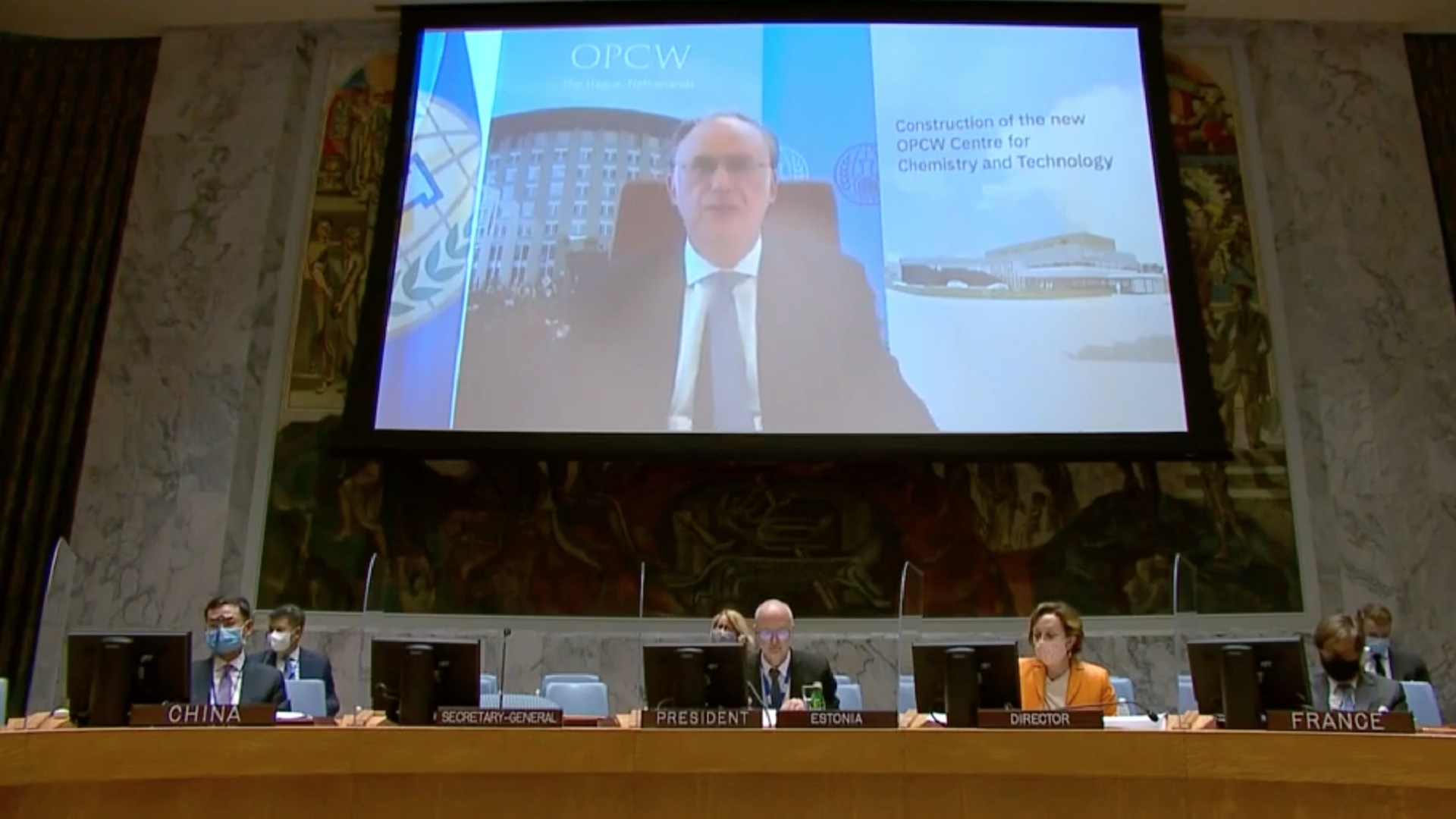
For the first time in a prolonged cover-up scandal, the world’s top chemical watchdog has acknowledged censoring a finding that undermined allegations of a toxic gas attack by the former Syrian government.
According topreviously leaked documents, expert German military toxicologists consulted by the Organization for the Prohibition of Chemical Weapons (OPCW) ruled out chlorine gas as the cause of death of dozens of victims in an alleged chemical attack in the Syrian town of Douma in April 2018. The experts even raised the possibility that the incident was a false flag. The OPCW suppressed this finding and released a final report asserting that chlorine gas was likely used. The OPCW’s conclusion aligned with the claims of the US, UK, and France, who bombed Syria in April 2018 over what they alleged was a Syrian government chemical attack in Douma.
After years ofstonewalling, the OPCW has admitted that the Germans’ input, along with the fact that they were even consulted, was concealed.
The concession came during a legal battle with Dr. Brendan Whelan, a veteran OPCW inspector and senior member of the team that deployed to Syria for the Douma mission. Whelan and another Douma team member, Ian Henderson, raised concerns about the manipulation of the investigation’s findings.
After their complaints became public, the OPCW leadership publicly disparaged the two dissenting inspectors and penalized them for alleged breaches of confidentiality. Whelansuccessfully challengedhis censure before the Geneva-based Tribunal of the International Labour Organisation (ILOAT), which recently awarded him damages andinstructed the OPCWto withdraw its impugned decision.
One of the allegations against Whelan was that he improperly sent two letters in March andApril 2019to Fernando Arias, the OPCW Director-General, raising concerns about unethical conduct in the Douma investigation. In trying to make its case against Whelan, the OPCW inadvertently admitted to the censorship that he had challenged. In his letters to Arias, the OPCW complained, Whelan included “specific and detailed information gathered by FFM [Fact-Finding Mission] investigators from toxicology experts. This information, classified as OPCW Highly Protected, was not included in the Final Report which was publicly released.”
The OPCW’s confirmation that it excluded the toxicologists’ “Highly Protected” information from the publicly released Final Report confirms one of Whelan’s key grievances.
“Critical information, like the expert opinions of the toxicologists… has, shockingly, been omitted,” Whelan wrote in his April 2019 letter. “There is even no record in the report of those consultations… To say that this selective use of expert opinions and facts is disturbing is an understatement.”
Whelan protested the omission of the German toxicologists’ input because of its profound implications. Inpublic statementsafter the Douma incident,experts had already raised doubtsthat chlorine caused the deaths in Douma. But the German military toxicologists, who were consulted by the OPCW in June 2018, were more definite. The Germans told the OPCW that the circumstances of the fatalities – apparent immediate death and collapse in piles at the center of two rooms, a failure to escape, and rapid profuse foaming at the mouth and nose – wereinconsistentwith chlorine poisoning. According to the then-head of the OPCW Laboratory, the experts even raised “the possibility of a staged attack” in Douma because “the circumstances of death for the victimsdo not match chlorine.”
While the Douma victims’ signs of rapid foaming are not consistent with exposure to chlorine gas, theyareconsistentwith nerve agent exposure. But by that point, the OPCW’s chemical analysis had ruled out a sarin or any other nerve agent bomb as the killer because none of these chemicals, or any toxic chemicals for that matter, were found at the scene or in biomedical samples.
Source: The Grayzone
