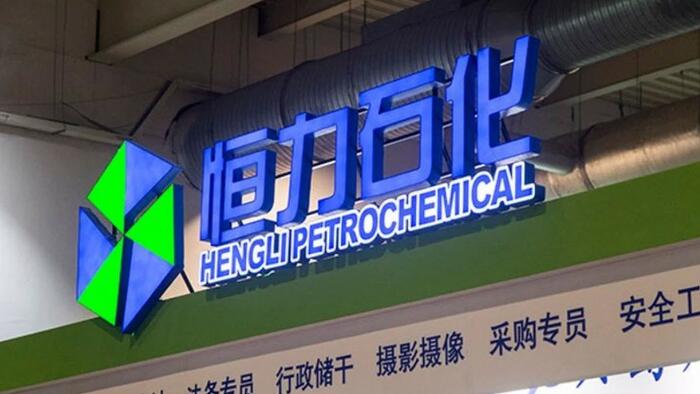
Over the weekend, wereportedthat in what some called a "watershed moment",Beijing ordered Chinese companies not to comply with US sanctions on five domestic refiners linked to the Iranian oil trade,deploying for the first time ablocking measureintroduced in 2021 that was aimed at protecting its firms from foreign laws it deemed unjustified. Of note, China's refiners - including Hengli Petrochemical (Dalian) Refinery which was sanctioned last month and several other privately-owned processors - had been facing asset freezes and transaction bans. Hengli was the most ambitious target to date in China’s refining sector, and underscores US eagerness to push Iran to the negotiating table at all costs, even just weeks before an expected and long-awaited meeting between Trump and his counterpart Xi Jinping.
Well, maybe not. In an apparent reversal of its blocking measure orders, overnightBloombergreported thatChina’s financial regulator advised the country’s largest banks to temporarily suspend new loans to five refiners recently sanctioned by the USover their ties to Iranian oil.
The National Financial Regulatory Administration asked banks to review their exposure and business dealings with firms including the abovementioned Hengli Petrochemical (Dalian) Refinery, one of China’s largest private refiners, while awaiting further guidance.For now, banks have been guided not to extend new yuan-denominated credit, though they have also been told not to call in existing loans, Bloomberg's sources said.
The verbal directive, which came before China entered a long holiday weekend on May 1 and ahead of the upcoming Trump-Xi summit contrasts with a May 2 notice from China’s Ministry of Commerce, which instructed companies to disregard US sanctions. That was the first time China had deployed a blocking measure introduced in 2021 aimed at protecting its firms from foreign laws it deemed unjustified.
While China has often railed against unilateral sanctions, it has in past instances also quietly allowed its largest companies to comply with them, in order to avoid blowback on its own economy.Its largest state banks have a history of complying with US sanctions against Iran, North Korea, and even top officials in Hong Kong to avoid losing access to the US dollar clearing system.In earlier episodes, Beijing sought to shield its systemically important lenders by channeling Iran-related transactions through China National Petroleum Corp’s subsidiary Bank of Kunlun Co., which is currently sanctioned.
As Bloomberg notes, the moves highlightthe balancing act Beijing faces as it tries to project defiance toward the Trump administration while shielding its largest state-owned banks from US secondary sanctions.Tensions are escalating between the superpowers just weeks before a long-awaited meeting between President Donald Trump and his counterpart Xi Jinping in Beijing on May 14–15.
Meanwhile, the White House has been ratcheting up efforts to cut off Iranian oil shipments to starve the Tehran regime for which oil remains the most vital financial lifeline. Late last month, the Treasury Department’s Office of Foreign Assets Control blacklisted Hengli, targeting a significant and well-connected player in the country’s vast crude-processing industry. The US also warned banks they are at risk of secondary sanctions if they support Chinese private refiners that buy Iranian oil.
Treasury Secretary Scott Bessent said the US sent letters to two Chinese banks warning them of the risk of secondary sanctions if they are found to be supporting transactions tied to Iran. Bessent didn’t identify the banks.
Separately, but perhaps linked to this, China’s independent refiners have slowed purchases of Iranian crude as they seek to manage a government push to make fuel at any cost to ensure energy security while they face collapsing profit margins.
There are about 16 million barrels on ships anchored in the Yellow Sea off the Chinese coast, almost 40% higher than the level prior to a US blockade of Iran’s ports in mid-April, according to data from Kpler. Already razor-thin teapot margins plunged torecord negative levelsafter the cordon began, while Iran’s oil prices have climbed since the war started, compounding the economic stress on independent refiners.
Source: ZeroHedge News
