With hopes of a permanent truce being continually undermined by minor skirmishes and blockade infringements, it remains unclear whether this war is close to ending. And while oil prices gyrate from one Trump Truth post to the next, two weeks of Brent above $100/barrel (only just inching below as of this morning) suggests the market is not buying into the quick resolution narrative.
Though it is worth asking the question,what if the peace talks are trulydifferent this time?
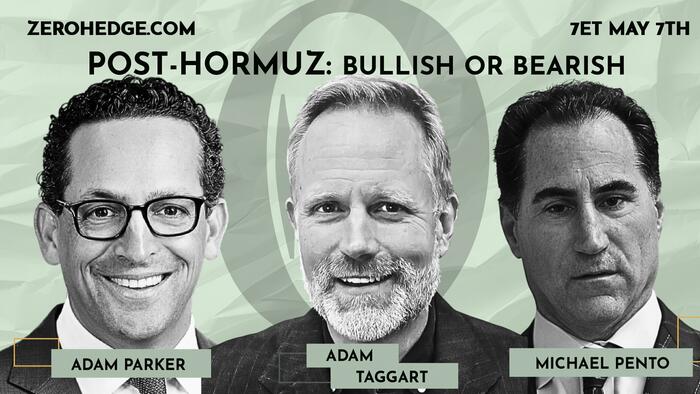
JoiningZeroHedge tonight at 7pm ETto answer what a post-Hormuz reopening means for markets will beformer Morgan Stanley chief investment officerAdam Parker, who now runs Trivariate Research, andMichael PentoofPento Portfolio Strategies. Parker and Pento will be hosted byAdam Taggart, founder ofThoughtful Moneyand regular ZH moderator.
The U.S. and Iran arereportedlyclose to a preliminary peace agreement that would reopen the Strait of Hormuz, ease shipping restrictions, and begin a broader 30-day negotiation process. Reuters and Axios reported the draft framework could be finalized within days.
President Trumppaused“Project Freedom,” the U.S. naval operation escorting ships through Hormuz, specifically to give diplomacy room to advance. Officials described the move as a confidence-building step tied directly to ongoing negotiations.
Markets reacted as if a breakthrough is increasingly likely.Oil prices plunged 7%+ yesterday on the reports.
A potential wrench in the works, Israelremains eagerto continue striking Tehran and claims it did not know Trump and the Iranians were ‘close’ to a deal.Israel has also continued bombing Lebanon despite President Trump’s April 17 demand that they stop.
Even assuming the best case scenario of an imminent reopening, baked-in supply disruptions may be sufficient to trigger a recession later in the year.
UBS projects US headline CPI will rise to 4.44% in May, driven by a sharp 12% increase in gasoline prices
Might a post-Hormuz “peace rally” be short-lived upon the realization of a weak real economy, burdened by higher gas, fertilizer, and food prices?
Source: ZeroHedge News