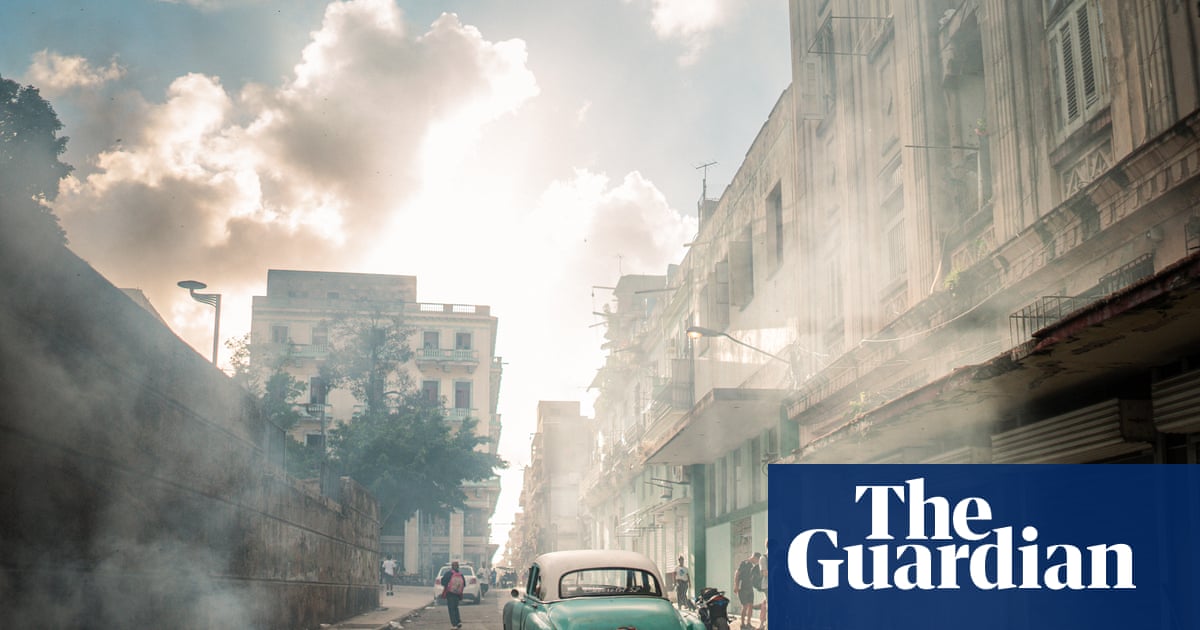
As Trump ramps up pressure by cutting off fuel to the island, Havana’s refuse is rarely collected, forcing residents to burn it in the streets despite the pollution
As thick smoke spread through the narrow streets of Havana, seeping into homes, schools and shops, Carlos Blanco, a chef, opened his bedroom window to see what was going on. “I saw a mist. But it wasn’t mist – it was smoke,” he says, describing the toxic smog emanating from a smouldering mountain of rubbish.
As theUS oil blockadeon Cuba enters its fourth month,choking off most of the island’s fuel supplies, growing mounds of waste lie on street corners across Havana. Amid fuel scarcity, authorities have opted to ration petrol by reducing waste collection, leaving less than half ofHavana’s rubbish trucks operational.
Many desperate Cubans throw their household waste into the street rather than let it fester in their homes as they wait for collection. With removal reduced, the government has allowed rubbish to be burned in crowded urban areas, with authorities designating 122 temporary waste collection points in Havana, at 24 of which there is “controlled incineration”.
Yet burning rubbish in the open air not only has harmful effects on health, it alsopollutes the air, soil and water. The state-run Cuban Neuroscience Centerhas saidthat unofficial fires – which it says burn at lower, inconsistent temperatures – are more perilous than controlled ones.
“This releases substances from the waste and creates new ones as molecules break down and re-form in the flames … [which] can persist in the environment for years and in the human body for perhaps a decade or more,” warned the health body.
However, Alexis González Inclán, a sanitation department official, justified the measures. “They are not ideal from an environmental standpoint, but they serve to mitigate risks to public health and urban order,” he told the news outletCubadebate.
As informal rubbish fires continue to blaze across the capital, residents fear possible health effects. At a clothing market in central Havana, Yani Cabrera dons a face mask as plumes of white smoke seep into her shop, smothering the terraced buildings and the busy street outside.
“Some guys from the street lit [the fire],” Cabrera says, pointing at the burning pile of rubbish. “I use this [mask] when there is a lot of smoke … I’m worried because this is dangerous.”
Cabrera notes that burning waste has increased since the US imposed its blockade in December and January, and has little hope things will improve soon. “We have to try to survive and hang in there because things aren’t getting any better,” she says. “What can we do?”
Source: Drudge Report
