The hantavirus Andres strain has now become an international concern following a cruise ship outbreak.
TheAndes strain of hantavirusstands out as the only known variant capable of human-to-human transmission. Most strains that spread solely through rodent bites or scratches, as well as direct contact with contaminated material,CNNreported.
Dr Maria Van Kerhove, WHO's Director for Epidemic and Pandemic Preparedness and Prevention, said it's safe to assume that's what happened with the MV Hondius outbreak, after symptoms of the illness were observed in at least two passengers and two crew members.
'We do know that some of the cases had very close contact with each other and certainly human-to-human transmission can't be ruled out so as a precaution this is what we are assuming,' Kerhove stated.
After departing Ushuaia, Argentina on 1 April, theMV Hondius cruise ship remains stranded at Praia, Cape Verdeas of 3 May with no authorisation to dock at port. One victim died onboard on 11 April, another on 2 May. Another casualty died in South Africa on 26 April, shortly after leaving the ship.
The World Health Organisation reported seven cases as of 4 May, including two laboratory-confirmed hantavirus infections, five suspected, three deaths, one critically ill patient, and three with mild symptoms.
The symptoms observed from 6 to 28 April include fever, gastrointestinal symptoms, rapid pneumonia progression, acute respiratory distress syndrome, and shock.
The ship, now anchored off Cape Verde, saw three passengers evacuated, two seriously ill, with one in intensive care in South Africa and another currently admitted at a medical facility in Zurich.
Authorities are now scrambling with contact tracing as countries coordinate case isolation, medical evacuations, and laboratory investigations. The WHO assesses the wider public health threat as low despite the origin and nature of the outbreak.
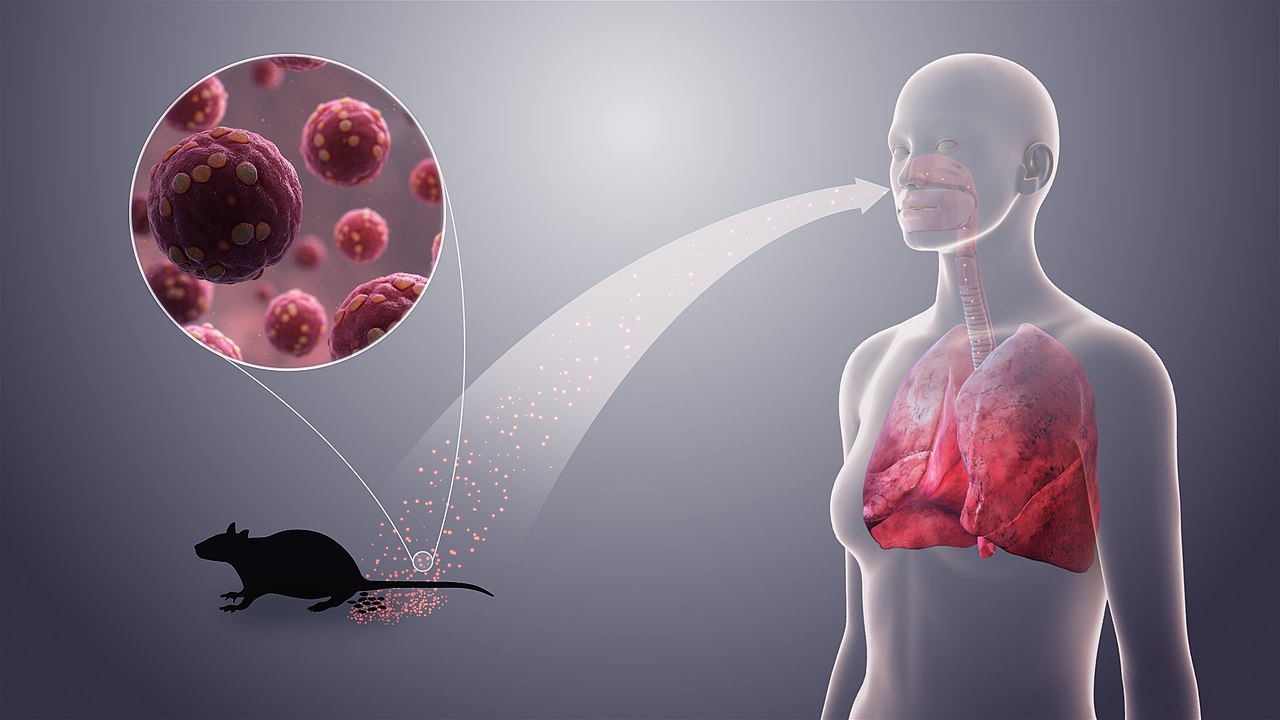
Hantaviruses generally infect humans via contact with infected rodents' urine, droppings, or saliva, often inhaled as contaminated particles in enclosed spaces.
Source: International Business Times UK
