(Image by Shutterstock AI Image Generator)
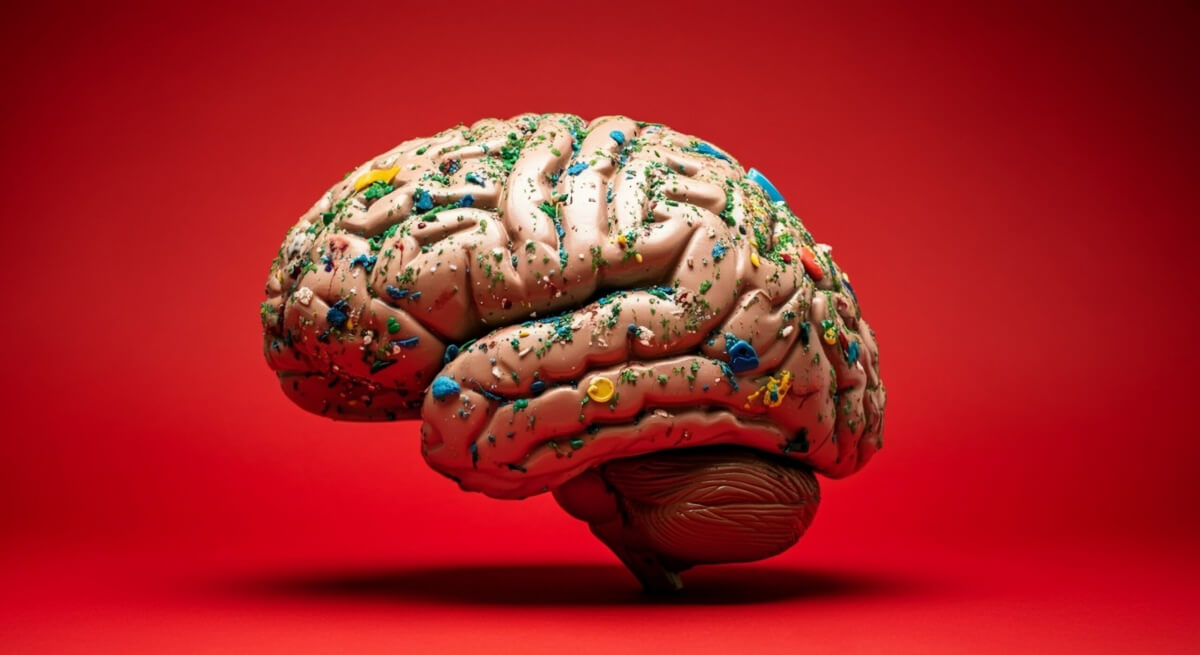
A plastic spoon’s worth of tiny fragments, quietly accumulating inside the human brain. That image is no longer science fiction, it’s where a new scientific perspective begins, and it argues that the growing buildup of plastics in the human body is one of the most pressing brain health questions of the moment.
Prior researchfound thatbrain tissue from deceased donors contained concentrations of microplastics anywhere from seven to thirty times higher than what was found in their liver or kidney tissue. The brain may be the organ most saturated with this pollution. That burden grew by roughly 50% between 2016 and 2024, according to the same research. Donors who had been diagnosed with dementia carried the heaviest load of all.
A new scientific perspective published in the journalBrainHealthis pulling together what researchers know, what they still can’t measure, and what needs to happen next. A particular emphasis was placed on pregnant women, children, and people already living withbrainor heart disease. The authors argue that the combination of high plastic levels in brain tissue, scientifically credible explanations for how those plastics cause harm, and a clear dietary source that most Americans consume daily makes this a brain health concern deserving urgent attention.
Science has confirmed that microplastics and their even tinier counterparts, nanoplastics, have turned up in human blood, in the placenta during pregnancy, inside the fatty deposits that clog arteries, and in brain tissue. Plastic particles found in arterial deposits were associated with a roughly fourfold increase in the combinedrisk of heart attack, stroke, or death over a follow-up period of thirty-four weeks, according to research cited in the perspective. Since stroke is a brain event, the authors note that this finding carries direct relevance to brain health.
Why the brain accumulates so much moreplasticthan other organs may come down to size. In animal studies, nanoscale plastic particles crossed the brain’s protective filtering system, known as the blood-brain barrier, within two hours of being swallowed. Larger particles did not make it through. Only the smallest ones did. Once inside, how the brain clears them remains unknown.
The brain’s high fat content may also play a role in how these particles accumulate, though researchers note that this same quality makes the brain one of the hardest organs to test accurately for plastics. Measuring what’s actually in brain tissue, reliably and in a way the broader scientific community agrees on, remains an unsolved problem.
This is where the story gets uncomfortably familiar for most American households. Ultra-processed foods (soft drinks, packaged snacks, instant noodles, mass-produced bread, and ready-to-heat meals) now account for more than half of caloric intake in the United States. These are industrially manufactured products that barely resemble whole food ingredients. According to the perspective’s authors, they are one of the main ways plastic enters the human body.
Plastic-based packagingmigrates into food during heating and storage. Industrial machinery used in processing causes plastic wear and contamination. By the time a packaged product reaches a consumer, it has had extensive contact with plastic at multiple stages. Whole foods encounter far less of it.
Evidence linking ultra-processed food to brain health problems comes from very large observational studies. One analysis of 385,541 participants found that higher consumption of ultra-processed food was associated with a 53% increase in the odds of common mental health disorder symptoms, a 44% increase for depression, and a 48% increase for anxiety. A separate large study using U.K. health data linked higher ultra-processed food consumption to an increased risk of dementia. Another study found that a 10% rise in ultra-processed food intake was associated with a 16% increase in the risk of thinking and memory problems and an 8% increase in stroke risk, and those associations held even after accounting for whether people followed well-regarded healthy eating patterns like the Mediterranean orDASH diets.
Source: Drudge Report
