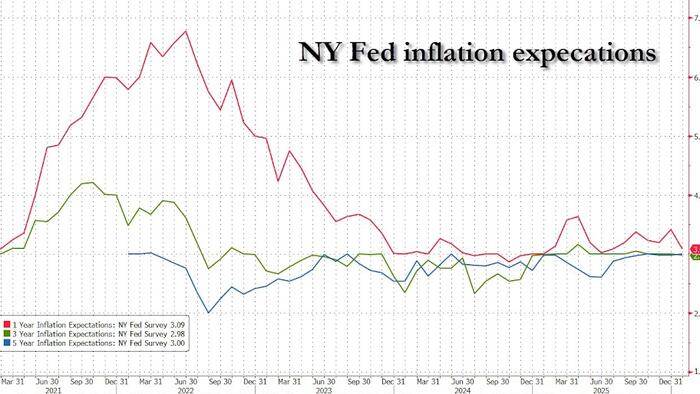
Consumer inflation expectations have plummeted to their lowest levels in six months, signaling a potential cooling in price pressures, while optimism about the labor market has rebounded sharply, according to the New York Federal Reserve's latest Survey of Consumer Expectations. The median one-year-ahead inflation expectation dropped to 2.8 percent in January, down from 3.1 percent in December and the weakest reading since July 2025. This decline comes amid steady interest rate cuts by the Federal Reserve and softening energy prices, offering a glimmer of hope for households grappling with persistent cost-of-living concerns.
The survey, which polls a rotating panel of approximately 1,300 U.S. households, also revealed a notable uptick in labor market sentiment. The median expected unemployment rate over the next year fell to 3.9 percent, the lowest since August 2025, reflecting renewed confidence in job security. Respondents anticipated a modest increase in earnings growth to 3.0 percent over the coming year, up from 2.8 percent previously, suggesting workers are betting on wage gains keeping pace with or outstripping inflation. These shifts mark a divergence from the pessimism that dominated late 2025, when recession fears weighed heavily on consumer outlooks.
Contextually, the data arrives as the U.S. economy navigates a delicate balancing act between curbing inflation and sustaining growth. The Federal Reserve has held its benchmark rate steady at 4.25-4.50 percent following three cuts last year, with markets pricing in a high likelihood of further easing this spring. Lower inflation expectations could bolster the case for additional rate reductions, easing borrowing costs for mortgages, auto loans, and credit cards. However, the rebound in labor optimism tempers fears of an imminent downturn, aligning with robust December jobs data that showed nonfarm payrolls rising by 256,000.
Economists interpret these findings as evidence that the Fed's tighter-for-longer policy is finally taking hold without triggering widespread layoffs. "The tandem drop in inflation forecasts and unemployment worries points to a soft landing scenario gaining traction," said Julia Coronado, president of MacroPolicy Perspectives. Yet, longer-term three-year inflation expectations ticked up slightly to 2.9 percent, hinting at lingering uncertainty over fiscal deficits and geopolitical risks. Stock markets reacted positively, with the S&P 500 climbing 1.2 percent on the report's release, while Treasury yields dipped, reflecting bets on looser monetary policy ahead.
Looking forward, the survey underscores a resilient consumer base underpinning U.S. growth, even as political debates intensify over trade tariffs and spending bills that could reignite inflationary forces. Policymakers will scrutinize upcoming CPI and PCE data for confirmation of this trend, but for now, the NY Fed's pulse on Main Street offers a cautiously optimistic narrative amid the broader macroeconomic tug-of-war.
