(Bloomberg) — In a matter of weeks, Europeans will begin heading off on their summer vacations — whether or not there will be enough jet fuel to transport them all remains an open question.
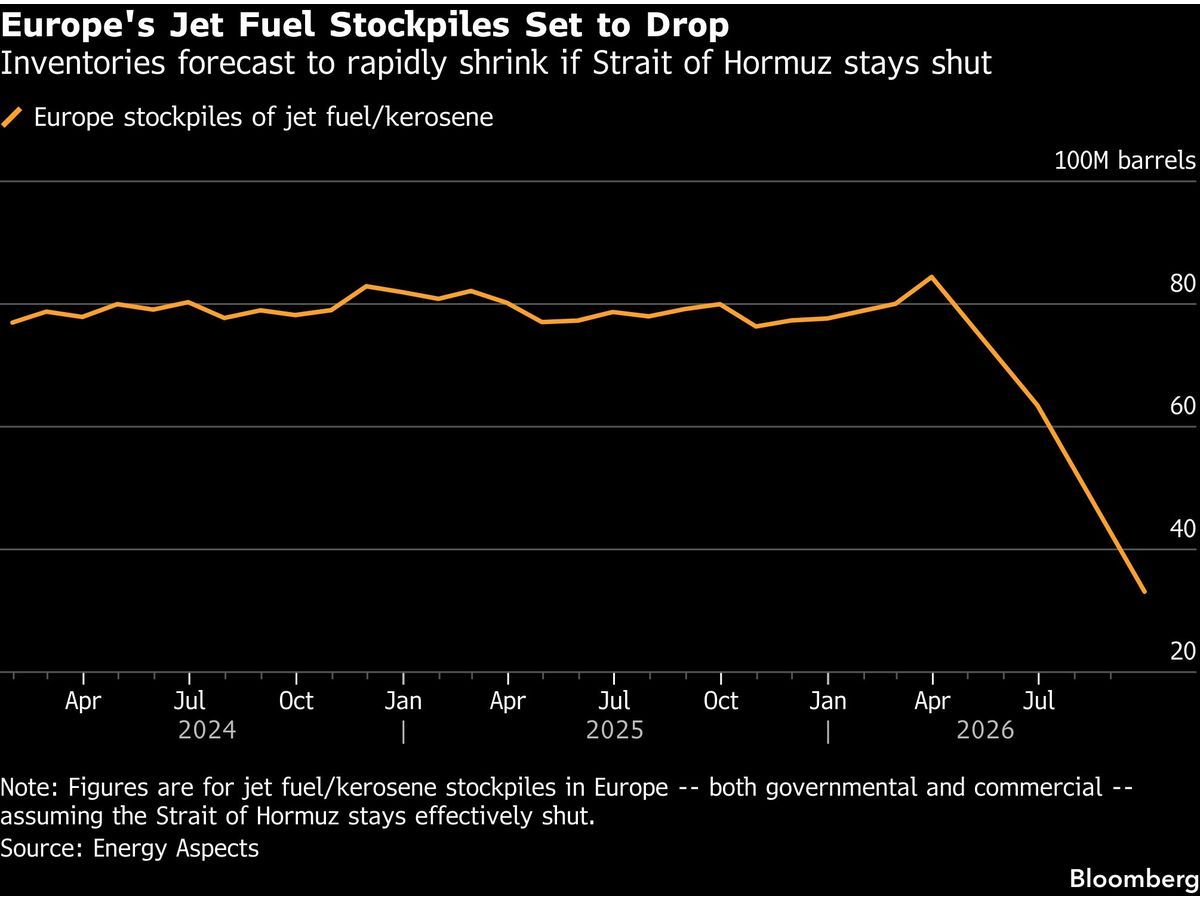
Here are three charts that go some way toward providing an answer. Chief among the uncertainties are how quickly and fully the Strait of Hormuz — the vital waterway linking energy infrastructure inside the Persian Gulf to the rest of the world — will reopen, and, in the meantime, to what extent Europe can secure replacement supplies.
If Hormuz remains largely shut, Europe’s stockpiles of jet fuel — including kerosene, from which it’s made — stand to deplete at a rate of 230,000 barrels a day this quarter, according to an estimate from consultancy Energy Aspects. That’s roughly double Italy’s entire demand.
Get the latest headlines, breaking news and columns.
A welcome email is on its way. If you don't see it, please check your junk folder.
The next issue of Top Stories will soon be in your inbox.
We encountered an issue signing you up. Please try again
“I think we start having problems by the end of June,” said Natalia Losada, senior oil products analyst at the firm, commenting on supplies at European airports if Hormuz doesn’t reopen. “Not the whole of Europe — but some countries,” would start to struggle, she added.
Analysts at Goldman Sachs Group Inc., FGE NexantECA, BloombergNEF and the International Energy Agency have also outlined the pressures on Europe’s supplies. While their views aren’t uniform, the overall picture is clear: the risks ramp up the longer Hormuz stays shut.
In normal times, a huge chunk of European imports comes from the Middle East. But those flows have collapsed, and while other exporters have increased deliveries, the region is still desperate for supply.
Source: Drudge Report
