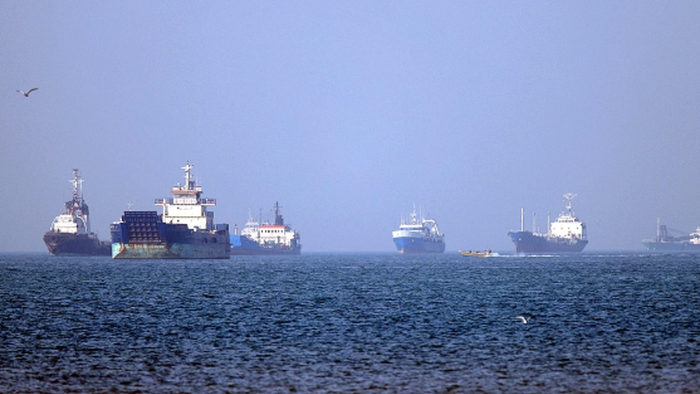
There have certainly been escalating tensions in the Strait of Hormuz this week amid a wave of Iranian attacks on commercial ships after a U.S. military effort to escort merchant vessels through the maritime chokepoint.
By midweek, tensions had simmered, and Iran is still reviewing a14-point U.S. proposalto end the war, with Tehran expected to send its response to Pakistani mediators later today.
President Trump said talks with Iran have been "very good" and suggested a deal remains possible. Iran's Foreign Ministry confirmed the U.S. proposal is still under review.
But when chaos erupted on the world's most critical waterway at the beginning of the week, a new report said that a large refined-products tanker owned by a Chinese shipowner was attacked off the UAE's Al Jeer port on Monday, according toReuters.
Beijing-based business media outletCaixinreported that the vessel's deck erupted in flames after the attack. The outlet noted the vessel was marked "CHINA OWNER & CREW."
A shipping industry source told Caixin that this was the first time a Chinese tanker was hit in the three-month-long war, calling it "psychologically very hard to accept."
Shortly after the Chinese tanker was attacked, it became clear why, two days later on Wednesday, China's Foreign Minister Wang Yi called for the swift reopening of the Hormuz chokepoint.
"The international community shares a common concern for the restoration of normal and safe passage of the strait," Foreign Minister Wang Yi told Iran's Abbas Araghchi, according to an official Chinese statement. "China hopes that the parties concerned will respond to the strong appeal of the international community as soon as possible."
China's urgency to resolve the highly disrupted Hormuz chokepoint comes just over a week before President Trump flies to Beijing to meet with President Xi Jinping.
The big question is whether China will cooperate with the U.S. to end the conflict and reopen the Strait, as much of the tanker flow through this critical waterway is destined for Asia, and the disruption has led to fuelshortages and soaring prices of crudeoil and related products in the region.
Source: ZeroHedge News
