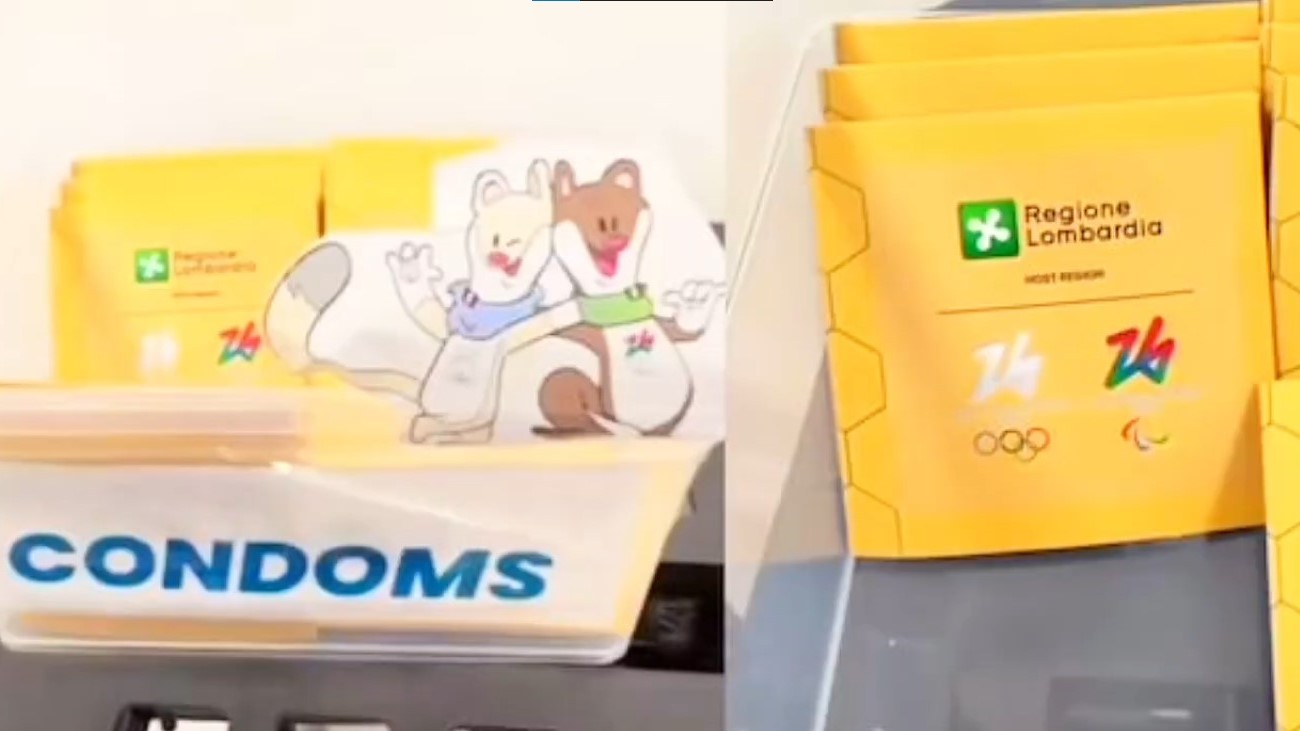
The 2026 Winter Olympics in Milan-Cortina have encountered an unforeseen logistical challenge as the athletes' village exhausted its entire stock of free condoms within three days of the Games' opening, according toreports. Organisers had initially made roughly10,000 packs of male and female condomsavailable to competitors residing in the Olympic Village in Cortina d'Ampezzo.
According to reports in the Italian daily La Stampa, that supply was depleted by the third day of competition. This development has generated both amusement and operational concern among officials, athletes and public-health observers, coming less than a week after the Winter Games began on Feb. 6, 2026.
Officialshave acknowledged the early shortfall and confirmed that additional shipments of condoms are being arranged, though no official delivery schedule has been released. An anonymous competitor quoted by La Stampa said: 'The supplies ran out in just three days. They promised us more will arrive, but who knows when.'
The initial allocation was described in media coverage as significantly lower than what has been typical at past Olympic Games. During the 2024 Summer Olympics in Paris, organisers distributed about 300,000 condoms to around 10,500 athletes, equating to an average of two per athlete per day. By contrast, Milan-Cortina's smaller allocation translated to approximately three condoms per athlete over the three-day period.
Ain’t no way 😂😭According to Italian outlet La Stampa, free condoms at the Cortina Olympic Village ran out in just three days. Organizers initially supplied 10,000, and this tradition has been in place since the 1988 Seoul Olympics to promote sexual health. Officials have…pic.twitter.com/4cdAS6PsAD
Lombardy's regional governor, Attilio Fontana, publicly defended the practice and affirmed that providing free condoms is a standard part of the Olympic experience. In a post on social media, Fontana wrote: 'Yes, we provide free condoms to athletes in the Olympic Village. If this seems strange to some, they're unaware of the established Olympic practice. It began in Seoul 1988 to raise awareness among athletes and young people about sexually transmitted disease prevention – a topic that shouldn't cause embarrassment.'
The governor also shared footage circulating online of Spanish figure skater Olivia Smart spotlighting the Milan-branded condoms, underlining how quickly the supply vanished.
The distribution of free condoms at Olympic Games is not new. The International Olympic Committee (IOC) introduced the practice at the 1988 Summer Olympics in Seoul as part of apublic-health strategyto reduce the spread of sexually transmitted infections (STIs) and promote safe sex among athletes and young people worldwide.
This approach was carried through subsequent games, with varying scales of distribution depending on the size and nature of the event. The record for condoms distributed at a single Olympics was at the 2016 Rio Games, where around 450,000 were made available.IOC press releasesand official statements archived on the official site provide general updates on public-health efforts and organisational news but do not typically include detailed breakdowns of condom supplies per village.
Observers view the tradition as an extension of responsibility for athletes' wellbeing, recognising that the multi-week residential environment of Olympic villages presents both opportunities for close social interaction and obligations to mitigate health risks.
Source: International Business Times UK