Blue Energyannounceda collaboration with GE Vernova to develop the world's firstgas-plus-nuclearpower plant in Texas.
The project will use two GE Vernova gas turbines to deliverroughly 1 GW starting around 2030. Steam supply will latershift to GE Vernova Hitachi BWRX-300small modular reactors for up to 1.5 GW of nuclear capacity by 2032.
Work at the Texas site could begin as early as this year, with a final investment decision expected in 2027.
The plan is similar to otherannouncementsfrom companies like Oklo and Liberty Energy that plan to deploy gas power turbines at proposed energy sites to initiatepower delivery and revenue collectionwhile the longer leg of building the reactor continues in the background.
Easier said than done, though. The NRC would normally never be involved in a gas energy project, but if it will share facilities with a future nuclear project, then things get a little more interesting. This is why Blue Energy submitted a plan, and recently received approval, for how to involve the NRC with the construction of a gas-to-nuclear site.
This new sequencing of gas-to-nuclear allows for power delivery to the data center or grid to begin inunder four years, compared to as many as ten years if it was a purely nuclear project.
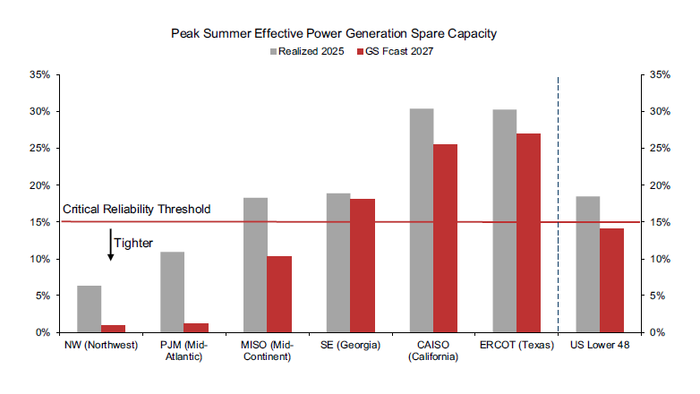
Depending on the location, it may be too little too late.Especially on the east coast…
Next summer the Eastern seaboard will look like North Korea at night thanks to chatbotspic.twitter.com/NEY97pa1LB
This is where people usually start pointing fingers at the data center forcreatingthe problem. Blaming hyperscalers though requires looking away from the fact thatnew power generation is also being delayed to connect to the grid.
Constellation'srestartof the Three Mile Island Reactor is currently facing a four-year delay from PJM. The reactor will be ready to provide clean energy to the grid in 2027, but has been told to waituntil 2031to actually connect.
Source: ZeroHedge News
