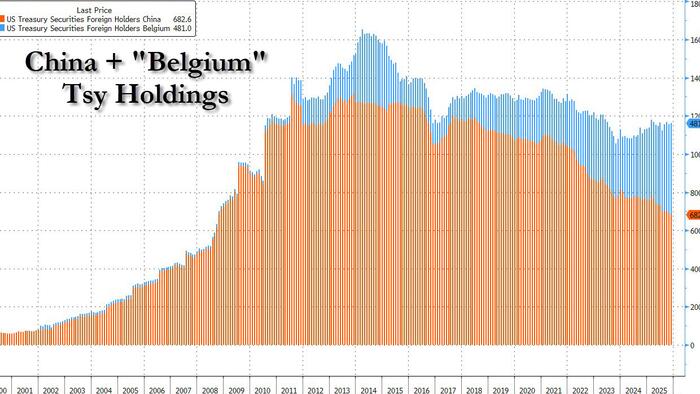
Beijing has issued directives to its major state-owned banks to sharply limit their exposure to US Treasuries, a move that underscores growing wariness toward American debt amid geopolitical frictions and efforts to diversify foreign reserves. Sources familiar with the guidance, which circulated through informal "window guidance" from the People's Bank of China (PBOC), indicate that banks like ICBC and Bank of China have been told to cap new purchases and gradually reduce existing holdings. This comes as China's Treasury portfolio, once the world's largest at over $1.3 trillion in 2011, has already dwindled to around $780 billion as of late 2025, reflecting a long-term de-dollarization push.
The order arrives against a backdrop of heightened US-China rivalry, including fresh tariffs proposed by the incoming Trump administration and ongoing disputes over technology exports and Taiwan. Chinese policymakers have cited risks from potential US sanctions, fluctuating yields, and the weaponization of the dollar in global finance—evident in cases like Russia's post-Ukraine invasion freezes—as key rationales. Beijing's strategy aligns with broader initiatives to bolster gold reserves, promote yuan internationalization through platforms like CIPS, and invest more in Belt and Road assets, reducing reliance on what officials privately call the "US financial hegemony."
Market reactions have been muted so far, with US 10-year Treasury yields ticking up only modestly to 4.2% in early trading. China's methodical sales over the past two years—totaling over $500 billion—have been absorbed by strong demand from US pension funds, Japanese investors, and the Federal Reserve's balance sheet dynamics. Data from the Treasury International Capital (TIC) system shows custodians in Europe and Japan snapping up the slack, preventing any Treasury market dislocation.
Yet some analysts downplay the directive as "hardly an issue at all," arguing it's more symbolic than seismic. "China's been offloading Treasuries for years without crashing the market," noted Brad Setser of the Council on Foreign Relations, pointing out that daily Treasury trading volume exceeds $900 billion, dwarfing potential Chinese sales. Others, like ZeroHedge contributors, frame it as a overdue risk management step rather than an aggressive dump, given Beijing's need to preserve dollar liquidity for trade surpluses and energy imports still priced in USD.
Looking ahead, the guidance could accelerate China's reserve reconfiguration, potentially pressuring longer-term US yields higher if paired with sales from other BRICS nations. For the US, it highlights vulnerabilities in funding trillion-dollar deficits through foreign appetite, even as domestic buyers fill gaps. While not an immediate crisis, the shift amplifies calls in Washington for fiscal restraint and diversification of Treasury buyers, lest the era of cheap foreign capital truly wanes.