WTI futures plunged more than 11% to the $90-a-barrel level afterAxios reportedearlier this morning that the U.S. is nearing a preliminary agreement with Iran to end the war. The sharp decline suggests traders are beginning to price in a potential geopolitical de-escalation and the potential reopening of the Hormuz chokepoint.
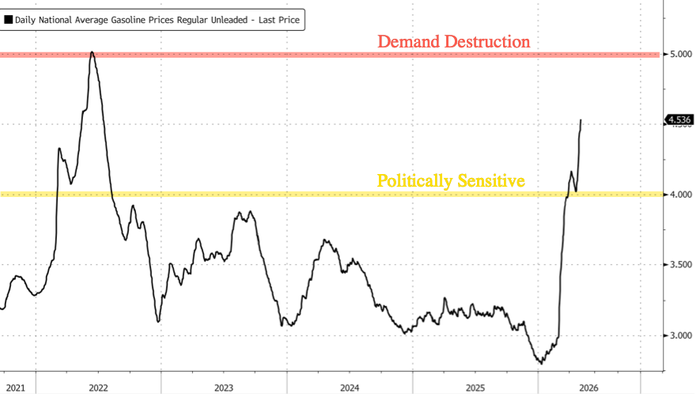
At the pump, however, the latest AAA data as of Wednesday morning show that the national average for regular 87-octane gasoline has climbed to $4.50 a gallon, the highest level since July 2022.
There will be a lag. Even if the Trump administration and Tehran formalize a deal in the near term, the immediate result will not be a collapse in gas and diesel pump prices, but rather an approaching peak.
Lower crude prices typically take a few weeks to work through wholesale markets, inventories, distribution networks, and retail outlets before meaningful declines in gas and diesel are visible at pump stations to consumers.
During a Monday press conference,Trump said he expects the price of gasoline to drop "substantially" following the end of the US-Iran war.
"I see it going down very substantially when this is over, I think very rapidly too, at levels that you've never seen because there's a lot of energy out there, ships all over the world that are loaded up with it," Trump said.
"They can't do much with it because they got kidnapped by a pretty evil place. But we're taking care of it."
Last week, Trump said pump prices would "come crashing down as soon as this war is over."
GasBuddy analyst Patrick De Haan warned that the$5-a-gallon thresholdis typically the "shock and awe" level that triggers demand destruction.
With the national average for gas already near $4.50 a gallon, and California prices above $6, the political and consumer pressure backdrop for the Trump administration has intensified in recent weeks.
Source: ZeroHedge News