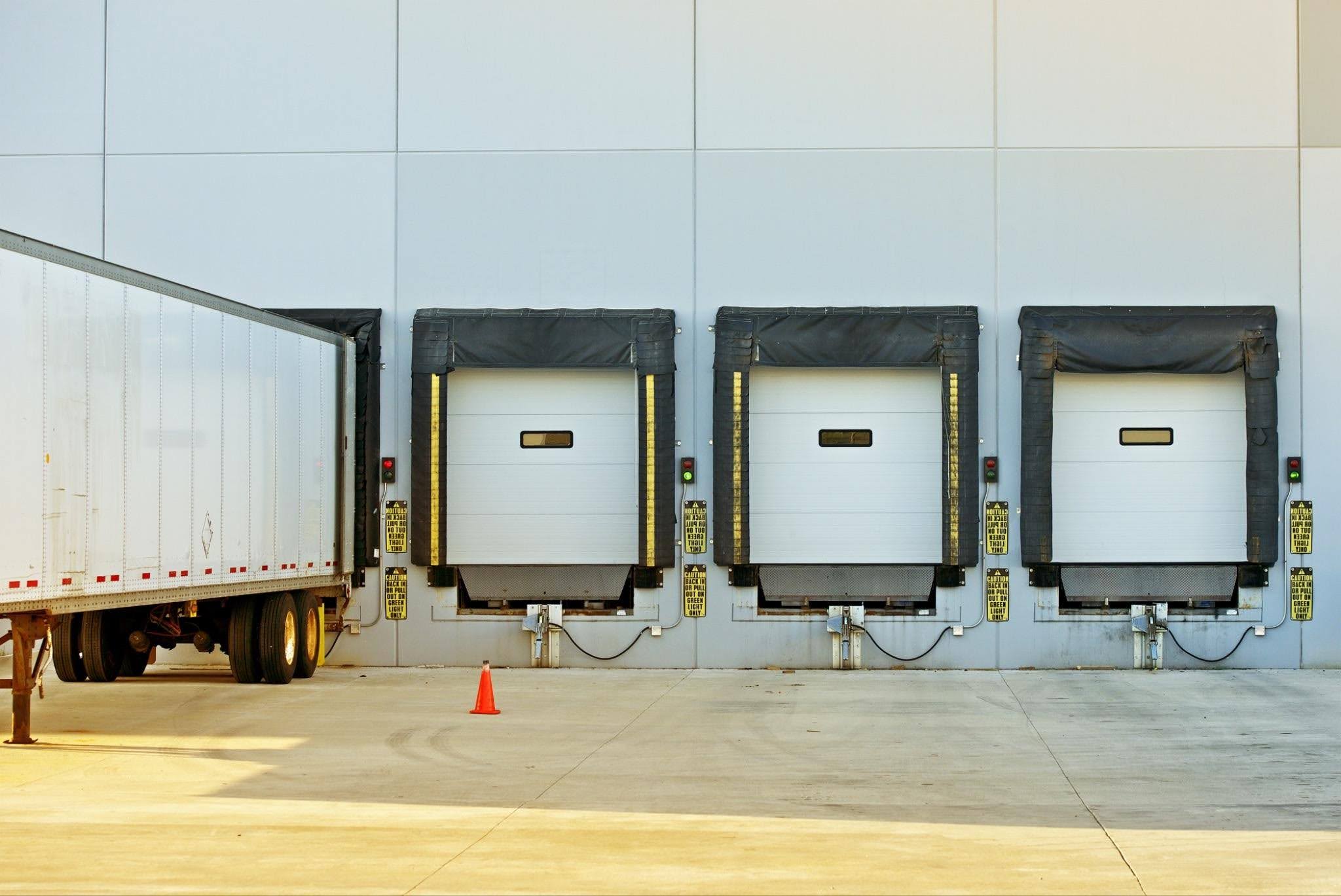
Most people never think about what happens outside a warehouse. Even fewer think about the loading dock. Yet this is often where supply chain plans meet reality.
Dock management is the coordination of lorries, trailers, loading bays, warehouse teams and appointment slots at a warehouse or distribution centre. Put simply, it decides who arrives, where they go, when they load or unload, and how quickly they leave.
When it works, nobody notices. Goods move, drivers depart on time and warehouse teams stay productive. Whendock schedulingfails, the effects spread quickly: vehicles queue at the gate, staff wait for late arrivals, orders miss transport windows and managers are left fixing problems that should have been visible earlier.
That is why C3 Solutions' 2026State of Dock and Yard Management reportis worth noting. Based on a survey of 149 supply chain and logistics professionals, it suggests many companies are still managing this critical control point with spreadsheets, manual updates and reactive decisions.
The clearest warning sign is manual work. Inefficient manual processes were named as the top operational challenge by 40.3% of respondents, up from 35.9% the previous year. During peak periods, 51.0% rely on overtime and 50.3% hire temporary labour, while only 34.2% turn to technology.
That reveals a familiar pattern. Many companies know their dock and yard operations are strained, but still add people before they remove friction from the process.
The dock matters because it is where warehouse, transport and supplier problems collide. A late inbound delivery can disrupt labour planning, door allocation, outbound loads and customer commitments. Supplier issues and labour shortages were both cited by 28.2% of respondents as leading challenges, showing how external volatility becomes more expensive when internal workflows cannot absorb it.
Visibility remains the obvious starting point. Real-time yard visibility was the most desired feature in dock and yard systems, selected by 59.1% of respondents. But buyers are also becoming more demanding. Integration with existing systems rose to 43.0%, while scalability and customisation nearly doubled to 23.5%.
That suggests companies are not simply looking for another dashboard. They want systems that connect with warehouse management, transport management and enterprise platforms already in place. Visibility is useful, but visibility without action can become just another screen to monitor.
Nicholas Couture, CEO of C3 Solutions, says the findings show a market that understands the need for change but has not yet fully committed to it.
Source: International Business Times UK
