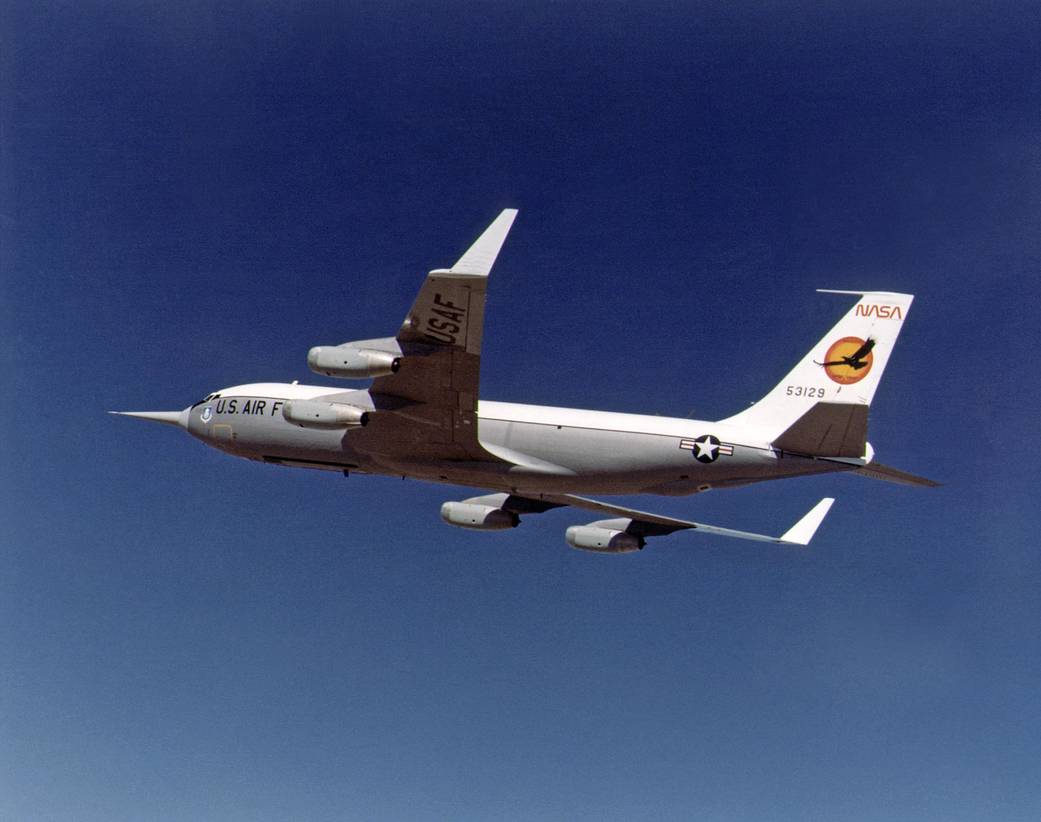
A '7700' distress signal was received from a Boeing KC-135 Stratotanker, a US Air Force 'flying gas station.' The emergency alert came while operating over the PersianGulf regionnear Qatar, raising questions about what went wrong during the flight.
Flight tracking data from Flightradar24 showed the aircraft issued a'7700' squawk code, an internationally recognised transponder signal indicating a general in-flight emergency, while flying over the area between Iran and Qatar.
The plane, referred to as the 'flying gas station' due to its mid-air refuelling role, reportedly departed from Al Dhafra Air Base in the United Arab Emirates and later disappeared from radar coverage after transmitting the distress signal, perNDTV.
According to tracking information cited in multiple reports, the KC-135 was conducting holding patterns in the air before beginning a descent, suggesting the crew may have been attempting an emergency landing procedure.
Despite the emergency signal and temporary loss of tracking, there has been no official confirmation from the US military of a crash, forced landing, or mechanical failure. Authorities have also not publicly linked the event to hostile activity.
Some regional tracking summaries suggest that temporary radar loss and emergency transponder signals in the area can occasionally be influenced byheavy electronic interference or jamming in the Gulf region, although this has not been confirmed as the cause in this case.
The KC-135 Stratotanker is one of the most important support aircraft in the US Air Force fleet. It enables fighter jets and bombers to extend their range by refuelling them mid-air, and can also carry cargo, passengers, or medical evacuation equipment. The aircraft has been in service for decades and remains essential for US operations across the Middle East and beyond.
Because of this role, any emergency involving a KC-135 is closely monitored, as it can affect broader military operations in active regions.
The recent emergency involving a KC-135 Stratotanker over the Gulf is not the first time the aircraft type has drawn attention due to in-flight complications or serious operational incidents. The KC-135 has a long service history spanning decades, and while generally reliable, it has experienced several emergencies ranging from technical failures to mid-air incidents.
In 1991, a KC-135 operating over Saudi Arabian airspace suffered a severe malfunction after encountering wake turbulence. In March 2026, another KC-135 incident in the Middle East resulted in a catastrophic crash in Iraq during a refueling mission connected to regional military operations. That event involved a mid-air emergency situation with another tanker aircraft, with one aircraft safely landing while the other went down, leading to crew fatalities, perBusiness Insider.
Source: International Business Times UK
