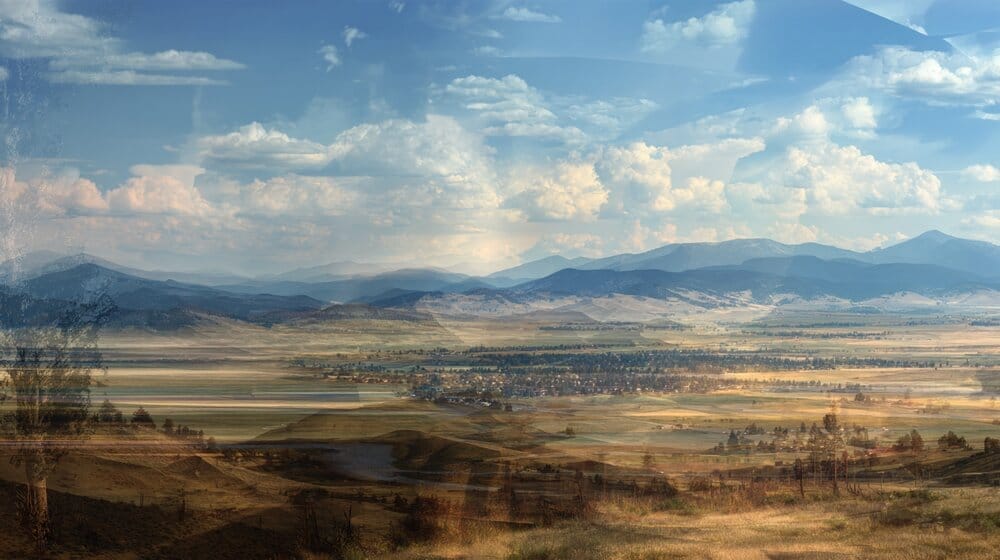
The old expression “There’s gold in them thar hills” is as true today as it was when it was coined during the 1850s Gold Rush. And the price of gold, which has been on a tear for the last five years, is making it profitable again to prospect in areas previously thought to have been mined out. Scott Thuman reports from Montana.
The following is a transcript of a report from “Full Measure with Sharyl Attkisson.”Watch the video by clicking the link at the end of the page.
Deep in the hills of remote Montana, and hitting the road with geologist and miner Eric Saderholm. We’re on a modern-day hunt for one of the oldest commodities on the planet.
Scott: Is this a target-rich environment out here?
Eric Saderholm: Yes, it is, it has been for a long time, the initial mining started in the late 1850s or 1860s, and that was people who were on their way, the 49ers on their way to the gold rush of California.
Gold has also shaped the history of America, driving western expansion across the land.
In fact, throughout human history, no other natural material has been so desired. The ancient Egyptians called gold “the flesh of the gods,” and today, it remains the definitive symbol of wealth.
While most people have heard that gold prices have been on the rise, you might not realize quite how much. Five years ago, the average price was around $1,800 an ounce. Today, close to $5000 an ounce – a 160% increase. In the US, there are nearly 70 active gold mines, the biggest in Nevada and Alaska.
Scott: Are we in another gold rush?
Eric Saderholm: Yes. I would say this gold rush, but I see this one as more sustainable than the ones in the past. Right now, central banks are pulling in tremendous amounts of gold with no desire to ever sell it. China is purchasing more. India is purchasing more, not for jewelry so much, but to a stockpile just because it’s safe money.
Source: Sharyl Attkisson
