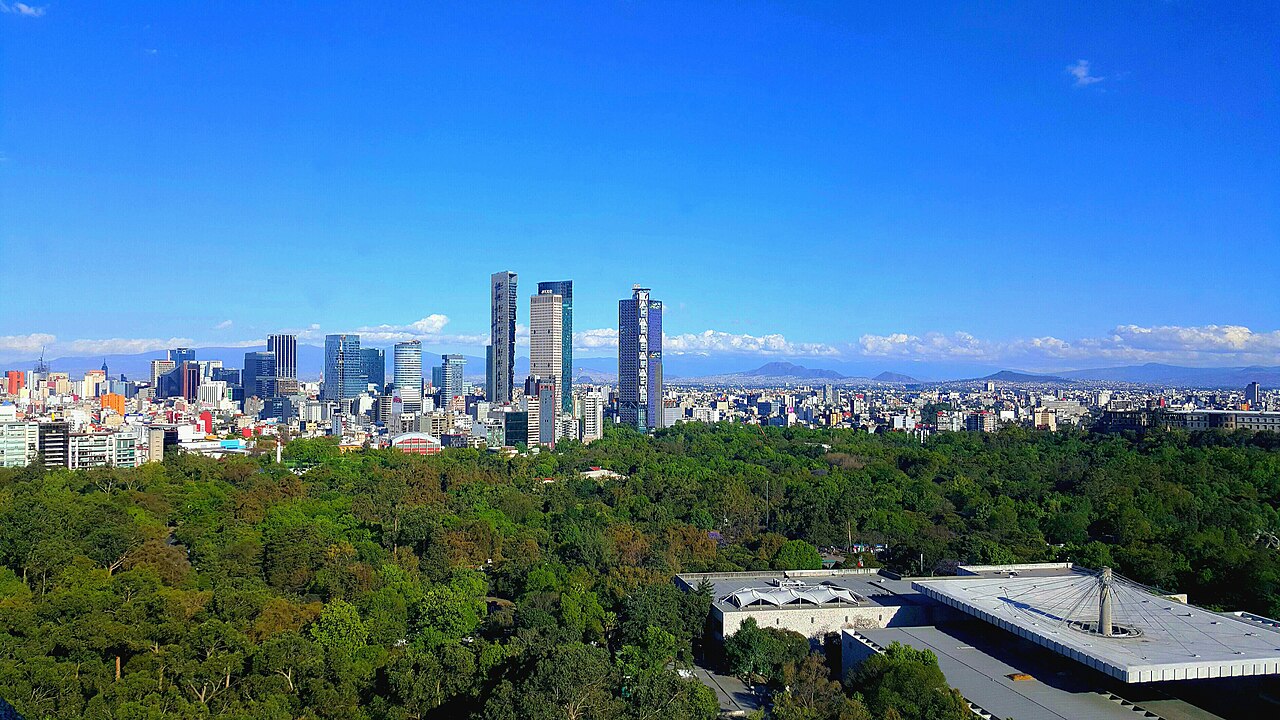
NASA has revealed the alarming pace at which Mexico City is sinking into the Earth, with new satellite data showing parts of the megacity are sinking by up to 25 cm annually.
Scientists using the latestNASA NISAR satellitetechnology have detected minute shifts in the ground, confirming that the urban sprawl is descending far faster and more unevenly than previously feared.
The Mexican capital is home to more than 20 million residents who now face a 'slow-motion emergency' as the ground beneath their feet compacts. This phenomenon, known as Mexico City land subsidence, is primarily driven by the relentless groundwater extraction crisis required to sustain the massive population. Built upon the soft, water-saturated ancient lakebed clay of Lake Texcoco, the city is literally buckling under its own weight as the subterranean aquifers are pumped dry.
NASA data shows that specific hotspots, including the Mexico City International Airport sinking zones and the central districts, are dropping by as much as 2 centimetres per month.
Unlike seasonal flooding, this type of land collapse is almost entirely irreversible. Once the clay layers compress, they lose their ability to hold water, meaning the city is permanently losing its natural foundation.
At the centre of this breakthrough is NASA's NISAR satellite, a joint mission with the Indian Space Research Organisation. The system uses powerful radar imaging to detect even minute shifts in the Earth's surface, capturing ground movement every few days.
The data shows that parts of Mexico City are sinking by as much as 0.78 inches (2 centimetres) per month, equivalent to nearly 10 inches (25 centimetres) annually.
Researchers say this level of precision allows them to identify specific hotspots, such as the international airport and central districts, where subsidence is particularly severe.
Enrique Cabral, a researcher at the National Autonomous University of Mexico (UNAM), warned that the subsidence is a 'very big problem' that now threatens the metro, the drainage system, and the potable water supply for millions.
Cabral said the damage extends across 'the subway, the drainage system, the water, the potable water system, housing and streets.'
Source: International Business Times UK
