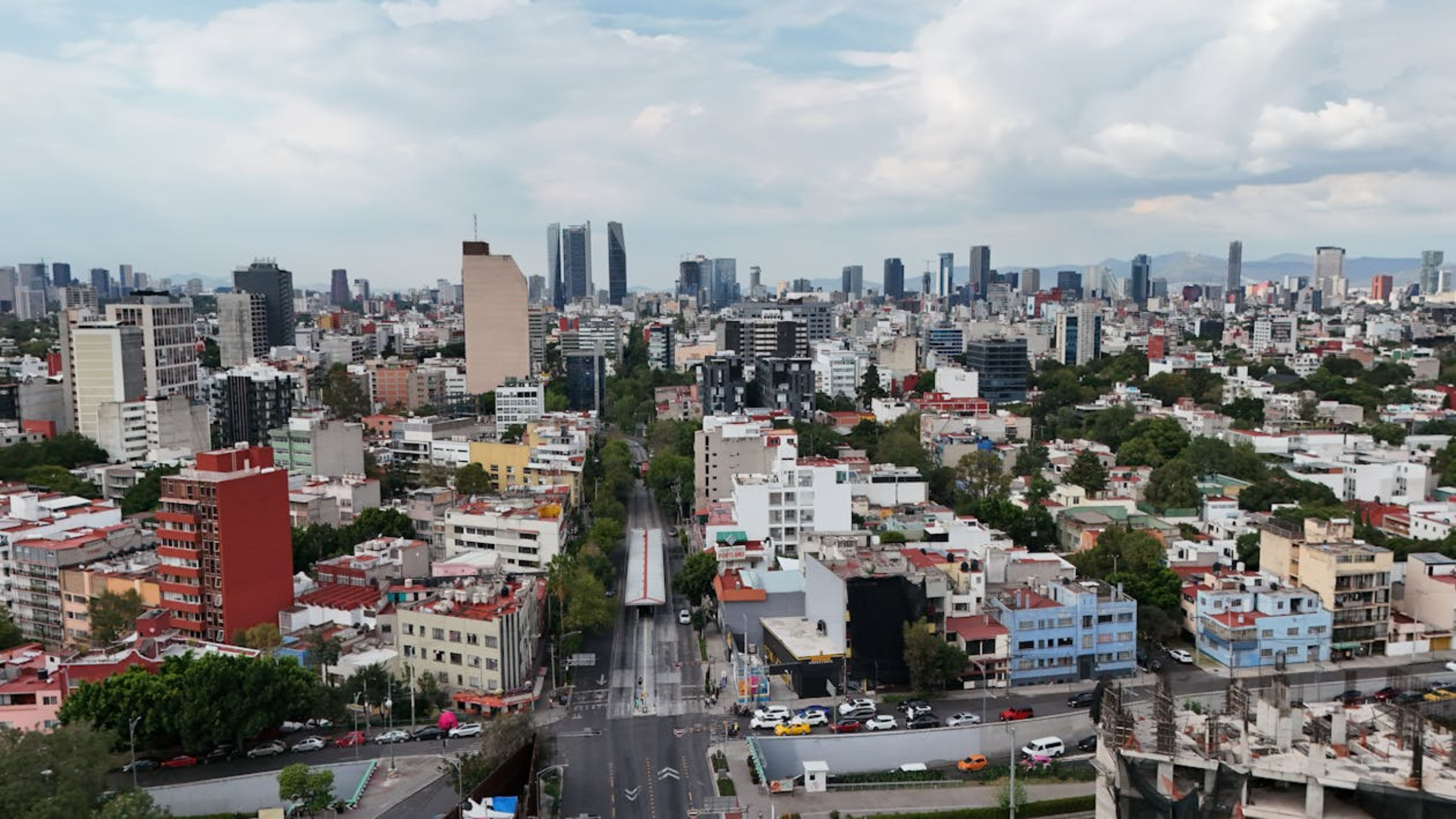
Mexico City is sinking at such a rapid pace that satellite data from NASA has captured the movement from space, revealing land subsidence of up to 0.8 inches a month in some areas. The phenomenon is now placing critical infrastructure, including the city's main airport, under strain while deepening concerns over a worsening water crisis affecting more than 22 million residents.
Scientists say the scale of ground collapse, driven largely by decades of groundwater depletion, makes Mexico City one of the fastest-sinking major cities in the world.
New imagery from NASA's NISAR satellite mission, developed in partnership with the Indian Space Research Organisation, has mapped ground movement across Mexico City between October 2025 and January 2026. Thedata shows uneven subsidenceacross the metropolis, with some districts sinking at around 0.8 inches per month, equivalent to more than 9.5 inches annually.
The satellite uses advanced radar technology capable of detecting minute changes in Earth's surface, allowing scientists to observe land deformation in near real time. Researchers say this level of precision has made it possible to visualise the extent of sinking across one of the world's largest urban areas.
Experts attribute the ongoing land subsidence primarily to the over-pumping of groundwater from an ancient aquifer beneath the city. This underground reservoir supplies around 60% of Mexico City's drinking water, but decades of extraction have left large voids beneath the surface.
Mexico City was originally built on the bed of a drained lake, sitting on soft, clay-rich soil that compresses easily when water is removed. Over time, this has caused the ground to gradually collapse. The issue has been known since the 1920s, but the rate of sinking has intensified in recent decades as demand for water has grown alongside rapid urban expansion.
The effects of subsidence are increasingly visible across the city. Roads are cracking and becoming uneven, while sections of public transport infrastructure have required reinforcement due to shifting ground levels. Buildings in affected areas have also begun to tilt as foundations adjust to unstable soil conditions.
The strain is not evenly distributed, with some neighbourhoods experiencing more severe deformation than others. The combination of ground movement and heavy infrastructure has accelerated structural stress, raising long-term engineering and safety concerns.
One of the most heavily impacted areas is the Benito Juárez International Airport, Mexico City's main aviation hub. Ground deformation in and around the site has raised concerns over operational stability, with ongoing monitoring now required to assess risks linked to continued subsidence.
Historic landmarks are also affected. The Angel of Independence monument, originally constructed in 1910, has required 14 additional steps at its base over the years to compensate for the sinking ground beneath it, illustrating the long-term and cumulative nature of the problem.
Source: International Business Times UK
