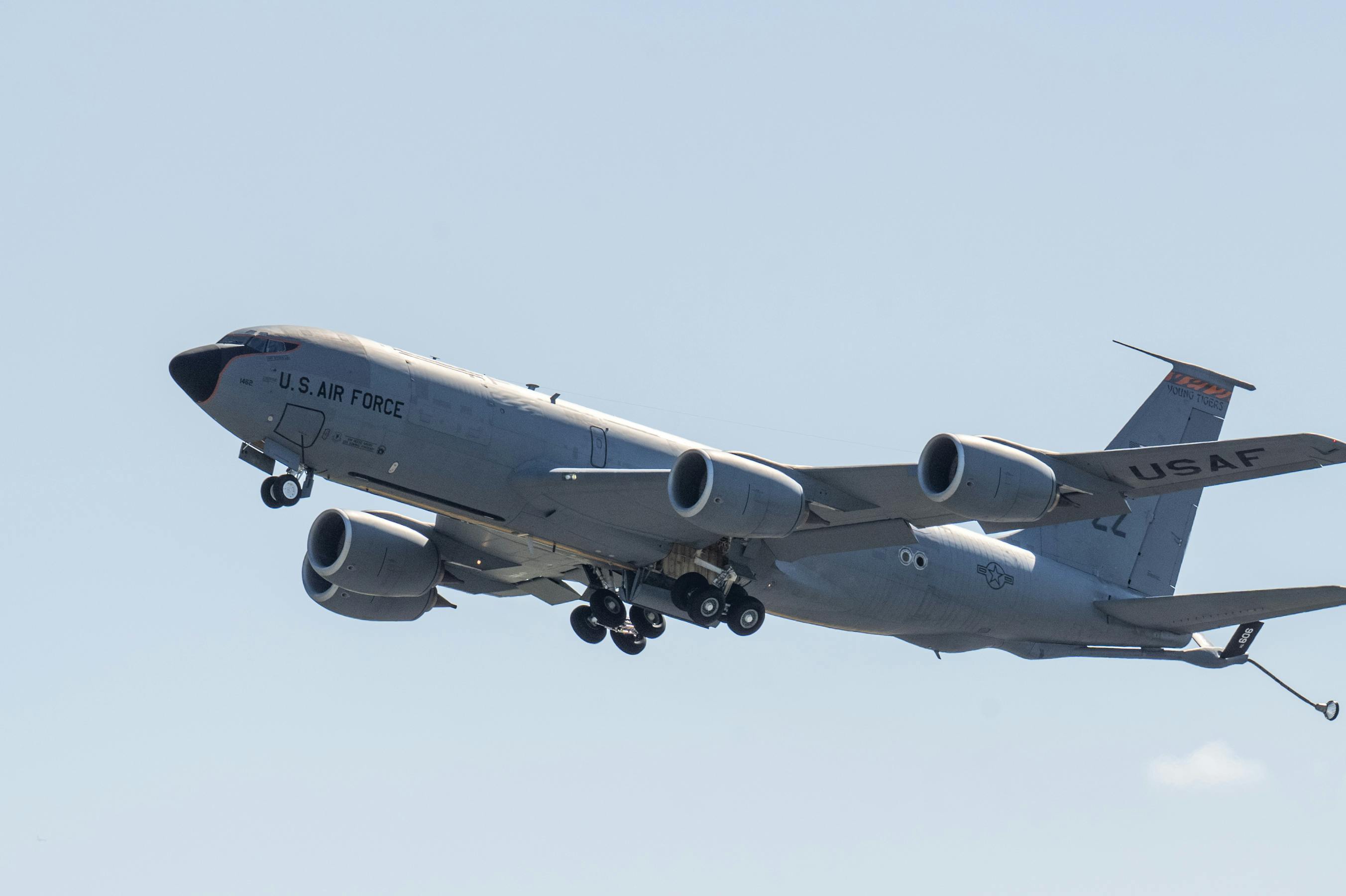
A US Air Force KC-135R Stratotanker issued an emergency squawk 7700 near theStrait of Hormuzbefore vanishing from radar, flight tracking data has shown.The aircraft, registration 62-3578 and operating from Al Dhafra Air Base in the UAE, squawked 7700 — the international code for a general emergency — while flying over the Arabian Gulf near the Strait of Hormuz on Tuesday.
It descended and manoeuvred towards Qatar before its transponder signal disappeared from Flightradar24 about an hour later. The event has focused fresh attention on the Gulf, where electronic interference is hardly a surprise.
Flight tracking showed the KC-135R Stratotanker was conducting what appeared to be a standard aerial refuelling mission when it activated the 7700 code. Analystson Xshared the aircraft's full flight path, noting it was last tracked in an area of heavy GPS and AIS jamming and spoofing, common amidUS-Iran tensions. The aircraft was heading for Qatar, a key US base location, at the time contact was lost.
BREAKING: A U.S. KC-135R Stratotanker reportedly squawked 7700, the general emergency code, before losing signal near the Strait of Hormuz.Tracking data shows it was descending toward Qatar before disappearing from public radar.No confirmed crash. No confirmed safe landing.…pic.twitter.com/WDJhPKRO5G
Aviation specialists have stressed that a vanished transponder does not confirm a crash, as planes can operate on military-only systems or suffer technical failures. Yet the combination of the emergency declaration and signal loss has generated interest among defence analysts. The KC-135R remains a backbone of American air power in the Middle East, capable of refuelling fighters and bombers mid-mission.
Such incidents take on extra weight given the strategic importance of the area. No debris has been reported, and initial assessments point to technical or environmental factors rather than deliberate action. Some unconfirmed reports even suggest the aircraft may have landed safely at a base in Qatar.
No official statement has been released by CENTCOM, the US Air Force or Qatari authorities confirming a crash, safe landing or diversion. US Central Command and the US Air Force have issued no statement on the tanker's fate, nor have Qatari officials.
This reticence is typical in sensitive military operations, where details emerge only when appropriate. The absence of further distress signals or wreckage reports has left room for optimism that the aircraft may have resolved the issue privately. Iranian state media and international aviation trackers have amplified the story without adding confirmed new information.
Some reports indicate the tanker entered a holding pattern before descending, a manoeuvre often used by crews to troubleshoot technical problems. TheEconomic Times reported a separate KC-46 Pegasus tankerwas also reported to have squawked 7700 in the broader region on the same day, though that incident occurred over Saudi airspace and remains unrelated according to available tracking data.
A U.S. Air Force KC-135 tanker disappeared from radar over the Strait of Hormuz after transmitting a 7700 emergency squawk code. Two H125 helicopters have since been dispatched from Al Udeid Air Base in Qatar, indicating a likely search and rescue effort is in progress.https://t.co/mibeK3p27i
Source: International Business Times UK
